


ULTRASTAR HC590 26TB PRICE INTELLIGENCE
Ultrastar HC590 26TB Price
Live 26TB HC590 pricing and historical value for high-density data-center and advanced storage buyers.
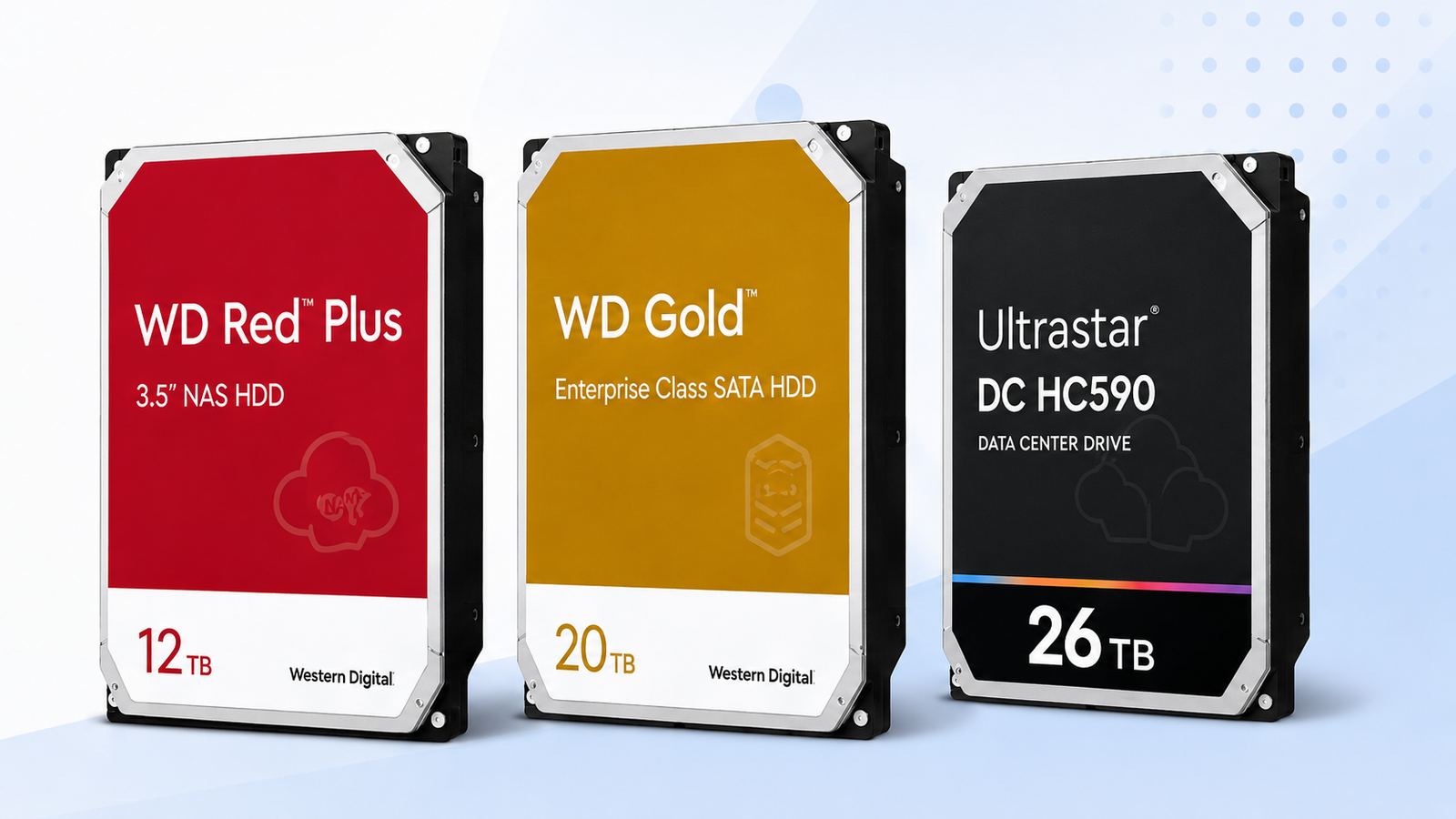
Check WUH722626ALE6L4 before buying. Compare the current HC590 26TB price, price per TB and recent history with WD Gold and other high-capacity enterprise options.
Price Trend
90-Day Price History
WD Deal Score
Live value by model or family
| Family / model | Capacity | $/TB | 30-Day | Historical position | Deal Score | Signal |
|---|---|---|---|---|---|---|
| Ultrastar HC590 26TBWUH722626ALE6L4 | 26TB | $50.50 | 3.3% | 82th percentile | 25Medium history | WAIT |
| WD Purple Pro 26TBWD260PURP | 26TB | $51.88 | 18.4% | 100th percentile | 25Medium history | WAIT |
| Ultrastar DC 24TBWUH722424ALE604 | 24TB | $46.58 | 0.0% | 0th percentile | 98Medium history | BUY |
| WD Gold 26TBWD261KRYZ | 26TB | $54.62 | 14.4% | 64th percentile | 36Medium history | WAIT |
Historical position compares today’s price per TB with recent tracked prices for new drives. Renewed, recertified, refurbished and used offers are kept separate.
Is this a good price?
WD Price Check Calculator
Amazon Live
Current Ultrastar HC590 26TB offers
| Drive | Model | Capacity | Amazon price | $/TB | Checked | |
|---|---|---|---|---|---|---|
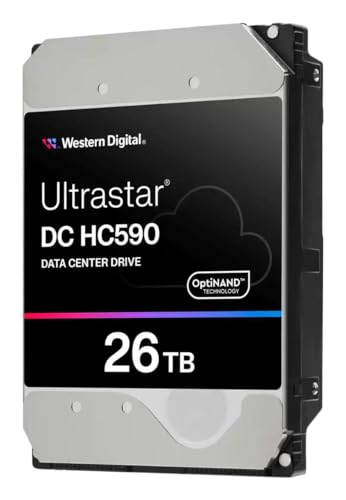 Ultrastar DCNew · PCNation Ultrastar DCNew · PCNation | WUH722626ALE6L4 | 26TB | $1,313.07 | $50.50 | Last verified 1d ago | Buy on Amazon |
As an Amazon Associate, Cloudzat may earn from qualifying purchases. Prices, seller, selected variation and availability can change after the last check. Confirm the exact model, capacity and New condition before checkout.
Capacity Economics
20TB vs 24TB vs 26TB acquisition cost
| Capacity | 20TB | 24TB | 26TB |
|---|---|---|---|
| Best current $/TB | — | $46.58 | $50.50 |
| 4-drive raw cost | — | $4,471.36 | $5,252.28 |
| 8-drive raw cost | — | $8,942.72 | $10,504.56 |
| Current model | — | WUH722424ALE604 | WUH722626ALE6L4 |
Raw acquisition cost only. Apply your RAID, RAIDZ, SHR, erasure coding, tax, shipping, spare and chassis costs separately.
Smart Alternatives
Better-value WD options to check


Decision table
What to compare before buying
| Decision factor | Ultrastar DC HC590 26TB (WUH722626ALE6L4) | WD Gold 26TB | WD Red Pro 26TB |
|---|---|---|---|
| Primary reason to buy | 26TB target capacity with exact-model tracking | Compare if current $/TB is lower | Compare when another capacity or class fits better |
| Price check | Current new-drive price and price history | Current price | Current price |
| Best timing input | Deal Score + price history | Relative $/TB and compatibility | Relative $/TB and capacity plan |
| Before checkout | Model, condition, seller, warranty | Exact alternative model and host support | Exact alternative model and total array cost |
WUH722626ALE6L4 is the SATA HC590 26TB identity behind this page
Ultrastar DC model names contain enough variation that capacity alone is not a safe identity. This page is anchored to WUH722626ALE6L4, the 26TB SATA base model used by the target model. Cloudzat requires that exact model evidence alongside the Ultrastar family and 26TB capacity before the listing can contribute to the comparison. That prevents a SAS version, a 24TB model, another Ultrastar generation or a renewed drive from contaminating the current price history.
Exact identity also matters for data-center documentation. A buyer can take WUH722626ALE6L4 directly into a compatibility matrix, procurement system or Western Digital product manual. The price chart then has the same granularity as the engineering decision, which is far more useful than a generic “Ultrastar 26TB” average.
HC590 26TB should be priced as a data-center component
The Ultrastar DC HC590 is aimed at data-center and high-density storage use, so a low marketplace price is only meaningful for buyers who can deploy the exact drive correctly. Before price becomes the deciding factor, confirm SATA support, the host or enclosure requirements, sector-format expectations and any vendor qualification rules. Cloudzat intentionally keeps the technical gate separate from the Deal Score so an attractive price does not become a universal hardware recommendation.
Once the platform fit is established, the price intelligence becomes powerful. Compare the HC590’s current $/TB with WD Gold and Red Pro 26TB, then multiply the unit difference across the number of bays. In a large array, a small per-drive saving can become material. In a small system, support simplicity may matter more than the last few dollars per terabyte.
Do not confuse the base SATA model with SED or SAS variants
Ultrastar product families can include base, self-encrypting and different-interface variants. Those differences are not cosmetic. The price tracker targets one specific model so that a cheaper variant with different requirements does not silently become the comparison. If an Amazon title contains multiple part numbers or a different interface, the safest behavior is rejection rather than an assumption that the products are equivalent.
For the buyer, the same rule applies at checkout. Verify the full model string, not merely “HC590 26TB.” If a security requirement calls for a self-encrypting model, use the appropriate exact part number rather than treating this base-model price as the procurement target. Price intelligence works best when it follows the same identity discipline as enterprise hardware management.
HC590 26TB versus WD Gold 26TB: compare the enterprise routes
WD Gold 26TB and HC590 26TB can both enter enterprise storage discussions, but they are sold and positioned differently. Start with current $/TB and array acquisition cost to see whether the market is favoring one route. Then check the platform’s supported models, interface, firmware expectations and warranty channel. A price advantage is valuable only after those requirements are satisfied.
The comparison can be especially useful for custom storage servers where the organization maintains its own qualification process. If either exact model is acceptable, a mature historical BUY signal may support choosing the cheaper family for the next expansion. If only one model is qualified, the other still serves as a reference for whether the target family is experiencing an unusual premium.
HC590 26TB versus Red Pro 26TB: enterprise density versus NAS positioning
Red Pro 26TB is designed around NAS positioning, while HC590 belongs to the data-center Ultrastar line. Their common capacity makes the price comparison tempting, but the intended environments are different. A custom TrueNAS or server build may allow both to be evaluated. A branded NAS appliance may have a more restrictive compatibility and support path. Treat the live price gap as a reason to investigate, not as proof of interchangeability.
This distinction is useful because the same buyer can value different things in different systems. A backup server may prioritize enterprise drive economics, while a vendor-supported office NAS may prioritize the supported Red Pro route. Cloudzat can show the cost of each decision without pretending that one family replaces the other in every chassis.
Why price per TB is especially useful at 26TB scale
At very high capacity, absolute prices can make two offers look farther apart than they are economically. Price per terabyte normalizes the comparison and reveals how efficiently each dollar buys storage. The metric becomes even more useful when comparing 24TB and 26TB within HC590 or comparing 26TB across Gold and Red Pro. A buyer can quickly see whether the extra density is priced close to the rest of the market or carries a substantial premium.
Do not stop at $/TB for a data-center purchase. Power, cooling, rack density, rebuild policy, spare strategy and controller limits can affect the total cost of storing a usable terabyte. The Cloudzat figure is intentionally an acquisition metric. It should feed a broader infrastructure model rather than pretend to be total cost of ownership.
How to use a short HC590 price history
If the HC590 chart has only a short history, treat the percentile as supporting evidence rather than the whole decision. Compare WUH722626ALE6L4 with current Gold 26TB and Red Pro 26TB prices, then account for interface, warranty channel and deployment requirements. The historical signal becomes more useful as the trend gains depth.
This matters for a high-dollar enterprise drive because one unusually cheap listing can otherwise dominate the first impression. A mature history distinguishes a repeatable market level from a short-lived event. The longer the deployment runs, the more useful it becomes for repeat procurement and expansion planning.
Array-scale math can turn a small HC590 discount into a large budget change
A twenty-dollar per-drive difference is not dramatic on one unit. Across twenty-four, forty-eight or more bays it becomes a procurement line item. Use the live unit price as the base, multiply it by the planned quantity, and compare the total with the qualified alternatives. For a staged deployment, repeat the calculation at each purchase window rather than assuming the first batch’s pricing will remain representative.
Large deployments should also include spare drives and replacement lead times. A favorable price may justify buying a planned spare with the initial batch, while a historically high price may support a smaller first order if capacity planning allows. The Deal Score becomes one tool for timing capital expenditure rather than merely a shopping badge.
Amazon can be useful for visibility even when enterprise procurement happens elsewhere
Many businesses will not buy a full data-center deployment through Amazon, but the marketplace can still provide a useful public signal for availability and street pricing. Cloudzat treats that signal as one source, not as a substitute for distributor or negotiated quotes. A public price can help identify whether a supplier quote is broadly aligned with the market or whether a particular family is experiencing unusual retail pressure.
If you do purchase through the marketplace, verify the exact model, seller, New condition and warranty path. If your organization buys through distribution, use the page’s history as context and compare it with your own landed cost. The same intelligence framework can support both channels without conflating them.
Keep the model number in the asset record after deployment
Price intelligence begins before the purchase, but exact-model discipline should continue afterward. Record WUH722626ALE6L4, serial number, purchase source, installation date and enclosure location in the asset system. That makes future replacement and warranty work easier and allows the next procurement cycle to compare like with like. A vague entry such as “26TB Ultrastar” loses information that was available at the time of purchase.
For fleets with mixed high-capacity generations, accurate model records also prevent a later buyer from assuming every 26TB drive has the same interface or feature set. The pricing page and the operational inventory then speak the same language, which is exactly what an enterprise price-intelligence tool should encourage.
Use the HC590 price as a density signal even when your quote comes from distribution
Data-center buyers frequently source Ultrastar drives through distributors or integrators rather than a consumer marketplace. The public WUH722626ALE6L4 price can still be valuable because it gives a visible, repeatable reference for the direction of 26TB supply. If the tracked market falls materially while a distributor quote remains unchanged, the buyer has a reason to ask whether channel pricing has caught up. If public pricing rises, a previously negotiated quote may suddenly look more attractive. The goal is comparison, not an assumption that the Amazon offer is the only valid procurement route.
Keep the comparison exact. A quote for a self-encrypting variant, SAS interface or different HC590 capacity should not be measured against this base SATA model as though they were the same part. Put the model number, quantity and support terms next to every price. That discipline makes the historical chart more than a shopping feature: it becomes an external reference series that can support capital planning, supplier conversations and the timing of future high-density storage batches.
Confirm delivery timing before using a low HC590 quote in a project plan
High-density enterprise storage is often purchased against a deployment schedule. An attractive WUH722626ALE6L4 price is not equally valuable if the delivery window misses the project date. Check current stock and arrival estimates after following the offer, then compare the cost of waiting with qualified alternatives. A slightly higher price with reliable delivery can be the lower-risk option when technicians, migration windows or rack capacity have already been scheduled.
For flexible capacity expansion, delivery timing can work in the opposite direction. A delayed project gives the buyer more time to observe the HC590 series and wait for a stronger historical position. Separate project urgency from the Deal Score so the same market data can support both urgent procurement and patient capacity planning.
Questions people ask
Ultrastar HC590 26TB FAQs
What model number is the Ultrastar DC HC590 26TB (WUH722626ALE6L4)?
This page targets WUH722626ALE6L4. Verify that exact model on the Amazon variation and the physical label before treating another 26TB listing as equivalent.
How is the Ultrastar DC HC590 26TB (WUH722626ALE6L4) price per TB calculated?
Cloudzat divides the current new-drive price by 26. The $/TB figure appears only when a current price is available.
What does an Early Deal Score mean?
It means the price history is still short, so the BUY/WATCH/WAIT signal is intentionally cautious. Use today’s $/TB and nearby WD alternatives alongside the score until the trend becomes deeper.
Can a matching drive appear when no current price is available?
Yes. If a positive Amazon price was previously verified, Cloudzat keeps that last verified price visible with its verification age and keeps the Buy on Amazon CTA. A failed or overdue refresh does not erase it.
Does the historical low include renewed or used drives?
No. The main Deal Score compares new-drive prices. Renewed, recertified, refurbished and used offers are kept separate from the new-drive history.
Should I wait for the lowest possible price?
Not necessarily. If the purchase is urgent, exact availability can matter more. If it is discretionary, a mature WATCH or WAIT signal gives you a reason to delay and compare alternatives.
Price methodology & sources
How Cloudzat compares WD prices
Cloudzat matches WD offers by family, capacity and model number before including them. Price per TB is the current new-drive price divided by capacity. Price history uses the prices Cloudzat has tracked over time, while renewed, recertified, refurbished and used drives are kept separate from new-drive comparisons.
The Deal Score combines current price per TB with the available price history. When history is limited, the signal stays conservative. The score is a purchase-timing aid, not a reliability rating or compatibility guarantee.
If a newer Amazon check does not return a replacement price, Cloudzat can keep the last successfully verified price visible with its age for reference. Always confirm the live checkout price, selected model, capacity, seller and condition before ordering.