


WD RED PRO 24TB PRICE INTELLIGENCE
WD Red Pro 24TB Price
Live WD241KFGX pricing, historical position and capacity economics for the 24TB Red Pro.
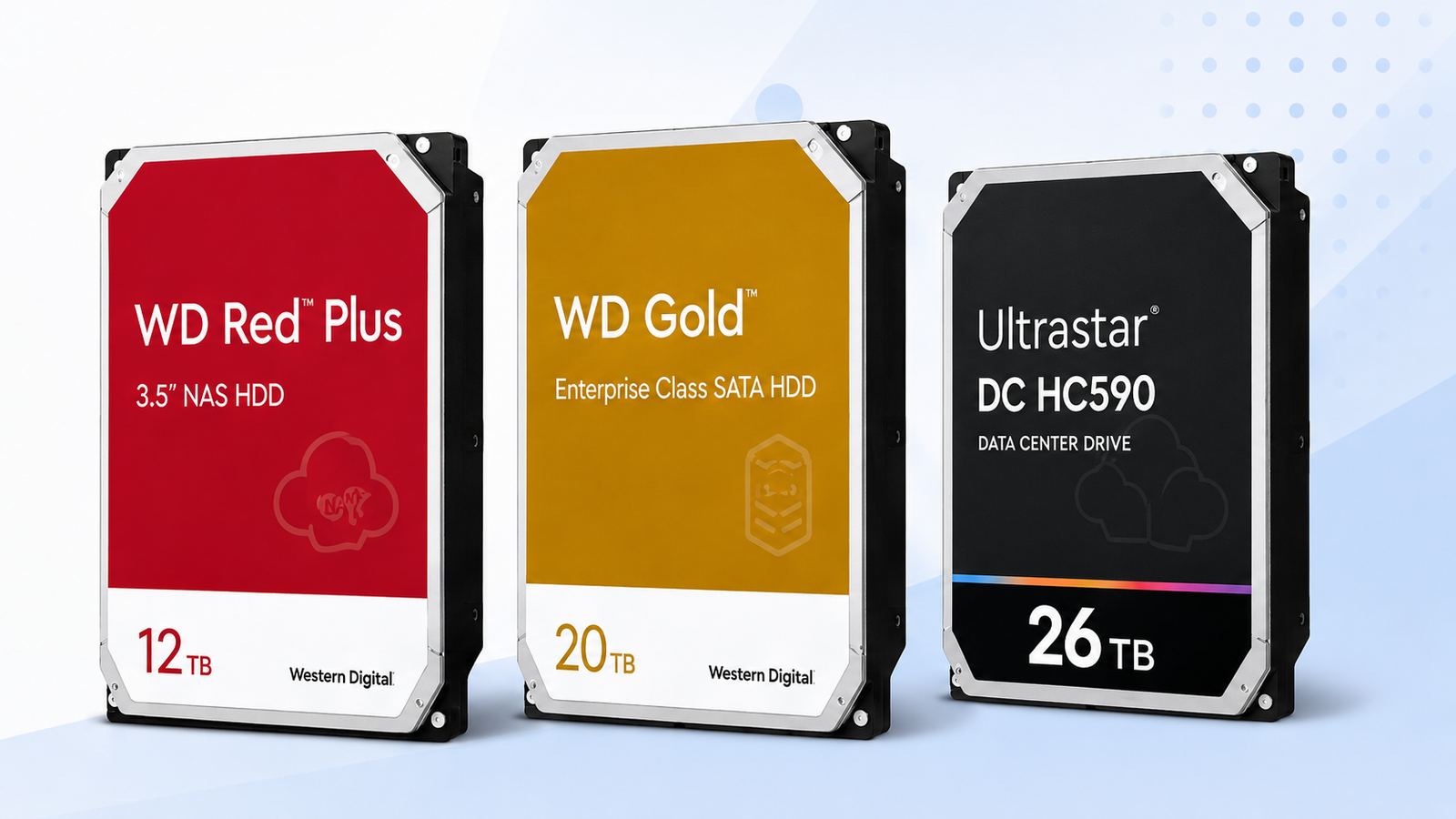
Check WD241KFGX before buying. Compare today’s price with its recent price history, price per TB and the 20TB and 26TB Red Pro options before choosing the 24TB tier.
Price Trend
90-Day Price History
WD Deal Score
Live value by model or family
| Family / model | Capacity | $/TB | 30-Day | Historical position | Deal Score | Signal |
|---|---|---|---|---|---|---|
| WD Red Pro 24TB | — | — | — | History in progress | —Early history | WATCH |
| WD Purple Pro 22TBWD221PURP | 22TB | $43.14 | — | History in progress | 81Early history | WATCH |
| WD Red Pro 18TBWD181KFGX | 18TB | $44.11 | -11.5% | 38th percentile | 63Medium history | WATCH |
| Ultrastar DC 24TBWUH722424ALE604 | 24TB | $46.58 | 0.0% | 0th percentile | 98Medium history | BUY |
Historical position compares today’s price per TB with recent tracked prices for new drives. Renewed, recertified, refurbished and used offers are kept separate.
Is this a good price?
WD Price Check Calculator
Amazon Live
Current WD Red Pro 24TB offers
See the model on Amazon, or compare the closest WD drives that currently have a price below.
See this model on AmazonOther WD options
Closest alternatives available now


As an Amazon Associate, Cloudzat may earn from qualifying purchases. Prices, seller, selected variation and availability can change after the last check. Confirm the exact model, capacity and New condition before checkout.
Capacity Economics
20TB vs 24TB vs 26TB acquisition cost
| Capacity | 20TB | 24TB | 26TB |
|---|---|---|---|
| Best current $/TB | — | — | $55.00 |
| 4-drive raw cost | — | — | $5,719.96 |
| 8-drive raw cost | — | — | $11,439.92 |
| Current model | — | — | WD260KFGX |
Raw acquisition cost only. Apply your RAID, RAIDZ, SHR, erasure coding, tax, shipping, spare and chassis costs separately.
Smart Alternatives
Better-value WD options to check


Decision table
What to compare before buying
| Decision factor | WD Red Pro 24TB (WD241KFGX) | WD Gold 24TB | Ultrastar HC590 24TB |
|---|---|---|---|
| Primary reason to buy | 24TB target capacity with exact-model tracking | Compare if current $/TB is lower | Compare when another capacity or class fits better |
| Price check | Current new-drive price and price history | Current price | Current price |
| Best timing input | Deal Score + price history | Relative $/TB and compatibility | Relative $/TB and capacity plan |
| Before checkout | Model, condition, seller, warranty | Exact alternative model and host support | Exact alternative model and total array cost |
WD241KFGX gives the 24TB Red Pro page one exact buying target
Cloudzat treats WD241KFGX as the anchor for Red Pro 24TB price intelligence. That prevents a broad 24TB search from mixing NAS products with external drives, refurbished enterprise stock, multi-packs or another Red Pro capacity selected on the same marketplace page. The current number shown here must belong to a new listing that matches the Red Pro family and 24TB target. Exact identity is the foundation for every calculation that follows.
The result is a history that a buyer can interpret without guessing what changed underneath it. If the chart moves, the movement reflects the matching target model rather than a switch from one unrelated 24TB product to another. This becomes increasingly important as Cloudzat accumulates weeks and months of price history and the Deal Score begins to depend more heavily on its own recorded range.
Why 24TB is a density decision as much as a price decision
Twenty-four terabytes occupies a useful position between the mature 20TB tier and the maximum 26TB Red Pro density. For a buyer with limited bays, that middle step can deliver substantial extra capacity without paying every dollar of the newest-capacity premium. The page is designed to expose that trade-off: current price per terabyte shows media efficiency, while four-drive and eight-drive totals show what the density choice does to the actual project budget.
A four-drive set of 24TB models contains sixteen terabytes more raw capacity than four 20TB drives. An eight-drive set adds thirty-two terabytes. Those gains can be valuable enough to justify a somewhat higher unit price. The important question is not whether WD241KFGX costs more than WD202KFGX. It is how much you are paying for the additional capacity and whether that premium is cheaper than running out of bays earlier.
Calculate the 20TB-to-24TB upgrade premium before choosing the middle tier
Start with the current price of WD202KFGX and WD241KFGX on the same day. Multiply each by the number of drives you plan to buy, then subtract the totals. That difference is the cash premium for increasing every bay by four terabytes. Divide the premium by the additional raw capacity to create an effective cost for the upgrade. This calculation is often more revealing than comparing two ordinary $/TB figures.
When the upgrade premium is modest, 24TB can be the stronger long-term choice because it buys more expansion room inside the existing chassis. When the premium is steep, 20TB may offer better value and leave budget for redundancy or backup. The live dashboard lets the answer move with the market instead of freezing it into a recommendation written around one week’s prices.
How 24TB compares with the 26TB Red Pro at the top of the family
The jump from 24TB to 26TB adds only two terabytes per drive, so the premium deserves close inspection. In a four-bay NAS that is eight additional terabytes raw. In eight bays it is sixteen. If WD260KFGX is only slightly more expensive, the density gain can be attractive. If the price gap is large, 24TB may represent the better balance between capacity per bay and acquisition cost.
This is exactly where historical context helps. A temporarily discounted 26TB model can make yesterday’s 24TB sweet spot disappear. Conversely, a tight 26TB market can make WD241KFGX the rational high-density choice. Compare both current $/TB and their historical positions rather than assuming the capacity hierarchy determines the value hierarchy.
Use the Deal Score to separate a normal 24TB price from a real buying window
A 24TB drive can remain expensive in absolute dollars even when it is historically cheap. The Deal Score addresses that by comparing the current price per terabyte with the price history Cloudzat has recorded for the same target. Once at least seven real days exist, the historical percentile begins to carry the timing signal. A low position in the tracked distribution supports a stronger score; a high position pushes the page toward WATCH or WAIT.
When the price history is short, treat the Deal Score as a cautious timing signal. Compare WD241KFGX with the current Red Pro 20TB and 26TB prices, then look at the total array cost. As the trend deepens, the 90-day median and historical position become more useful for deciding whether today’s offer is unusually strong.
Bay scarcity can make WD241KFGX cheaper than a lower-cost drive overall
Storage buyers often optimize the drive price while ignoring the value of the bay. If choosing 20TB means the NAS reaches its capacity ceiling a year earlier, the apparent saving may eventually trigger an expansion chassis or full system replacement. WD241KFGX can be economically preferable even with a slightly higher $/TB if it extends the useful life of an expensive enclosure. That is a total-system decision rather than a disk-only decision.
Estimate the cost of the next expansion step and assign some of that cost to each bay you preserve. The exact number does not need to be perfect. Even a rough bay value changes the comparison from “24TB costs more” to “24TB costs this much more but postpones this much infrastructure.” Price intelligence becomes substantially more useful when it is connected to the architecture it is funding.
When WD Gold 24TB should enter the 24TB comparison
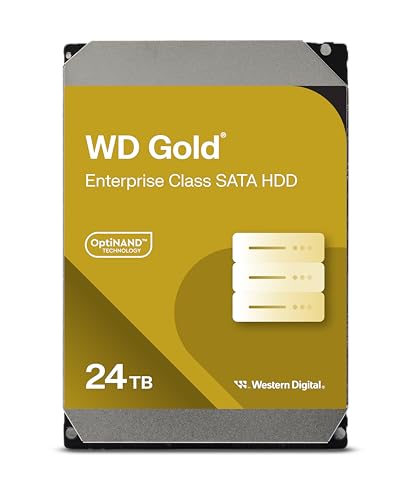
A WD Gold 24TB offer can become interesting when enterprise SATA inventory is priced more aggressively than Red Pro. The Smart Alternatives section is meant to reveal that market condition, but the technical fit must still be checked. Confirm the exact Gold model, interface, host support and warranty channel before treating a lower price as a substitute for WD241KFGX.
For buyers using general-purpose servers, workstations or storage platforms without a narrow NAS compatibility list, that cross-family option can be valuable. For a vendor NAS with validated drive lists, the economic saving may not outweigh support requirements. Cloudzat surfaces the price difference; the deployment rules determine whether you can act on it.
Ultrastar HC590 24TB is a different kind of alternative
The 24TB HC590 is designed for data-center use, so its presence in a price comparison should be treated as an enterprise alternative rather than a drop-in NAS recommendation. If you operate a server or storage platform that supports the exact interface and model, a competitive HC590 price can change the economics of the 24TB tier. If you are buying for a consumer NAS, compatibility and acoustic or operational expectations may matter more than the headline $/TB.
The comparison is still useful because it shows what the broader high-capacity WD market is doing. A divergence between Red Pro and Ultrastar prices can signal family-specific inventory pressure. That context helps explain whether WD241KFGX itself looks expensive or whether the entire 24TB market has moved.
Check seller, variation and quantity before ordering several 24TB drives
A high-capacity NAS order can be several thousand dollars, so verify the final marketplace state after following the Amazon button. Confirm that 24TB and WD241KFGX remain selected, the condition is New, the seller is acceptable and the quantity you need is available at the displayed price. Marketplace pages can change selected variants or seller offers between Cloudzat updates, and a large order makes even a small mismatch costly.
On receipt, inspect the label and retain purchase records. If the array is being built in phases, note which serial numbers were installed together and the date each batch entered service. These basic procurement records make warranty and replacement work easier later and let you compare future purchases with the original price-intelligence history.
A 24TB buying plan should include the next expansion, not only today’s fill
Before purchasing WD241KFGX, decide whether the current order is the final population of the NAS or the first stage of a larger plan. If more bays will be filled later, a price threshold for the second batch can be set now. That prevents a future expansion from becoming an unplanned purchase at whatever price happens to be available. The same history page can act as the comparison for subsequent orders.
If the market changes significantly, keep the architecture flexible. A future 26TB promotion might make the next enclosure more attractive than continuing with 24TB, while a strong 20TB discount could favor a lower-density archive tier. Price intelligence should support those decisions without forcing every future purchase to repeat the first one.
Build a 24TB purchase threshold around the array, not the single drive
A useful WD241KFGX target should be expressed as both a unit price and a complete-array budget. Start with the number of drives the project requires, add any spare you intend to hold, and set the maximum landed hardware spend before opening the marketplace. Then convert that total back into a per-drive ceiling. When Cloudzat shows a mature median and recorded low, you can judge whether the ceiling is realistic. This prevents a buyer from seeing one discounted drive, mentally labeling the whole project a bargain, and then discovering that the required quantity is offered by a different seller or at a higher effective price.
The threshold can also include a density premium. Decide how much extra you would pay over the 20TB build to gain four more terabytes in every bay. If the live 24TB premium falls inside that amount, the higher-density build is economically justified by your own plan. If it exceeds the amount, the cheaper capacity remains defensible. This approach makes WD241KFGX valuable when it solves a real space constraint and keeps it from becoming an automatic upgrade simply because it sits in the middle of the high-capacity range.
Questions people ask
WD Red Pro 24TB FAQs
What model number is the WD Red Pro 24TB (WD241KFGX)?
This page targets WD241KFGX. Verify that exact model on the Amazon variation and the physical label before treating another 24TB listing as equivalent.
How is the WD Red Pro 24TB (WD241KFGX) price per TB calculated?
Cloudzat divides the current new-drive price by 24. The $/TB figure appears only when a current price is available.
What does an Early Deal Score mean?
It means the price history is still short, so the BUY/WATCH/WAIT signal is intentionally cautious. Use today’s $/TB and nearby WD alternatives alongside the score until the trend becomes deeper.
Can a matching drive appear when no current price is available?
Yes. If a positive Amazon price was previously verified, Cloudzat keeps that last verified price visible with its verification age and keeps the Buy on Amazon CTA. A failed or overdue refresh does not erase it.
Does the historical low include renewed or used drives?
No. The main Deal Score compares new-drive prices. Renewed, recertified, refurbished and used offers are kept separate from the new-drive history.
Should I wait for the lowest possible price?
Not necessarily. If the purchase is urgent, exact availability can matter more. If it is discretionary, a mature WATCH or WAIT signal gives you a reason to delay and compare alternatives.
Price methodology & sources
How Cloudzat compares WD prices
Cloudzat matches WD offers by family, capacity and model number before including them. Price per TB is the current new-drive price divided by capacity. Price history uses the prices Cloudzat has tracked over time, while renewed, recertified, refurbished and used drives are kept separate from new-drive comparisons.
The Deal Score combines current price per TB with the available price history. When history is limited, the signal stays conservative. The score is a purchase-timing aid, not a reliability rating or compatibility guarantee.
If a newer Amazon check does not return a replacement price, Cloudzat can keep the last successfully verified price visible with its age for reference. Always confirm the live checkout price, selected model, capacity, seller and condition before ordering.