


Canada · CAD · Deal Watch
Proxmox RAM Black Friday Deals Canada 2026: What to Buy
Put Proxmox memory on your Black Friday shortlist and look for the kit that adds usable capacity to the machine you own.
Check DDR generation, form factor, ECC requirements and the supported module arrangement. Compare like-for-like kits rather than treating equal total capacity as proof of compatibility. Check recent prices for the exact compatible kit. A worthwhile Black Friday reduction buys usable installed capacity, with the seller and return terms still part of the comparison.
Choose a Crucial DDR5 SO-DIMM kit for a mini PC that specifically uses replaceable DDR5 SO-DIMMs. Choose Kingston Server Premier ECC UDIMM only for a platform that supports that exact memory type. These are different module formats and are not substitutes for one another.
Which Proxmox RAM option should you choose?
Start here
Crucial DDR5 SO-DIMM Kit
Choose it for a mini PC requiring replaceable DDR5 laptop-format memory.
Buy on AmazonChoose this alternative
Kingston Server Premier ECC UDIMM
Choose it for a platform explicitly supporting the exact ECC module type.
Find this configurationCurrent Proxmox RAM Listings on Amazon
Black Friday sale dates and offer timing
Dates for 2026: Black Friday — November 27; Amazon.ca — November 19–30. Individual offer periods and eligibility vary.

Crucial 64GB DDR5 RAM, 5600MHz (or 5200MHz or 4800MHz) Laptop Memory Kit, SODIMM 262-Pin, Compatible with 13th Gen Intel Core and AMD Ryzen 6000 - CT2K32G56C46S5
Last verified 2026-11-14 13:49:31 UTC

Crucial 64GB DDR5 RAM Kit (2x32GB), 4800MHz CL40 Laptop Memory - SODIMM 262-Pin - Compatible with 12th Intel Core - CT2K32G48C40S5
Last verified 2026-11-14 13:49:31 UTC

CORSAIR Vengeance SODIMM DDR5 RAM 64GB (2x32GB) Up to 5600MHz CL48 Intel XMP iCUE Compatible Computer Memory - Black (CMSX64GX5M2A5600C48)
Last verified 2026-11-14 13:49:31 UTC

Timetec 64GB KIT (2x32GB) DDR5 5600MHz (PC5-5600) PC5-44800 SODIMM Laptop RAM – 262-Pin 1.1V CL46 Non-ECC Unbuffered Memory Module for Laptop, Notebook, Mini PC, All-in-One
Last verified 2026-11-14 13:49:31 UTC

【DDR5 RAM】 GIGASTONE 64GB Kit (2x32GB) DDR5 5600MHz PC5-44800 CL 46-46-46-90 1.1V SODIMM 262 Pin Unbuffered Non ECC High Performance Notebook Laptop Memory Upgrade- Laptop Only
Last verified 2026-11-14 13:49:31 UTC

DATO DDR5 UDIMM 64GB Kit 32GBx2 Desktop RAM 5600MHz PC5-44800 CL46 1.1V 288-Pin Non-ECC unbuffered dimm, Desktop Memory Module
Last verified 2026-11-14 13:49:31 UTC

TEAMGROUP T-Force Vulcan Alpha DDR5 Ram 64GB Kit (2x32GB) 6000MHz (PC5-48000) CL38 Desktop Memory Module Ram Compatible with AMD Expo&AMD Optimized Memory Red FLARD564G6000HC38JDC01
Last verified 2026-11-14 13:49:31 UTC
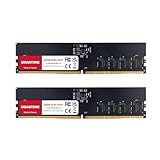
【DDR5 RAM】 GIGASTONE 64GB Kit (2x32GB) DDR5 5600MHz PC5-44800 CL 46-46-46-90 1.1V UDIMM 288 Pin Unbuffered Non ECC High Performance PC Desktop Memory Upgrade
Last verified 2026-11-14 13:49:31 UTC
As an Amazon Associate, Cloudzat earns from qualifying purchases. Prices and availability can change; Amazon shows the final price for your chosen item.
Proxmox RAM buying guide
| Choice | Best for |
|---|---|
| Crucial DDR5 SO-DIMM Kit | a mini PC requiring replaceable DDR5 laptop-format memory |
| Kingston Server Premier ECC UDIMM | a platform explicitly supporting the exact ECC module type |
Which Proxmox RAM option should you choose?
For a mini PC requiring replaceable DDR5 laptop-format memory, choose Crucial DDR5 SO-DIMM Kit.
For a platform explicitly supporting the exact ECC module type, choose Kingston Server Premier ECC UDIMM.
Memory planning begins with active guests
Count the guests that need to be resident at the same time, then add their realistic memory allocations rather than the absolute maximum every VM could theoretically consume. Infrastructure services can be modest, while database, Windows, analytics and AI workloads can absorb tens of gigabytes each. Add host overhead and leave headroom for spikes. That approach produces a capacity target that can be compared with Black Friday kits without turning the calculation into guesswork.
For many serious home labs, 64GB lands in a useful middle ground. It supports meaningful consolidation while remaining widely available in two-module kits. A 96GB or 128GB target becomes more defensible when guest density is high or the system must carry extra workloads during cluster maintenance.
DDR4 and DDR5 are not interchangeable
A lower-priced DDR4 kit cannot replace DDR5 in a platform designed for DDR5, and the reverse is equally true. This sounds obvious, yet marketplace searches often group capacities without respecting generation.
Frequency is secondary to compatibility for this use case. A virtualization host benefits more from stable supported capacity than from buying a very fast kit that the platform downclocks or refuses to train. Check the vendor memory support guidance and BIOS requirements for high-density modules before ordering.
SODIMM, UDIMM and RDIMM define the physical path
Mini PCs commonly use SODIMM, consumer towers often use UDIMM, and server platforms may use RDIMM. These are not simply different names for the same memory. A 128GB RDIMM kit can be an excellent high-value purchase for the right server and completely useless for a compact two-SODIMM node.
Before checkout, confirm both the host slot type and the exact module organization. The number of modules matters because a platform with two slots cannot use a four-stick kit without leaving memory unused.
ECC requires end-to-end support
ECC can improve resilience on platforms that actually implement it, but the DIMM label is only one part of the chain. Processor memory controller, motherboard traces, firmware and module type all matter. Some systems accept ECC-capable modules while operating them without error correction, and others distinguish unbuffered ECC from registered memory.
If ECC is a requirement for your Proxmox design, verify the exact CPU and board documentation before treating a Black Friday ECC kit as compatible.
ZFS changes the memory conversation without creating a magic ratio
ZFS benefits from memory for ARC and metadata, but simplistic fixed ratios can produce poor buying decisions. A storage-heavy Proxmox machine can justify more RAM than a compute-only node, yet that does not mean every terabyte of disk automatically creates the same memory requirement.
Use the planner to reserve space for guests first and then leave sensible host and storage headroom. The Black Friday opportunity is to buy enough capacity for the planned workload, not to satisfy a folklore formula.
Clusters need spare memory, not just equal memory
Three identical 64GB nodes create consistency, but high availability becomes difficult if every node is already using almost all 64GB. When one host is down, important guests need somewhere to restart. That can make 96GB or 128GB per node a strategic purchase even when normal operation appears comfortable at a lower figure.
Because cluster memory is multiplied across three nodes, Black Friday savings can become substantial. Compare total kit cost across the entire cluster and confirm that the same memory configuration is available for all nodes before standardizing around a sale SKU.
High-capacity kits can reduce slot pressure
A two-module 96GB or 128GB kit can preserve expansion flexibility on platforms with limited slots and avoid mixing later upgrades. The price per gigabyte may be higher than a smaller kit, but the system-level value can be better when replacing smaller modules later would otherwise create wasted hardware.
Check whether the platform firmware supports 48GB or 64GB module densities. High-density DDR5 support has improved, but model-specific validation still matters. Black Friday is a good time to move up a density tier only when the host can actually use it.
Do not compare server memory with laptop memory by price alone
A broad 64GB search can surface inexpensive SODIMM, UDIMM and registered server memory on the same screen. Their prices reflect different markets and electrical designs, so a single ranking by dollars per gigabyte is misleading.
Price history is especially useful for commodity memory
RAM pricing can move well before a major sales event. A Black Friday badge may appear after a kit has already been selling at a similar price for weeks.
That keeps later regular-price changes from rewriting the historical comparison. The shopper still needs to confirm capacity and variation on Amazon because memory listings frequently group multiple kit sizes under one product family.
Buy memory only after the platform is final
The dependency order for a Proxmox build is simple: choose host architecture, verify memory type and ceiling, then purchase the kit. This prevents the most common Black Friday compatibility mistake and makes the sale comparison meaningful. After memory is selected, storage and networking can be sized around the same workload plan.
If a host ships with adequate memory, do not upgrade merely because a kit is discounted. Additional capacity should unlock a real use: more guests, safer failover, larger caches or future services. Unused RAM bought because it was on sale is still unused capital.
Plan the guests and the recovery procedure together
Add the memory required by the host and the guests that will run at the same time. Leave room for filesystem cache, updates and a useful operating margin. More cores do not remove a memory limit, and optimistic overcommitment can leave an otherwise capable lab difficult to use. Choose a configuration that fits the current guest set and a realistic amount of growth.
Keep backups on storage that remains available when the host fails. A snapshot on the same drive is useful for some changes, but it does not recover the host after losing that drive. Test the restoration of at least one important guest before relying on the setup. A simple recovery path can matter more than a small saving on a less suitable host.
Match memory and storage to the actual host
DDR4, DDR5, SO-DIMM, UDIMM and RDIMM are different purchasing requirements. ECC support also depends on the complete platform rather than the module label alone. Use the host documentation and a suitable compatibility list before buying a discounted memory kit. A module that physically resembles another module is not necessarily electrically or operationally interchangeable.
For NVMe storage, consider write activity, endurance, cooling and the consequences of an unexpected power loss. A consumer drive can be suitable for a modest lab; a workload with stricter durability and availability requirements may justify enterprise storage with documented power-loss protection. Keep a usable backup regardless of the drive tier.
Buying Proxmox RAM in Canada
For Proxmox RAM in Canada, begin with Crucial DDR5 SO-DIMM Kit for a mini PC requiring replaceable DDR5 laptop-format memory. Compare Kingston Server Premier ECC UDIMM when a platform explicitly supporting the exact ECC module type is the more useful choice. The Amazon links and prices on this page use Amazon Canada and Canadian dollars. Add delivery and any required components to the amount you are comfortable paying. For a model family with several configurations, use the model name and the installed components together when comparing these two choices. Keep the seller’s order details so you can check that the hardware you receive is the version you chose.
Electricity cost calculator
Replace the example values with your own measurements, capacity or prices.
Questions buyers ask
Which Proxmox RAM option should I choose?
Choose Crucial DDR5 SO-DIMM Kit for a mini PC requiring replaceable DDR5 laptop-format memory. Choose Kingston Server Premier ECC UDIMM for a platform explicitly supporting the exact ECC module type.
Is 64GB RAM good for Proxmox?
Yes. It is a strong general-purpose tier for many mixed labs, though dense VMs, ZFS-heavy workloads and failover targets can justify more.
Can I use laptop SODIMM in a server?
Only if the server platform is designed for that form factor. Many towers use UDIMM or RDIMM instead, so verify the slot type.
Is ECC RAM required for Proxmox?
No, but it can be desirable on supported platforms. The entire CPU, motherboard, firmware and DIMM path must support the intended ECC mode.
Should a three-node cluster have the same RAM per node?
Matched capacity simplifies scheduling and failover planning. More important, leave enough spare memory that critical guests can run when a node is unavailable.
Related buying guides
- Proxmox Hardware buying guide
- Proxmox Mini PC buying guide
- Proxmox Server buying guide
- Proxmox NVMe SSD buying guide
- Proxmox 10GbE buying guide
- Proxmox Cluster buying guide
- DDR4 desktop RAM
- DDR5 desktop RAM
- DDR4 SO-DIMM RAM
- DDR5 6000 CL30 kits
- DDR5 64GB kits
- DDR5 96GB kits
- ECC UDIMM memory
- ECC RDIMM memory
- DDR5 CUDIMM memory
- Kingston FURY Beast
- Kingston FURY Impact
- Kingston FURY Renegade RAM
- Corsair Vengeance RAM
- Corsair Dominator Titanium
- G.Skill Flare X5
- G.Skill Trident Z5
- G.Skill Ripjaws S5
- TeamGroup T-Force RAM
- Synology RAM upgrades
- UGREEN NAS RAM upgrades
- Desktop RAM
- DDR5 SO-DIMM RAM