


Canada · CAD · Deal Watch
Proxmox Cluster Black Friday Deals Canada 2026: What to Buy
Bring your Proxmox cluster plans closer this Black Friday with complete node costs and a clear network and storage design.
Compare memory and storage across the intended nodes, then add network and backup costs. Extra machines introduce their own power, maintenance and recovery requirements. Set a recent-price baseline for the whole build before Black Friday. Buy when the combined offers reduce that useful setup’s cost, rather than shifting the budget into unnecessary extras.
Compare matched MINISFORUM MS-01 nodes for a network-focused compact lab and AI X1 Pro nodes for an expandable-memory approach. Choose the node after deciding how guests will be stored and backed up. Several cheap computers do not automatically create a reliable high-availability installation.
Which Proxmox Cluster option should you choose?
Start here
MINISFORUM MS-01
Choose it for matched compact nodes with the necessary network links.
Find this configurationChoose this alternative
MINISFORUM AI X1 Pro
Choose it for matched expandable-memory nodes with an independently planned cluster network.
Buy on AmazonCurrent Proxmox Cluster Listings on Amazon
Black Friday sale dates and offer timing
Dates for 2026: Black Friday — November 27; Amazon.ca — November 19–30. Individual offer periods and eligibility vary.

MINISFORUM AI X1 Pro-470 Mini PC, AMD Ryzen AI 9 HX470 (12C/24T, up to 5.2 GHz), Radeon 890M, 32 GB DDR5 RAM, 1 TB PCIe 4.0 SSD, 4K Quad-Display, Dual 2,5G LAN, Wi-Fi 7, Bluetooth 5.4, OCuLink
32GB RAM
Last verified 2026-11-13 09:57:36 UTC
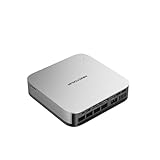
MINISFORUM X1 Pro Mini PC, AMD Ryzen AI 9 HX 370 Processor with 12 Core up to 5.1 GHz, AMD Radeon 890M, 32GB DDR5/1TB SSD, HDMI/DP/USB4 x 2, USB 3.2 x 4, 2.5G RJ45 x 2, WiFi 7, BT5.4
32GB RAM · 1TB SSD
Last verified 2026-11-13 07:00:26 UTC

MINISFORUM X1 Pro 370 Mini PC with AMD Ryzen AI 9 HX370, Radeon 890M Graphics, 32GB RAM 1TB SSD, 2x5G RJ45 Port|WiFi7|BT5.4, HDMI/DP/2xUSB4 Video Output, Copilot Support AI Mini Computer
32GB RAM · 1TB SSD
Last verified 2026-11-13 03:23:25 UTC

MINISFORUM NAB9S Mini PC, Intel Core i9-13900HK (14C/20T, Up to 5.4GHz), 32GB DDR4, 1TB PCIe 4.0 SSD, Quad 4K Display, Dual 2.5GbE LAN, Wi-Fi 6, BT 5.2
32GB RAM
Last verified 2026-11-13 09:57:36 UTC
MINISFORUM NAB9S Mini PC, Intel Core i9-13900HK (14C/20T, Up to 5.4GHz), 16GB DDR4, 500GB PCIe 4.0 SSD, Quad 4K Display, Dual 2.5GbE LAN, Wi-Fi 6, BT 5.2
16GB RAM
Last verified 2026-11-13 09:57:36 UTC

Beelink SER8 Mini PC AMD Ryzen 7 8845HS(Max 5.1GHz), 32GB DDR5 1TB PCIE4.0 SSD Mini Computer, AMD Radeon 780M Graphics 12 core 2700MHz Gaming PC,Triple Display USB4/DP/HDMI, 2.5G LAN Micro PC
32GB RAM
Last verified 2026-11-13 09:57:36 UTC

MSECORE Mini PC i9, 64GB RAM 1T SSD Desktop Computer with i9-9880H (up to 4.8 GHz), 2*HD, 1*DP, Triple Display, Dual 2.5G LAN, Optical, Wi-Fi 6e, 4K@60Hz, Windows 11 Pro
64GB RAM
Last verified 2026-11-13 09:57:36 UTC

MINISFORUM Mini PC Venus UM790 Pro AMD Ryzen 9 7940HS up to 5.2 GHz 32 GB DDR5 1TB SSD with AMD Radeon 780M, 4X USB3.2, 2X USB4, 2xHDMI 2.1, 2X PCIe4.0, Wi-Fi 6E/BT5.3, RJ45 2.5 G
32GB RAM · 1TB SSD
Last verified 2026-11-13 09:57:36 UTC
As an Amazon Associate, Cloudzat earns from qualifying purchases. Prices and availability can change; Amazon shows the final price for your chosen item.
Proxmox Cluster buying guide
| Choice | Best for |
|---|---|
| MINISFORUM MS-01 | matched compact nodes with the necessary network links |
| MINISFORUM AI X1 Pro | matched expandable-memory nodes with an independently planned cluster network |
Which Proxmox Cluster option should you choose?
For matched compact nodes with the necessary network links, choose MINISFORUM MS-01.
For matched expandable-memory nodes with an independently planned cluster network, choose MINISFORUM AI X1 Pro.
Three purchases make configuration consistency valuable
A cluster repeats every difference. Matched node models simplify spare parts, firmware, memory upgrades, network configuration and capacity planning. That consistency is why a three-node Black Friday purchase can have more value than assembling three unrelated bargains.
Amazon variation pages can still produce mismatched internals under the same family name. Confirm the selected RAM, storage and network configuration for all three quantities.
Plan for the node that is missing
High availability is useful only when the surviving infrastructure has enough resources to run the workloads that matter. If three 64GB nodes normally consume nearly all available memory, losing one host can leave nowhere to restart critical VMs. Capacity planning should therefore include the degraded state, not just normal balanced operation.
This requirement can make 96GB or 128GB nodes a higher-value purchase even when each node appears underutilized on an ordinary day. The extra memory is spare capacity for failures and maintenance headroom, not necessarily wasted capacity.
Quorum is not the same as application resilience
A three-node cluster provides a useful quorum shape, but quorum alone does not guarantee that guest storage, network services or applications survive a failure. The architecture still needs a storage strategy, backup copies and correct restart behavior. Black Friday shopping should not compress those design questions into the simple phrase three identical PCs.
Local storage multiplies quickly across nodes
A 2TB NVMe recommendation sounds modest until it is repeated across three nodes; a mirrored 4TB design can require six drives. That multiplication is exactly why a seasonal sale can create meaningful savings. It is also why capacity and interface mistakes become expensive. Decide whether storage is local, replicated or shared before purchasing a large batch of drives.
For local ZFS or replication, consistent drive classes simplify expectations. For shared storage, the cluster nodes may need less local capacity but more network bandwidth. The decision tool keeps storage and network inputs together because changing one can alter the other.
10GbE can be a cluster-wide purchase
Three 10GbE host links usually imply at least three compatible NIC/ports plus a switch and media. When migration, backup or distributed storage is important, that fabric can materially improve the speed of those jobs. The Black Friday saving should therefore be calculated on the entire network, not on a single NIC card.
If 2.5GbE meets the workload, keeping it can preserve budget for memory or storage that delivers more value. Faster networking is not a status symbol; it is an answer to measured or expected east-west traffic.
Backups stay outside the cluster failure domain
A cluster is not a backup. Replication or shared storage can protect availability while still propagating deletion, corruption or configuration mistakes. Budget an independent Proxmox Backup Server, NAS or other repository according to the recovery plan. That separate target may also need multi-gig networking and UPS protection.
Black Friday can be useful for purchasing the backup target in the same period, but keep the roles distinct in the design. The cluster should remain recoverable even when the failure affects more than one compute node.
Power protection should cover the infrastructure path
Three efficient nodes may each draw little power, yet the combined cluster, switch and storage target can create a meaningful UPS load. A shutdown plan that protects only one node may not preserve quorum or storage availability long enough to complete clean operations. Measure the devices that actually need continuity.
UPS runtime is based on watt load and battery characteristics, not the VA label alone. If a Black Friday UPS deal is added to the setup, verify the manufacturer runtime data at the expected combined load.
Standardization can justify a premium model
A premium mini PC or compact server with a higher memory ceiling and better NIC may look expensive compared with an entry node. Across a cluster, however, avoiding three separate upgrades and preserving a consistent topology can offset part of that premium. The right unit of comparison is deployed per-node cost and useful lifetime.
The goal is not to maximize purchase price for its own sake; it is to surface nodes that can remain useful as the cluster grows.
Use price history before multiplying the order quantity
Ordering three units magnifies a mistaken sale claim. A CA$50 difference between the event price and the true recent market becomes CA$150 across the cluster.
Add the cost of every cluster node and connection
List three nodes, per-node memory, per-node storage, NICs, switch ports, media, backup target and power protection. Mark which components are mandatory at initial deployment and which can be added later. That simple exercise turns Black Friday browsing into a procurement plan and makes it easier to spot when a cheap component creates an incompatible branch.
Calculate both the normal-price setup and the event setup. A cluster sale is successful when it reduces the cost of a coherent deployment, not when it merely accumulates the largest number of discount badges.
Plan the guests and the recovery procedure together
Add the memory required by the host and the guests that will run at the same time. Leave room for filesystem cache, updates and a useful operating margin. More cores do not remove a memory limit, and optimistic overcommitment can leave an otherwise capable lab difficult to use. Choose a configuration that fits the current guest set and a realistic amount of growth.
Keep backups on storage that remains available when the host fails. A snapshot on the same drive is useful for some changes, but it does not recover the host after losing that drive. Test the restoration of at least one important guest before relying on the setup. A simple recovery path can matter more than a small saving on a less suitable host.
Match memory and storage to the actual host
DDR4, DDR5, SO-DIMM, UDIMM and RDIMM are different purchasing requirements. ECC support also depends on the complete platform rather than the module label alone. Use the host documentation and a suitable compatibility list before buying a discounted memory kit. A module that physically resembles another module is not necessarily electrically or operationally interchangeable.
For NVMe storage, consider write activity, endurance, cooling and the consequences of an unexpected power loss. A consumer drive can be suitable for a modest lab; a workload with stricter durability and availability requirements may justify enterprise storage with documented power-loss protection. Keep a usable backup regardless of the drive tier.
Buying Proxmox Cluster in Canada
For Proxmox Cluster in Canada, begin with MINISFORUM MS-01 for matched compact nodes with the necessary network links. Compare MINISFORUM AI X1 Pro when matched expandable-memory nodes with an independently planned cluster network is the more useful choice. The Amazon links and prices on this page use Amazon Canada and Canadian dollars. Add delivery and any required components to the amount you are comfortable paying. For a model family with several configurations, use the model name and the installed components together when comparing these two choices. Keep the seller’s order details so you can check that the hardware you receive is the version you chose.
Electricity cost calculator
Replace the example values with your own measurements, capacity or prices.
Questions buyers ask
Which Proxmox Cluster option should I choose?
Choose MINISFORUM MS-01 for matched compact nodes with the necessary network links. Choose MINISFORUM AI X1 Pro for matched expandable-memory nodes with an independently planned cluster network.
Why does Proxmox clustering often use three nodes?
Three nodes provide a practical quorum shape for many labs, but actual HA, storage and failure design still needs to be planned.
How much RAM should each cluster node have?
64GB is a useful serious-lab baseline; 96GB or 128GB can provide more density and failover headroom when workloads are memory-heavy.
Do all cluster nodes need to be identical?
No, but matching hardware simplifies capacity planning, maintenance and troubleshooting. Black Friday makes standardized bulk purchasing more attractive.
Is 10GbE required for a Proxmox cluster?
No. It is valuable when migration, backups or replicated/shared storage need more bandwidth. Smaller clusters can work well on 2.5GbE.