


Cloudzat Storage Price Forecast · August 12, 2026
Server RAM is the strongest upward-pressure category in this Sprint because current AI/server demand continues to constrain DRAM supply.
Quick answer
Current forecast signal
TrendForce expected server DRAM contract prices to rise again in 3Q26 and described 2027 supply as structurally tight.
Scenario range
30, 90 and 180-day outlook
Market assumptions reviewed 2026-08-12 · Confidence: medium-high
Interactive forecast
Server RAM Budget Forecast
Enter the real price you are considering. The result uses a scenario range and confidence grade; it does not claim to know a future retailer price or sale date.
Amazon price evidence
Compare exact products and verified prices
3 matching listingsCompact exact-product rows keep model, capacity, price and the Amazon purchase action visible together. Confirm the final checkout price and seller on Amazon.

Kingston · Server Premier
Kingston KSM26RS4/16MEI Server Premier - DDR4-16 GB - DIMM 288-pin - 2666 MHz / PC4-21300 - CL19-1.2 V - Registered - ECC
Kingston · Server Premier
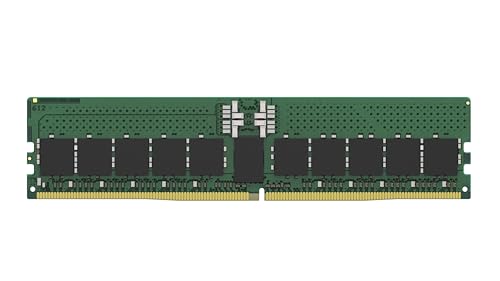
Kingston DDR5 32GB PC 5600 CL46 Server Premier ECC Hynix A Retail

Micron Micron DDR5 RDIMM
96GB DDR5 6400MHz PC5-51200 2Rx4 1.1V CL52 288-PIN ECC Registered RDIMM NEMIX RAM Server Memory Compatible with Micron MTC40F204WS1RC64BC1R
Buying decision
Buy now, wait, or watch?
For a committed server deployment, qualified memory availability matters as much as theoretical savings; delay only when the project itself is flexible.
Detailed guide
Server RAM Price Forecast buying guide
Use these sections to understand the market signal, compare value and decide how much weight to place on waiting.
What the current market is signaling
Server RAM carries the clearest upward signal in this Sprint. TrendForce's July 2026 server DRAM material described a tight seller's market, projected further 3Q26 contract-price increases and warned that 2027 server DRAM bit-supply growth could lag platform demand. That creates a very different timing environment from ordinary historical memory deflation.
Server memory has the strongest upward baseline in this Sprint because current DRAM supply is being pulled toward AI and server workloads. TrendForce's 2026 outlook still described a tight seller's market into the third quarter. That makes the old habit of waiting for routine DRAM deflation much less reliable for infrastructure buyers.
The upstream cost driver behind server RAM
The upstream driver is capacity allocation. DRAM manufacturers are prioritizing HBM and server-related products because AI infrastructure is consuming a growing share of advanced memory output. RDIMM availability therefore reflects both ordinary server demand and the opportunity cost of wafer capacity used elsewhere.
RDIMM pricing is influenced by more than ordinary consumer DDR5 supply. Server-grade qualification, ECC architecture, rank configuration and platform demand sit on top of the DRAM component market. Supplier allocation toward HBM and data-center products can keep module pricing firm even when desktop memory promotions appear elsewhere.
Why retail prices can diverge from the industry trend
Street pricing can lag contract changes because distributors carry inventory and large customers may have long-term agreements. A module on Amazon can remain unchanged for weeks and then reprice sharply when replacement inventory arrives at a higher cost.
Contract pricing usually reaches retail and distribution with a lag. A reseller may still hold lower-cost inventory while the upstream market has already reset, or may reprice quickly when replacement cost rises. Cloudzat therefore treats current module offers as evidence of channel reality rather than assuming the contract forecast is already fully reflected.
How capacity changes the forecast
Capacity per module matters because 32GB, 48GB, 64GB, 96GB and higher-capacity RDIMMs do not share identical supply or platform demand. The price premium per gigabyte can change as server CPU memory-channel configurations and workload needs shift.
Module capacity matters because 48GB, 64GB and 96GB RDIMMs do not share identical demand or bill-of-material economics. A virtualization host needing eight 64GB modules faces a different budget from a system designed around four 96GB modules. The forecast keeps capacity and quantity explicit before estimating total project exposure.
What current price history can and cannot prove
Cloudzat history must stay attached to exact module part numbers. A Kingston 64GB 5600MT/s RDIMM is not interchangeable in the price series with a 64GB desktop UDIMM, and a Micron 96GB 6400 RDIMM belongs to a different density and speed tier.
Exact identities such as KSM56R46BD4-64HA, MTC20F104XS1RC56BR and MTC40F204WS1RC64BC1R are tracked separately. This avoids mixing a Kingston 64GB DDR5-5600 RDIMM with Micron 48GB or 96GB parts simply because all listings contain 'server DDR5'. Clean model history is essential when each module can be expensive.
The right way to use dollars per gigabyte as a benchmark
Dollars per gigabyte is useful for budget forecasting, especially across a multi-DIMM deployment. However, rank, speed, ECC type, registered versus unbuffered architecture and platform qualification come before unit cost.
Price per gigabyte is useful for server memory only after platform compatibility is satisfied. Rank, speed, ECC type and RDIMM versus LRDIMM or UDIMM support can determine whether a module will POST. The tool calculates unit economics inside the compatible configuration instead of encouraging cross-class comparisons that cannot be deployed.
When buying now is rational
Buying now is rational when a server expansion is scheduled, the exact module is qualified and current pricing fits the project budget. In a tight market, postponing a committed deployment can create both higher acquisition cost and availability risk.
Buying now becomes more compelling when a server rollout, cluster expansion or capacity requirement is scheduled and the forecast band is positive. Multiplying even a modest per-module increase across eight, sixteen or more DIMMs can create a meaningful budget risk. The calculator therefore shows both module-level and project-level exposure.
When waiting has a real expected payoff
Waiting can make sense when the server build is speculative, platform compatibility is not finalized or the user expects a CPU generation change. The forecast is not a reason to stockpile incompatible memory simply because contract prices are rising.
Waiting is least attractive in a persistent tight-supply scenario unless the deployment itself can be postponed or redesigned. A buyer may still wait for validated higher-density modules, but the decision should be based on architecture rather than an assumption that identical RDIMMs will soon revert to last year's prices.
How promotions distort short-term forecasts
Server memory promotions are less predictable than consumer gaming RAM deals. Distributor allocations, volume discounts and OEM-specific kits can matter more than holiday sales, so the forecast focuses on budget exposure rather than expecting a particular retail event.
Server RAM promotions are less predictable than consumer gaming-memory sales. Distributor quotes, enterprise contracts and OEM channels matter more, and a marketplace listing may represent a tray or seller-specific opportunity. Cloudzat records the exact retail offer but gives the market signal more weight than a one-day coupon when confidence is high.
Compatibility and product identity before price
Compatibility errors are expensive at server scale. The page requires users to identify DDR generation, module type, capacity and platform support before comparing price. On-die ECC in ordinary DDR5 is not the same thing as module-level ECC behavior in server RDIMMs.
Compatibility is especially strict. A server can require a particular DDR generation, supported speed, rank topology and registered-memory type, and mixing modules can reduce speed or fail validation. The forecast page makes users confirm the required module class before it interprets a lower price as a buying opportunity.
Risk factors that can break the forecast
The forecast can break if major capacity expansion arrives earlier, AI infrastructure demand slows abruptly or buyers push back hard enough to change contract negotiations. The opposite risk is further allocation tightness that exceeds today's upward range.
The largest forecast downside risk would be faster capacity expansion or weaker AI/server demand than currently expected. The upside risk is continued allocation tightness extending into 2027. Because the current supplier commentary points in one direction more clearly than the HDD market, server-RAM confidence is intentionally higher.
Practical forecast for server-memory planner
For infrastructure planners, the current base case favors securing known-good server memory for committed deployments rather than waiting for the old deflation pattern to return. The calculator converts the scenario into a total project-budget range across the number of modules required.
For an infrastructure budget, the useful question is the cost of the whole planned population. The tool multiplies the current module price by quantity, applies the selected horizon's range and shows the potential budget penalty of waiting. That makes the forecast actionable for procurement rather than merely reporting a percentage trend.
Price forecast questions
Server RAM Price Forecast FAQs
Are server RAM prices expected to keep rising?
The current industry outlook remains upward, especially for server DRAM, though retail timing can lag contract changes.
Why is server RAM different from desktop RAM?
Registered ECC modules, platform qualification, rank and capacity mix create a different procurement market.
Should I buy extra RDIMMs now?
Only if they are known-good parts for a planned deployment. Forecast pressure is not a reason to stockpile incompatible memory.
What is the most useful server RAM metric?
Total project cost matters, while dollars per GB helps compare qualified capacity options.
Can DDR5 on-die ECC replace server ECC?
No. On-die ECC at the chip level should not be confused with the module-level ECC architecture used by server memory.
Why can Amazon prices lag industry increases?
Retail and distribution inventory may have been purchased before the latest contract repricing.
Does the calculator handle multiple modules?
Yes. It projects the total budget range using module price and quantity.
What could make prices fall sooner?
Faster supply expansion, weaker AI/server demand or aggressive buyer resistance could change the cycle.
How is compatibility handled?
The page emphasizes exact part numbers and platform qualification before comparing price.
When was this forecast reviewed?
August 12, 2026.
Sources and methodology
How this forecast is built
Server RAM uses the current server DRAM contract outlook as the strongest market input in this Sprint. Retail exact-model history is still required before Cloudzat labels a local trend as observed rather than inferred.
- TrendForce July 2026 server DRAM bulletin
- TrendForce 2Q26 memory outlook
- Kingston DDR5-5600 ECC RDIMM family
- Micron server DDR5 catalogue
Forecast ranges are scenarios, not guaranteed future prices. Marketplace prices can change after Cloudzat verifies them, so use the Amazon checkout page to confirm the final price, seller and availability before buying. As an Amazon Associate, Cloudzat may earn from qualifying purchases.