


Cloudzat Storage Price Forecast · August 12, 2026
Hard-drive prices are increasingly shaped by high-capacity data-center demand and platform transitions rather than a simple annual decline.
Quick answer
Current forecast signal
The near-term HDD signal is mixed: high-capacity demand is firm, but retail clearances can still create sharp model-specific discounts.
Scenario range
30, 90 and 180-day outlook
Market assumptions reviewed 2026-08-12 · Confidence: medium-low
Interactive forecast
Hard Drive Price-per-TB Forecast
Enter the real price you are considering. The result uses a scenario range and confidence grade; it does not claim to know a future retailer price or sale date.
Amazon price evidence
Compare exact products and verified prices
12 matching listingsCompact exact-product rows keep model, capacity, price and the Amazon purchase action visible together. Confirm the final checkout price and seller on Amazon.
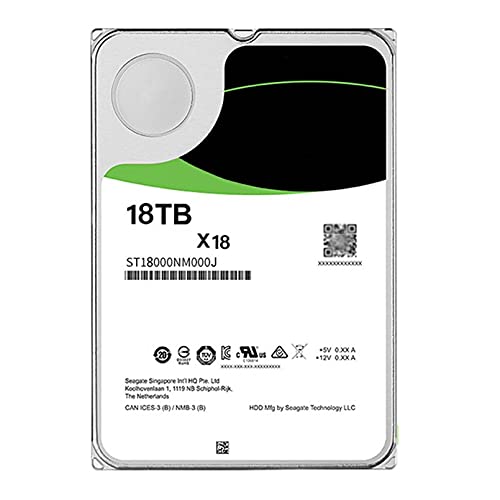
Seagate · Exos X18
DBG 3.5in 7E8 Enterprise Dry Drive 18TB SATA HDD 7200RPM 6GB/S Mechanical Hard Drive ST18000NM000J

Seagate · Exos X18
Seagate Enterprise ST18000NM004J Internal Hard Drive 3.5" 18TB SAS

Western Digital · Ultrastar DC HC550
Western Digital WD WUH721818AL5204 18TB SAS 12Gb/s 7.2K RPM 512M 0F38353 512e/4Kn SE HDD

Seagate · Exos X24
Seagate 20TB Exos Enterprise Hard Drive | SATA (ST20000NM002H)

Seagate · Exos X24
Seagate Exos X24 16TB Enterprise Internal Hard Drive HDD - 6GB/s SAS 7200RPM 2.5M MTBF (ST16000NM002H)

Seagate · Exos X20
Seagate ST18000NM003D 18TB Exos X20 SATA Hard Drive, 3.5" HDD, SATA 6Gb/s, 7200rpm, 256MB Cache, 512E, 4.16ms, NCQ
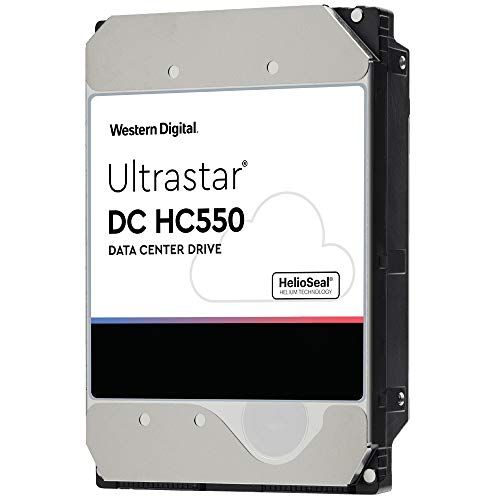
Western Digital · Ultrastar DC HC550
TFGAJKKKKK WUH721818ALE6L4 3.5-inch HDD [7200RPM] 18TB [Buffer:512MB] Serial ATA Rev.3.0 600MB/s
Seagate · Exos X24
Seagate Exos X24 3.5" Internal Hard Drive - 12TB, Single, SATA III 6 Gb/s

Seagate · Exos X20
Seagate Exos X20 ST20000NM007D 20TB 7.2K RPM SATA 6Gb/s 3.5in Hard Drive

Western Digital · Ultrastar DC HC550
Western Digital WUH721816ALE6L4 3.5" 16TB SATA 6Gb/s7.2K RPM 512M 0F38462 512e/4Kn HDD
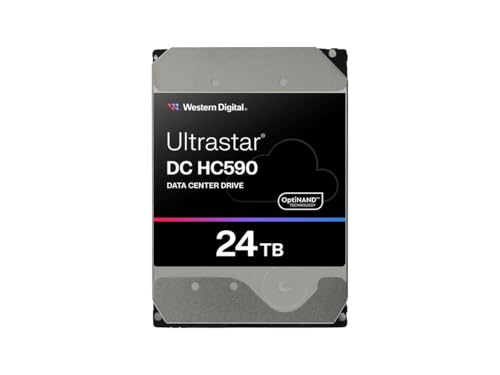
Western Digital · Ultrastar DC HC590
Western Digital Ultrastar DC HC590 24TB Data Center Hard Drive, SAS 12Gb/s, 7200 RPM, 512MB Cache, 3.5-inch

Toshiba · MG11
TOSHIBA Internal Hard Drive 24 Tb 7200 RPM 1000 Mb 3.5" Serial, W129036584 (7200 RPM 1000 Mb 3.5 Serial Ata Iii)
Buying decision
Buy now, wait, or watch?
Buy based on exact capacity, interface and price per TB; wait only when the purchase is flexible and the current model is above your target.
Detailed guide
Hard Drive Price Forecast buying guide
Use these sections to understand the market signal, compare value and decide how much weight to place on waiting.
What the current market is signaling
The hard-drive market is being pulled by large-scale data creation and a rapid move toward higher capacities. Western Digital reported strong year-over-year storage revenue growth in fiscal 2026 and explicitly tied HDD demand to persistent AI data. That supports a firmer backdrop than the old assumption that every capacity should steadily become cheaper each quarter.
Current HDD demand is strongest at high capacities rather than evenly distributed across every desktop size. Backblaze's recent deployment mix and manufacturer commentary both point toward 20TB-plus infrastructure demand. That backdrop can support large-drive pricing even while older consumer capacities are discounted in retail channels.
The upstream cost driver behind hard drives
HDD cost is dominated by mechanical platform economics: heads, media, helium designs, areal density and manufacturing yield. Seagate's Mozaic HAMR roadmap and Western Digital's higher-capacity platform work can improve cost per terabyte over time, but qualification cycles and enterprise commitments can keep near-term supply disciplined.
HAMR and other areal-density advances lower cost per stored bit only after manufacturing yields, qualification and volume improve. Seagate's Mozaic roadmap is therefore relevant to the six-month direction but not a promise that a particular 24TB SATA model will be cheaper next week. Cloudzat keeps technology transitions in the longer-horizon risk band.
Why retail prices can diverge from the industry trend
Retail internal-drive prices can move differently from hyperscale economics. A distributor clearing Exos inventory may create a dramatic temporary deal even when enterprise demand is strong. Conversely, a newly introduced capacity may carry a launch premium that makes the category look more expensive than mature models.
Enterprise HDDs are frequently sold through several channels at once. Retail-box, OEM, data-center pull and recertified inventory can carry very different warranty treatment. A clearance on one channel should not reset the clean new-retail comparison for every listing, so Cloudzat keeps condition and exact-model identity separate.
How capacity changes the forecast
High-capacity tiers deserve separate treatment. Backblaze reported that most new Q1 2026 deployments were above 20TB, showing where infrastructure demand is concentrating. That can support 20TB-plus pricing even as older 12TB or 16TB stock occasionally clears at attractive unit costs.
The 20TB and 24TB tiers deserve their own histories because high-capacity demand is not linear. ST20000NM002H and ST24000NM002H can have different inventory depth and seller competition even within Exos X24. A capacity-weighted average would hide those differences and produce a misleading forecast for a buyer choosing one size.
What current price history can and cannot prove
Cloudzat history is model-specific, so a 24TB Exos X24 does not inherit a 20TB model's price series. This prevents a capacity mix change from being mistaken for market inflation. Once several snapshots exist, the page can compare median movement with the wider HDD scenario band.
Exact-model history is particularly important for enterprise disks. Cloudzat stores a snapshot only after the model number matches the intended exact product, so a Toshiba MG11 listing cannot silently replace an Exos observation. That discipline matters more than a large sample of loosely related hard-drive titles.
The right way to use dollars per terabyte as a benchmark
Dollars per terabyte is the essential HDD benchmark, but it should be paired with warranty and workload class. Enterprise drives, NAS drives and surveillance drives can share capacity while carrying very different endurance, acoustics and support terms.
Price per terabyte is the central HDD value metric, but interface and warranty still bound the comparison. A cheap SAS disk is not a substitute for a SATA-only system, and a lower-priced OEM unit with uncertain support is not equivalent to a full-warranty retail drive. The calculator therefore treats unit cost as one decision input.
When buying now is rational
Buying now is rational when the user needs capacity for an array expansion, backup window or server deployment and the current unit cost is already below the recent benchmark. Delaying an operational project for a small speculative discount can cost more than the drive saving.
For a degraded array, backup expansion or server deployment with a fixed date, operational risk dominates small forecast differences. The tool shortens the acceptable waiting window when capacity is required now. It is designed to prevent a statistically cheaper future scenario from becoming advice to operate without enough storage or redundancy.
When waiting has a real expected payoff
Waiting can pay when the purchase is optional and a capacity is in the middle of a platform transition. Mature capacities sometimes become more attractive when the next density tier reaches the channel, but there is no guarantee that the exact model will be discounted rather than discontinued.
Waiting is more defensible when the purchase is discretionary and a capacity tier appears to be transitioning. A new 30TB or larger generation can pressure older unit pricing, but it can also cause a specific model to disappear instead of becoming cheaper. The six-month band includes both outcomes rather than assuming orderly clearance.
How promotions distort short-term forecasts
Enterprise HDD deals are often seller-specific. A price collapse can indicate OEM packaging, recertified stock or a warranty difference rather than a market-wide move. The forecast should only compare like-for-like new retail identities when measuring the clean benchmark.
An enterprise listing that is dramatically below the rest of the market deserves inspection before celebration. OEM packaging, recertification, shortened warranty or a different sector format can explain the price. Cloudzat's benchmark series is meant to represent comparable new inventory, not the lowest number attached to a partially matching product name.
Compatibility and product identity before price
Before using price as the deciding variable, verify SATA versus SAS, 512e versus 4Kn requirements, sector-format support, power-disable-pin behavior and enclosure compatibility. The cheapest wrong interface is not a deal.
Compatibility checks for hard drives go beyond capacity. SATA versus SAS, 512e versus 4Kn, host support for high capacities and power-disable-pin behavior can decide whether a disk is usable. The forecast page keeps those requirements visible so price does not outrank a technical mismatch.
Risk factors that can break the forecast
The biggest forecast risks are unexpected hyperscale allocation changes, faster or slower HAMR qualification, retailer inventory clearances and currency shifts. These forces can move a specific capacity outside the broad range even if the overall direction is reasonable.
The main downside risk to the forecast is a sharp channel clearance or faster-than-expected density transition. The upside risk is continued hyperscale allocation that keeps high-capacity platforms tight. Because those forces can move in opposite directions, HDD confidence remains lower than the current server-RAM signal even when the market narrative is strong.
Practical forecast for HDD buyer
For a hard-drive buyer in 2026, the base case is not a straight-line decline. Cloudzat keeps the 30-day band close to neutral and widens the 90- and 180-day ranges because capacity transitions can create both excellent deals and renewed firmness.
For most buyers the near-term HDD call is neutral to mildly firm, not a claim of perpetual increases. The page is most useful when a real model, capacity and target price are supplied. It then quantifies whether the expected value of waiting is large enough to justify delaying the actual storage project.
Price forecast questions
Hard Drive Price Forecast FAQs
Are hard drive prices going up in 2026?
Some high-capacity segments have firm demand, but retail outcomes remain mixed. Cloudzat therefore uses a range rather than a single upward forecast.
Why are 20TB and 24TB drives important to the forecast?
Current infrastructure deployments are concentrating on larger capacities, which can support pricing in those tiers.
Will HAMR make drives cheaper immediately?
Higher areal density can improve economics over time, but qualification and ramp timing mean retail savings are not immediate or guaranteed.
Should I compare HDDs only by price per TB?
No. Interface, warranty, workload rating, sector format, acoustics and seller condition also matter.
Can OEM or recertified stock distort the market price?
Yes. A very low listing may reflect different warranty or condition and should not be merged into a new-retail history series.
Is waiting six months always better?
No. The 180-day range is wider because both capacity transitions and demand strength can move prices.
How does Cloudzat store HDD history?
Each verified exact model receives a dated price snapshot when Cloudzat observes a current Amazon offer.
What if I need a drive for a degraded array?
Operational urgency usually outweighs a modest speculative saving. Replace the failed capacity first.
Does this forecast cover SAS drives?
The market discussion is relevant, but the tracked offers in this release focus on selected SATA exact models.
When was this forecast reviewed?
August 12, 2026.
Sources and methodology
How this forecast is built
HDD scenarios use manufacturer demand/capacity disclosures and current high-capacity deployment evidence rather than a flash-memory contract index. Cloudzat exact-model price snapshots provide the retail evidence layer.
- Western Digital fiscal Q3 2026 results
- Seagate Mozaic 4+ announcement
- Backblaze Q1 2026 Drive Stats
- Seagate Exos X24 product family
- Toshiba MG Series enterprise HDDs
- WD Ultrastar DC HC590
Forecast ranges are scenarios, not guaranteed future prices. Marketplace prices can change after Cloudzat verifies them, so use the Amazon checkout page to confirm the final price, seller and availability before buying. As an Amazon Associate, Cloudzat may earn from qualifying purchases.