


Cloudzat Storage Price Forecast · August 12, 2026
Used-drive pricing is condition-driven, so Cloudzat treats new-drive prices as an anchor and applies explicit risk discounts instead of pretending there is one clean market curve.
Quick answer
Current forecast signal
The directional market signal is low confidence: expensive new drives can support used values, while enterprise decommission batches can push them down.
Scenario range
30, 90 and 180-day outlook
Market assumptions reviewed 2026-08-12 · Confidence: low
Interactive forecast
Used Drive Fair-Value Forecast
Enter the real price you are considering. The result uses a scenario range and confidence grade; it does not claim to know a future retailer price or sale date.
Amazon price evidence
Compare exact products and verified prices
6 matching listingsCompact exact-product rows keep model, capacity, price and the Amazon purchase action visible together. Confirm the final checkout price and seller on Amazon.

Seagate · Exos X24
Seagate 20TB Exos Enterprise Hard Drive | SATA (ST20000NM002H)

Seagate · Exos X24
Seagate Exos X24 16TB Enterprise Internal Hard Drive HDD - 6GB/s SAS 7200RPM 2.5M MTBF (ST16000NM002H)
Seagate · Exos X24
Seagate Exos X24 3.5" Internal Hard Drive - 12TB, Single, SATA III 6 Gb/s

Seagate · Exos X24
Seagate Exos X24 24TB Enterprise Internal Hard Drive HDD - 6GB/s SATA 7200RPM 2.5M MTBF (ST24000NM002H)

Toshiba · MG11
TOSHIBA Internal Hard Drive 24 Tb 7200 RPM 1000 Mb 3.5" Serial, W129036584 (7200 RPM 1000 Mb 3.5 Serial Ata Iii)
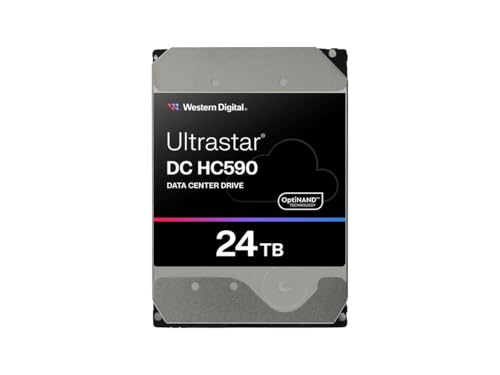
Western Digital · Ultrastar DC HC590
Western Digital Ultrastar DC HC590 24TB Data Center Hard Drive, SAS 12Gb/s, 7200 RPM, 512MB Cache, 3.5-inch
Buying decision
Buy now, wait, or watch?
Buy only when the discount is large enough to compensate for age, health uncertainty and reduced warranty protection.
Detailed guide
Used Drive Price Forecast buying guide
Use these sections to understand the market signal, compare value and decide how much weight to place on waiting.
What the current market is signaling
Used-drive prices are anchored partly by the cost of new alternatives, but condition creates much wider dispersion than in any new-product category. A seller can ask very different amounts for two identical model numbers because power-on hours, SMART history, recertification source and return policy are not equivalent.
Used-drive pricing has the weakest market signal because two units with the same model number can have very different remaining value. Age, power-on hours, SMART attributes, workload history, warranty and seller testing matter more than a small shift in the new-drive market. Cloudzat therefore starts with low forecast confidence.
The upstream cost driver behind used hard drives
There is no clean upstream 'used HDD contract price.' Supply comes from enterprise refreshes, recycler inventory, individual sellers and manufacturer recertification programs. Demand rises when new high-capacity drives become expensive, but large decommission batches can push used unit prices down at the same time.
A new-drive price is still a useful ceiling because it tells the buyer how much discount the used unit must offer to compensate for extra risk. When a new enterprise drive is heavily discounted, an unchanged used asking price can become unattractive overnight even though the second-hand seller has not changed anything.
Why retail prices can diverge from the industry trend
Marketplace asking prices are not the same as completed transaction values. Listings can sit unsold for months, and unusually cheap offers can hide shipping damage risk, missing warranty or inaccurate condition. Cloudzat therefore focuses on fair-value discount from a comparable new drive rather than claiming a precise used-market index.
Condition terminology is unreliable across marketplaces. 'Used', 'renewed', 'recertified' and 'seller refurbished' can imply different testing and warranty treatment. The forecast tool asks the user for the actual condition evidence rather than assigning a universal discount to a label that may not be standardized.
How capacity changes the forecast
Capacity changes the depreciation curve. Older 8TB and 12TB enterprise disks may have abundant retired supply, while newer 20TB-plus drives remain closer to current production economics. The appropriate discount should widen as age and uncertainty rise.
Capacity affects depreciation because older lower-density disks can lose appeal faster when new high-capacity models improve rack efficiency. A 10TB used drive and a 24TB used drive should not share one depreciation curve. The page evaluates the user's asking price against a like-capacity new anchor whenever possible.
What current price history can and cannot prove
Cloudzat can store new exact-model prices as an anchor, but the forecast does not treat a used listing as the same condition. The user enters the actual used asking price, age, SMART status and warranty situation into the calculator.
Cloudzat does not pretend Amazon's new-product history is a used-market transaction index. Cloudzat stores clean new exact-model anchors, while the shopper enters the used asking price and condition. That separation prevents seller-condition noise from contaminating the new benchmark and makes the low-confidence label explicit.
The right way to use discount versus new price as a benchmark
Price per terabyte is necessary but not sufficient. A used enterprise disk can look exceptional per TB while carrying high power-on hours, a weak return window or no manufacturer warranty. The tool therefore estimates an additional risk-adjusted discount before calling a listing attractive.
For used drives, the key unit metric is the discount to a comparable new product, not only dollars per terabyte. A drive that saves 20% but has no warranty and heavy hours can be worse value than one that saves 12% with strong health evidence and meaningful manufacturer coverage remaining.
When buying now is rational
Buying used now can be rational for non-critical bulk storage, lab environments or redundant arrays when the drive has clean health data, a credible seller and a deep enough discount to compensate for risk.
Buying a used drive can be rational when the discount is large, health evidence is credible, warranty status is clear and the workload can tolerate the residual risk. The calculator becomes stricter for backup-only copies, irreplaceable data and array roles where a second failure would be costly.
When waiting has a real expected payoff
Waiting is sensible when used prices are too close to new retail. If a used listing costs 85 or 90 percent of a new drive with full warranty, the buyer is accepting a large reliability and support discount without receiving enough financial compensation.
Waiting in the used market is mostly a bet on depreciation or additional listings rather than a supplier contract cycle. The page can project a modest downward range, but it does not claim that a particular seller will lower a price. Availability can disappear entirely when a desirable batch sells out.
How promotions distort short-term forecasts
Used-drive promotions are mostly seller events rather than manufacturer sales. Inventory batches, liquidation auctions and recycler stock can create sudden local drops that a category forecast cannot schedule in advance.
Retail sale events matter indirectly because a cheap new drive compresses the acceptable used price. If a new 20TB model receives a major discount, a used 18TB listing may need to fall as well to remain competitive. The tool therefore encourages rechecking the new anchor before committing to a used purchase.
Compatibility and product identity before price
Exact model verification is critical because enterprise families can contain SATA, SAS, 512e, 4Kn, SED and OEM variants. A photograph of the label and a verified model string are more valuable than a generic family name in the listing title.
Model identity, interface and health verification come before price. SAS versus SATA, sector format, SMART warnings and remaining warranty can all change the decision. A bargain that cannot connect to the intended system or already reports serious media problems is not made attractive by a favorable forecast.
Risk factors that can break the forecast
The biggest forecast risk is unknown condition. SMART values can be reset or incomplete, shipping can damage a healthy disk, and some recertified drives have different warranty paths. That is why this page intentionally carries the lowest confidence grade.
Used-market risk is dominated by information asymmetry. SMART data can be incomplete, workload history may be unknown and shipping damage can erase any expected saving. That uncertainty is why the forecast band is wider and the confidence lower than for a factory-new exact model with a clean warranty path.
Practical forecast for used-drive buyer
For used-drive buyers, the tool is best used as a negotiation and screening aid. It estimates the fair discount relative to a new anchor and tells the user when the risk-adjusted value is too weak to justify giving up new-drive support.
The final used-drive recommendation compares asking price, new anchor, age, health and warranty. 'Buy' means the discount appears to compensate for the entered risk factors; it does not certify the hardware. 'Watch' is common when the price is close to new retail or the condition evidence is too weak.
Price forecast questions
Used Drive Price Forecast FAQs
Are used hard-drive prices expected to fall?
They may, but condition and local inventory dominate. The forecast intentionally uses a wide low-confidence range.
What discount should a used drive have versus new?
The required discount depends on age, health, warranty and seller quality. The calculator increases the required discount as risk rises.
Is SMART data enough to prove a drive is safe?
No. SMART is useful evidence but cannot guarantee future reliability or reveal every handling problem.
Should I buy recertified instead of ordinary used?
A credible recertification source and defined warranty can justify paying more than for an unknown used drive.
Why use a new price as the anchor?
It shows how much warranty and condition risk the buyer is being compensated for.
Are enterprise drives better used purchases?
They can be attractive, but workload history, noise, interface and power requirements still matter.
Can I use used drives in RAID?
You can, but avoid creating a false sense of safety. Redundancy is not backup and correlated age can increase risk.
Does Backblaze data predict my used drive failure?
No. Fleet statistics provide context, not a prediction for one individual disk.
Why is this forecast low confidence?
Used condition and seller quality create much more price dispersion than new exact-model listings.
When was this forecast reviewed?
August 12, 2026.
Sources and methodology
How this forecast is built
Used-drive forecasting is risk-adjusted rather than a pure market extrapolation. New exact-model prices provide an anchor; the user supplies used condition, age, warranty and asking price. Backblaze reliability data informs the importance of age/model context but does not predict any individual drive.
Forecast ranges are scenarios, not guaranteed future prices. Marketplace prices can change after Cloudzat verifies them, so use the Amazon checkout page to confirm the final price, seller and availability before buying. As an Amazon Associate, Cloudzat may earn from qualifying purchases.