


Cloudzat Storage Price Forecast · August 12, 2026
PS5 SSD prices no longer sit in a simple falling-cost cycle because NAND contract prices remain elevated in 2026.
Quick answer
Current forecast signal
The base scenario is mildly upward over 90 days, but retail promotions can still create excellent 2TB and 4TB buying windows.
Scenario range
30, 90 and 180-day outlook
Market assumptions reviewed 2026-08-12 · Confidence: medium
Interactive forecast
PS5 SSD Deal Forecast Calculator
Enter the real price you are considering. The result uses a scenario range and confidence grade; it does not claim to know a future retailer price or sale date.
Amazon price evidence
Compare exact products and verified prices
9 matching listingsCompact exact-product rows keep model, capacity, price and the Amazon purchase action visible together. Confirm the final checkout price and seller on Amazon.

Samsung · 990 PRO with Heatsink
Samsung 990 Pro M.2 4 Tb Pci Express 4.0 V-Nand TLC Nvme, W128825757 (4.0 V-Nand TLC Nvme)
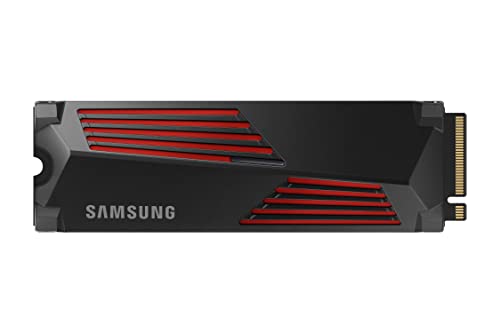
Samsung · 990 PRO with Heatsink
Samsung SSD 990 PRO with Heatsink 1TB, NVMe M.2, Up to 7,450MB/s

Samsung · 990 PRO with Heatsink
Samsung SSD 990 PRO w/Heatsink 2TB & T7 Portable SSD 2TB Storage Bundle
Seagate · FireCuda 530R with Heatsink
ZP1000GM3A073

Seagate · FireCuda 530R with Heatsink
Seagate FireCuda 530R SSD with Heatsink 2TB Internal Solid State Drive - M.2 PCIe Gen4 ×4 NVMe 1.4, speeds up to 7400MB/s, 2400TBW, 1.8M MTBF with Rescue Services (ZP2000GM3A073)
Seagate · FireCuda 530R with Heatsink
Seagate FireCuda 530R SSD with Heatsink 4TB Internal Solid State Drive - M.2 PCIe Gen4 ×4 NVMe 1.4, speeds up to 7400MB/s, 5050TBW, 1.8M MTBF with Rescue Services (ZP4000GM3A073)

Crucial Crucial T500 with Heatsink
Crucial T500 2TB PCIe Gen4 NVMe Gaming PS5 SSD with Heatsink, Up to 7,400MB/s, TLC NAND, PlayStation 5 Compatible, Laptop, & Desktop (PC), Solid State Drive, Includes 1Mo Adobe CC – CT2000T500SSD5
Crucial Crucial T500 with Heatsink
Crucial T500 1TB PCIe Gen4 NVMe Gaming PS5 SSD with Heatsink, Up to 7,300MB/s, TLC NAND, PlayStation 5 Compatible, Laptop, & Desktop (PC), Solid State Drive, Includes 1Mo Adobe CC – CT1000T500SSD5
Crucial Crucial T500 with Heatsink
Crucial T500 4TB PCIe Gen4 NVMe Gaming PS5 SSD with Heatsink, Up to 7,000MB/s, TLC NAND, PlayStation 5 Compatible, Laptop, & Desktop (PC), Solid State Drive, Includes 1Mo Adobe CC – CT4000T500SSD5
Buying decision
Buy now, wait, or watch?
If a compatible heatsink model already meets your target price, the current NAND backdrop reduces the case for waiting without a clear sale objective.
Detailed guide
PS5 SSD Price Forecast buying guide
Use these sections to understand the market signal, compare value and decide how much weight to place on waiting.
What the current market is signaling
PS5 SSD pricing is currently tied to a NAND market that remains unusually firm. TrendForce expected NAND contract prices to rise again in 3Q26, although the pace was lower than the extraordinary increases seen earlier in the year. That backdrop reduces the odds of assuming a normal month-by-month decline for premium Gen4 drives.
PS5 SSD demand sits directly on the consumer NAND cycle, so current flash-market pressure is relevant. It is not sufficient on its own, however, because gaming SSD brands compete aggressively and retail events can temporarily overwhelm component costs. The forecast therefore starts mildly upward but keeps room for model-specific deals.
The upstream cost driver behind PS5 SSDs
A PS5 expansion SSD is a client NVMe product, so NAND, controller supply and retail competition matter more than server-memory dynamics. Manufacturers can still run promotions, but rising flash input costs can narrow the depth or frequency of those deals.
A PS5 upgrade is a finished retail SSD, not a raw NAND contract. Controller, DRAM design, firmware, heatsink and branding all contribute to the ticket price. Cloudzat converts the upstream NAND signal into a smaller consumer range rather than copying a double-digit contract move directly into a prediction for a retail drive.
Why retail prices can diverge from the industry trend
Retail PS5 SSD pricing diverges because vendors aggressively market around gaming events and console storage demand. A 2TB 990 PRO with heatsink, a FireCuda 530R and a competing Gen4 drive may respond differently even when they use similar flash economics.
Gaming promotions create especially noisy short-term pricing. A 2TB drive can receive a console-focused discount while its 4TB sibling remains unchanged, or the opposite can happen when a retailer clears high-capacity stock. Live exact-model offers therefore take precedence over broad category direction when the current discount is unusually good.
How capacity changes the forecast
Capacity changes the practical forecast. Two-terabyte drives often have the deepest competition, while 4TB models carry a larger absolute ticket price and can show more volatile promotion percentages. Sony currently supports compatible M.2 capacities up to 8TB, so buyers have more tiers to compare than at PS5 launch.
Capacity materially changes the PS5 decision. Two terabytes is a common balance of price and library size, while 4TB reduces future deletion pressure at a higher checkout total. The tool compares price per terabyte inside the selected capacity instead of assuming the cheapest total-price option is automatically the best value.
What current price history can and cannot prove
Historical price direction is most useful when heatsink status and capacity are locked. Mixing a bare 2TB SSD with a 4TB heatsink model can create a false signal larger than the entire forecast range.
Heatsink status is part of the identity. A Samsung 990 PRO 2TB with heatsink and a FireCuda 530R 2TB with heatsink each get their own series, and bare-drive listings are not merged into those observations. That prevents a heatsink premium from being misread as an unexplained market jump.
The right way to use dollars per terabyte as a benchmark
Price per terabyte is useful for comparing 2TB and 4TB PS5-compatible drives, but it should not override Sony's compatibility requirements. A cheaper SSD that lacks an appropriate cooling solution or falls outside the supported physical limits is not equivalent value.
Price per gigabyte helps compare capacities, but compatibility remains non-negotiable. A low price on an SSD without adequate cooling or the expected PS5 form factor does not become a valid benchmark. The price forecast is intentionally downstream of the compatibility check rather than a substitute for it.
When buying now is rational
Buying now is rational when the user needs storage immediately and the current SSD is already on a strong promotion. With NAND still firm, waiting solely for the assumption that flash always gets cheaper can be a weak strategy in the current cycle.
Buying now is rational when the console is genuinely capacity-constrained and a compatible heatsink model already meets the user's target. The current NAND backdrop means there is less reason to delay a needed upgrade merely because SSDs have historically become cheaper over long periods. Urgency can outweigh a narrow hoped-for discount.
When waiting has a real expected payoff
Waiting is more defensible for a non-urgent upgrade when the current listing is near full MSRP and the shopper has a specific target price. Retail gaming SSD promotions can still produce meaningful short-term drops even inside an upstream inflationary market.
Waiting can still work for a flexible buyer, especially if the current listing is near full MSRP and no new games require immediate space. The tool evaluates 30, 90 and 180 days separately, so a buyer can see how much potential saving would be needed before a delay becomes worthwhile.
How promotions distort short-term forecasts
PS5 SSDs are especially promotion-sensitive around major retail events. The forecast tool therefore calculates the expected value of waiting but also flags when today's deal already undercuts the user's target by enough to remove the need to speculate.
Major sales can produce PS5 SSD prices below the scenario's expected lower bound. Cloudzat treats that as a deal opportunity, not a model failure. The user-entered target price lets the calculator say buy when today's promotion is already better than what waiting would reasonably be expected to achieve.
Compatibility and product identity before price
Sony requires a PCIe Gen4 x4 NVMe M.2 SSD and recommends 5,500MB/s or faster sequential reads, with effective heat dissipation. The tracked product must be an actual compatible SSD, not a heatsink-only accessory or the wrong capacity.
Sony's current requirements remain the compatibility floor: PCIe Gen4 x4 NVMe M.2, supported physical sizes, effective heat dissipation and a recommended sequential read speed of 5,500MB/s or faster. The forecast does not reward a cheaper drive that falls outside the intended PS5 configuration.
Risk factors that can break the forecast
The forecast could fail if NAND demand weakens faster than expected, suppliers add capacity, or consumer resistance forces deeper retail discounts. It could also undershoot price increases if channel inventory tightens suddenly.
Forecast risk comes from NAND allocation, controller supply, new SSD launches and retailer competition. A newer Gen5 PC drive can also shift Gen4 pricing even though PS5 does not need Gen5 bandwidth. Those cross-market effects make the six-month range wider than the near-term band.
Practical forecast for PS5 storage buyer
For PS5 buyers, Cloudzat's base case is mildly upward over 90 days with medium confidence, but the practical recommendation still depends on today's discount, capacity and how soon additional game space is needed.
The practical PS5 output combines current price, capacity, heatsink status and deadline. In the present market the base signal is mildly upward, but a strong promotion can still produce an immediate buy recommendation. The page is designed to answer 'is this exact deal good now?' rather than simply 'are SSD prices rising?'
Price forecast questions
PS5 SSD Price Forecast FAQs
Are PS5 SSD prices expected to rise?
The current NAND backdrop supports a mildly upward scenario, but consumer promotions can still create short-term declines.
Should I buy a 2TB PS5 SSD now?
If it is compatible, has appropriate cooling and already meets your target price, buying can be reasonable in the current market.
Is 4TB usually cheaper per TB?
Sometimes, but the larger ticket price and promotion cycle differ by model. Compare the actual current unit cost.
What does Sony require for PS5 M.2 storage?
Sony specifies PCIe Gen4 x4 M.2 NVMe, supported form factors and effective heat dissipation, and recommends 5,500MB/s or faster sequential reads.
Does a heatsink change the price forecast?
It changes the exact product identity and price series. Heatsink and bare versions should not be mixed.
Can PS5 SSD prices still fall during rising NAND prices?
Yes. Retailers can discount inventory or run gaming promotions even when upstream costs are increasing.
Why does Cloudzat use 30, 90 and 180 days?
The confidence and possible range widen as more future supply, demand and promotion assumptions are required.
Does the tool know future Amazon sale dates?
No. It estimates scenario ranges and evaluates today's deal against your target.
Can I use an 8TB SSD in PS5?
Sony currently lists supported M.2 storage capacities from 250GB through 8TB, provided the other requirements are met.
When was this forecast reviewed?
August 12, 2026.
Sources and methodology
How this forecast is built
PS5 SSD scenarios use the current NAND contract-price direction as an upstream input, then temper that signal for consumer retail promotions. Compatibility is checked against Sony requirements before price logic is applied.
- TrendForce 3Q26 NAND outlook
- PlayStation M.2 SSD requirements
- Samsung 990 PRO with Heatsink 2TB
- Seagate FireCuda 530R Heatsink support
- Crucial T500 with heatsink
Forecast ranges are scenarios, not guaranteed future prices. Marketplace prices can change after Cloudzat verifies them, so use the Amazon checkout page to confirm the final price, seller and availability before buying. As an Amazon Associate, Cloudzat may earn from qualifying purchases.