


MOBILE DRIVE PRICE INTELLIGENCE
LaCie Mobile Drive Prices: 1TB to 5TB Value
Compare current Mobile Drive capacities and see what you save or pay versus same-capacity LaCie Rugged HDD.
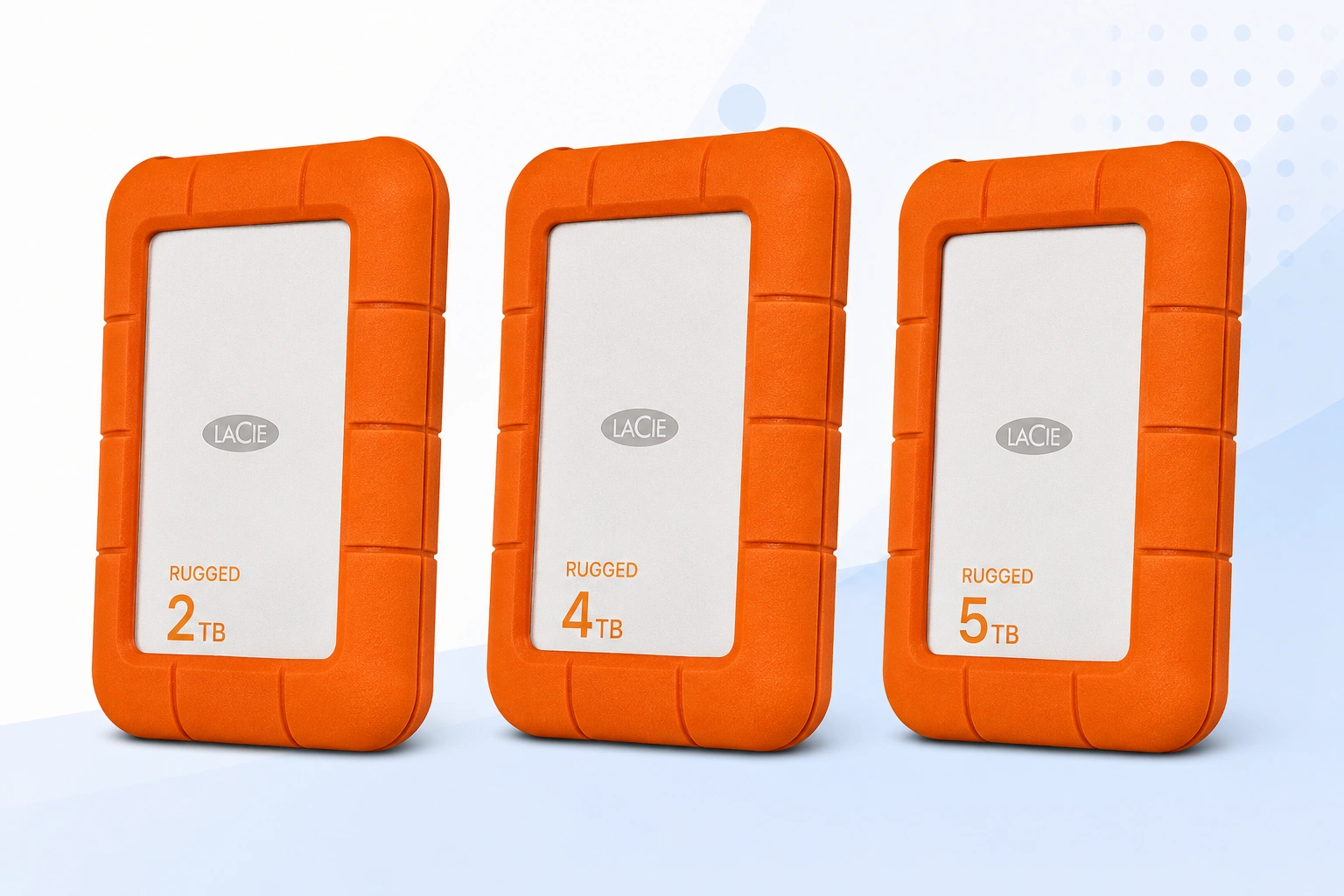
Use Mobile Drive as a portable-HDD value choice. Compare 1TB, 2TB, 4TB and 5TB first, then check the same-capacity Rugged Price Gap to see what the alternative physical design currently costs.
Price Trend
90-Day Price History
Price history is building
We’ll show the 90-day trend here as more daily price checks are recorded.
LaCie Deal Score
Live value by family or capacity
| Drive | Current | $/TB | 30-Day | Deal | Sale | Signal |
|---|---|---|---|---|---|---|
| Mobile Drive 1TB | — | — | — | — | — | WATCH |
| Mobile Drive 2TBSTHG2000400 | $299.99 | $150.00 | — | 45 | — | WAIT |
| Mobile Drive 4TBLaCie Mobile Drive | $201.99 | $50.50 | — | 85 | — | WATCH |
| Mobile Drive 5TBLaCie Mobile Drive | $235.97 | $47.19 | — | 85 | — | WATCH |
Each row is evaluated inside its own family and media class. A Rugged HDD is not scored against a Rugged SSD simply because both carry the LaCie name.
Is this a good price?
LaCie Price Check
Amazon Live
Current LaCie Mobile Drive Prices offers
| Drive | Model | Capacity | Amazon price | $/TB | Checked | |
|---|---|---|---|---|---|---|
 LaCie Mobile DriveNew · Amazon buying options LaCie Mobile DriveNew · Amazon buying options | Verify listing | 5TB | $235.97 | $47.19 | Last verified 3d ago | Buy on Amazon |
 LaCie Mobile DriveNew · Amazon buying options LaCie Mobile DriveNew · Amazon buying options | Verify listing | 4TB | $201.99 | $50.50 | Last verified 3d ago | Buy on Amazon |
 LaCie Mobile DriveNew · Amazon buying options LaCie Mobile DriveNew · Amazon buying options | STHG4000400 | 4TB | $299.99 | $75.00 | Last verified 3d ago | Buy on Amazon |
 LaCie Mobile DriveNew · Amazon buying options LaCie Mobile DriveNew · Amazon buying options | STHG2000400 | 2TB | $299.99 | $150.00 | Last verified 3d ago | Buy on Amazon |
As an Amazon Associate, Cloudzat may earn from qualifying purchases. Prices, seller, selected variation and availability can change. Confirm the LaCie family, capacity, model and New condition before checkout.
Capacity Economics
1TB vs 2TB vs 4TB vs 5TB purchase cost
| Capacity | 1TB | 2TB | 4TB | 5TB |
|---|---|---|---|---|
| Best current $/TB | — | $150.00 | $50.50 | $47.19 |
| One drive | — | $299.99 | $201.99 | $235.97 |
| Two copies | — | $599.98 | $403.98 | $471.94 |
| Current model | — | STHG2000400 | LaCie Mobile Drive | LaCie Mobile Drive |
This table stays inside the media class of this page. The main LaCie hub defaults to Rugged HDD capacity economics rather than treating SSD and HDD storage as interchangeable.
Smart Alternatives
Other current LaCie options


Mobile Drive prices should be judged as portable HDD prices
LaCie Mobile Drive is a portable hard-drive family, so its value belongs beside other portable HDD options rather than portable SSDs or desktop d2 products. This page tracks current New-condition Mobile Drive offers by capacity and shows the cost per terabyte inside that media class. The objective is to answer whether the current Mobile Drive price is sensible for a buyer who wants portable capacity without automatically paying the Rugged family premium.
Keeping the benchmark narrow matters because a mixed LaCie leaderboard would be misleading. SSDs will almost always carry a higher $/TB because the buyer is purchasing a different performance class, while d2 can achieve lower $/TB at much larger desktop capacities. Mobile Drive should win or lose on the terms of the portable-HDD decision it actually competes in.
The STHG model family keeps capacity identity specific
Current Mobile Drive support records include STHG model identities across the 1TB, 2TB, 4TB and 5TB capacities covered by this page. Exact model evidence helps distinguish a complete drive from a generic compatible accessory and helps prevent one variation from setting the price history of another. The broader family page can accept a clear Mobile Drive listing when capacity is unambiguous, but conflicting or multi-capacity evidence is treated conservatively.
This is important for Amazon results because a parent listing can expose several capacities. A low 1TB price should not appear as the best 5TB deal simply because both variations share much of the same title. The price engine normalizes the selected capacity before it computes $/TB or places the row into a family benchmark.
Mobile Drive versus Rugged is a direct premium comparison
The most useful LaCie comparison for Mobile Drive is often Rugged HDD at the same capacity. Cloudzat calculates the Price Gap when both sides have a qualifying current price. A negative gap means Mobile Drive is cheaper; a positive gap means it currently costs more. The calculation does not say which physical design is better. It makes the financial difference visible so the buyer can decide whether the ruggedized use case is relevant enough to justify paying more.
Price promotions can reverse the expected relationship. Rugged may occasionally be discounted close to or below Mobile Drive. That is exactly when a live premium calculation is more useful than a static article claiming one family is always the cheaper choice. The products can keep the same specifications while their relative value changes materially.
Capacity sweet spots move between 1TB, 2TB, 4TB and 5TB
Portable-HDD pricing does not always scale smoothly with capacity. One tier can be heavily discounted while another is constrained by inventory. The capacity table lets a shopper see whether 4TB currently offers a stronger balance than 5TB or whether the extra terabyte costs very little. The relevant comparison is not just total checkout price but the extra dollars required for the extra storage.
This marginal view matters for a growing photo or document archive. Paying slightly more now can avoid an early replacement, but buying excess capacity can also reduce the budget available for a second copy. The page is designed to expose both sides so the capacity decision remains tied to actual storage needs.
Historical position matters when the purchase is flexible
A current Mobile Drive offer can look reasonable beside today’s alternatives and still be expensive relative to its own recent history. The 90-day chart and Sale Score add that timing dimension once enough observations exist. A flexible buyer can use the record to decide whether to wait, while someone facing an immediate storage shortage can still use the current Deal Score to avoid an obviously weak offer.
The chart is not backfilled with invented prices. When the daily record is young, the page simply says history is building. That makes the early presentation less dramatic but more trustworthy, and the signal becomes more informative naturally as the site accumulates real observations.
A portable drive is often bought in pairs even when search intent says singular
Searchers usually type “LaCie Mobile Drive 5TB” as though the purchase is one device. In a backup plan, the realistic cost can be two or three copies. The economics panel multiplies current prices so that redundancy is included before the capacity is chosen. A capacity that looks cheap for one unit can become expensive across a rotation, while a smaller tier may fund a safer multi-copy plan.
This is not a recommendation to buy duplicate copies of every file blindly. It is a reminder that important data should not depend on one portable object. A second external drive, NAS or other independent destination can change the total budget, and price intelligence is more useful when that budget is visible early.
Do not let a low accessory price become a fake Mobile Drive deal
LaCie accessories and compatible cases frequently include the brand or family name in their titles. A price engine that searches only for keywords can mistake a carrying case or replacement cable for a drive and produce an absurd $/TB result. This plugin rejects accessory identity before the row reaches the benchmark. Genuine drives can still mention included cables in feature text because the decision is based on what the product is, not whether a word appears anywhere on the listing.
The same rule protects the history table. One false twenty-dollar accessory price can create a fake historical low that would distort Sale Score for months. Strict product identity is therefore not a cosmetic catalogue feature; it is part of the accuracy of every downstream price signal.
Mobile Drive is not a performance substitute for Rugged SSD
Both products are portable, but the media type changes the reason for buying them. Mobile Drive is an HDD capacity purchase. Rugged SSD is a solid-state performance purchase. Comparing their raw price per terabyte can be useful as a budget reality check, but it should not feed one combined Deal Score. The plugin keeps those media classes separate and sends SSD shoppers to a dedicated page where interface and performance tier can be considered alongside price.
This separation is especially important for creative workloads. A large archive can live economically on a portable HDD, while active editing or repeated high-volume transfers may justify SSD cost. The right product comes from the workflow first, then price intelligence helps select a good offer inside that choice.
Condition consistency keeps the benchmark honest
Used, refurbished, renewed and recertified products can appear at lower prices than New Mobile Drive offers. Those conditions may be perfectly reasonable for some buyers, but mixing them into the New benchmark would make the live market look cheaper than the transaction the page is supposed to evaluate. Cloudzat therefore uses New-condition offers for the main signal and retains the last successfully verified price with its verification age when a later refresh does not provide a replacement price.
The buyer should still inspect seller details and the actual listing at checkout. Price intelligence narrows the decision, but the marketplace remains dynamic. A valid deal only exists if the selected capacity, condition and seller match what the shopper intended to purchase.
The strongest Mobile Drive purchase is the one that leaves backup headroom
A five-terabyte drive can look like the obvious value leader, but the best system purchase may be two four-terabyte drives if that capacity already covers the data set and allows independent copies. Conversely, buying two one-terabyte drives can be false economy if the data will outgrow them quickly. Capacity economics gives the buyer a way to connect price-per-terabyte with total backup architecture.
The important step is to estimate how much data will exist during the useful life of the drive. Add realistic growth, preserve some free-space margin and then compare the qualifying Mobile Drive capacities. Price should select among capacities that already meet the requirement rather than define the requirement itself.
A simple buying routine keeps Mobile Drive decisions practical
Confirm the Mobile Drive family, selected capacity and model where shown. Check New condition and seller, compare the current price per terabyte across 1TB, 2TB, 4TB and 5TB, and look at the Price Gap against Rugged HDD at the same capacity when available. If history is mature, use Sale Score to judge timing. If not, treat the current Deal Score as a market snapshot rather than a long-term prediction.
Then price the second copy or independent backup destination. This final step prevents a cheap single drive from becoming the whole data-protection strategy. The page is intentionally focused on a small set of decisions that materially affect cost, capacity and timing.
Mobile Drive value changes when portability is part of a daily routine
Mobile Drive is often purchased for ordinary daily portability rather than extreme field conditions, and that use pattern should shape the capacity choice. A drive that moves between desk, studio and home may benefit more from manageable size, enough headroom and a second backup than from buying the maximum capacity available. The current family ladder lets the buyer see whether 2TB, 4TB or 5TB has the strongest value without assuming that every mobile user carries the same archive. Current price becomes useful only after the working routine is clear.
This also explains why the Rugged Price Gap is a helpful but limited comparison. If the Mobile Drive stays in a laptop bag and rarely faces rough travel, a large Rugged premium may not buy meaningful value for that user. If the drive is frequently transported through demanding environments, the buyer may decide the premium is worthwhile. Cloudzat shows the money involved and leaves that use-case judgment explicit rather than hiding it inside a score.
Watch for old and new Mobile Drive generations sharing search results
LaCie product names can persist across design revisions, and marketplace search results do not always make the generation obvious in the first line. Model and capacity evidence therefore matters more than the family name alone. A historical price for one revision should not silently become proof that a different listing is cheap today. The plugin keeps exact model information when available and treats unclear capacity evidence conservatively, which is particularly important when a parent Amazon listing exposes several variations.
For the shopper, the practical response is to verify the model or at least the exact capacity and product family after clicking through. If the current offer differs from the model expected by the page, use the current price only as a buying option rather than assuming every specification or historical point transfers perfectly. Price intelligence works best when product identity is as disciplined as the arithmetic.
A Mobile Drive sale is strongest when it beats both history and the Rugged alternative
The clearest Mobile Drive opportunity appears when three signals align: the current capacity has a strong price per terabyte, its Sale Score shows a favorable position in the available history, and the same-capacity Rugged alternative carries a premium you do not need to pay. If only one signal is strong, the choice deserves more thought. A low ticket price can hide poor capacity value, while a good historical price may still be unattractive if a nearby capacity is much better. The page keeps these checks separate so a promotion badge does not become the entire buying argument.
Use the current live offer as the final financial input after that sizing decision. Compare the selected capacity with the same family and nearby LaCie alternatives, then include an independent backup destination in the total budget. That sequence keeps price intelligence tied to a practical storage architecture instead of optimizing a single device in isolation.
Decision table
What to compare before buying
| Question | Why it matters | What to verify |
|---|---|---|
| Capacity | Changes both total cost and price per terabyte | Exact selected capacity on the listing |
| Family | Rugged, Mobile Drive and d2 solve different physical-use cases | Product family and exact model |
| Current price | LaCie pricing can move substantially around promotions | Live price, seller and New condition |
| Price history | Separates a normal price from a strong sale | 90-day position when enough history exists |
| Backup plan | One portable drive should not become the only copy | Second copy and off-site strategy |
Questions people ask
LaCie Mobile Drive Prices FAQs
What is a good price for LaCie Mobile Drive?
A good price is one that is competitive inside the same LaCie family and capacity, not merely low in absolute dollars. Cloudzat first converts the current offer to cost per terabyte, then uses the available family history and same-class alternatives. Confirm the selected STHG capacity and New condition before comparing the current offer.
What does the Deal Score mean for LaCie Mobile Drive?
Deal Score is a current-value signal. It compares a qualifying New-condition offer with relevant current LaCie pricing in the same media class and family context. It is not a durability, performance, seller-quality or reliability score.
Why can the price of LaCie Mobile Drive change so much?
Storage prices move with promotions, inventory, seller mix, model transitions and the selected capacity. LaCie products can also carry a design, interface or ruggedization premium, so a broad market move does not always translate into the same percentage change for every LaCie family.
Does Cloudzat mix used or renewed LaCie Mobile Drive offers into the benchmark?
No. The principal benchmark is for qualifying New-condition products. Used, renewed, refurbished and recertified offers can have different warranty, seller and condition characteristics, so they should not define the New-product price signal.
How does Cloudzat prevent accessories from affecting LaCie Mobile Drive pricing?
The catalogue requires evidence that the listing is a complete LaCie storage device from the intended family. Cases, sleeves, replacement cables, power adapters, docks, empty enclosures and unrelated products are rejected before they can influence price-per-terabyte or Deal Score calculations.
Should I buy LaCie Mobile Drive as my only backup?
No single drive should be treated as the only copy of important data. Use the price tools to plan the cost of two or more independent copies where the data matters, and keep at least one backup physically or logically separate from the working drive.
Price methodology & sources
How Cloudzat evaluates LaCie prices
Current shopping offers are matched to the intended LaCie family, capacity and exact model when a model-specific page requires one. New-condition products establish the public benchmark. Cases, replacement cables, adapters, empty enclosures, unrelated storage families and non-new offers are excluded from the main price signal.
Portable HDD, desktop HDD and portable SSD benchmarks remain separate. Historical charts and Sale Scores appear only when enough daily observations exist. Price Gap is a transparent same-capacity comparison between closely related LaCie families; it does not claim that the compared products have equal speed, ruggedness, interface, warranty or workload suitability.
Always confirm the exact model, selected capacity, interface, seller, regional warranty terms and current checkout price. LaCie product lines can change by revision and market.