


UPS capacity screening
The AI UPS Sizing Calculator screens watts, apparent power and headroom so a rack or lab does not select backup power from a VA label alone. AI servers can have high power factor and high sustained loads, but exact runtime, overload behavior, battery configuration and generator coordination depend on the UPS model and manufacturer curves.
Quick answer
What UPS size should protect this AI load?
Start with measured or approved watts, convert to required VA using a conservative power-factor input, add the site’s headroom, then verify runtime and overload capability from the exact UPS documentation.
Live Amazon options
Rack UPS options by capacity and brand
Compare current online rack UPS options from multiple vendors after calculating the protected load. Check both watt and VA limits, input/output voltage, receptacles, runtime curve and expansion-battery support.
Online rack UPS options
4 options
PR#-SUINT1500LCD2U
Tripp Lite SUINT1500LCD2U 1500VA 1350W Ups Smart Online Intl LCD Rackmount 208/230V USB 2U
PR#-SUINT1500LCD2U
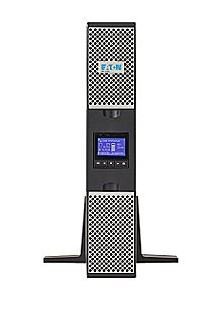
9PX3000RT
Eaton 9PX3000RT 3000VA, 2700W Uninterruptible Power Supply
9PX3000RT

ARSNX_4657984_L16A
APC SRT3000XLA Smart-Ups SRT 3000VA 120V
ARSNX_4657984_L16A

SRT3000RMXLW-IEC
APC SRT3000RMXLW-IEC Smart-UPS SRT 3000VA RM 208/230V IEC
SRT3000RMXLW-IEC
Interactive planning tool
AI UPS Capacity Calculator
Use this as a screening calculation. It does not certify a server, predict benchmark performance, design high-voltage electrical work, or replace the current OEM and facility documentation.
Before you buy
Four checks that keep planning estimates in context
Start with current documentation
Use the exact platform or OEM system guide as the source of truth for supported configurations and limits.
Keep assumptions visible
Every calculator input is an assumption until it is replaced by a measurement, vendor limit or facility design value.
Separate nameplate from application performance
Port speed, SSD peak rate, GPU memory and power ratings do not guarantee end-to-end workload results.
Escalate facility decisions
High-voltage distribution, rack electrical work, cooling design and liquid loops require qualified professionals and current codes.
Buying decision
Buying decision: what changes the answer
Use UPS capacity to meet a defined continuity objective: graceful shutdown, short ride-through or generator transfer. Buying extra VA without a runtime or redundancy objective does not create a reliable power strategy.
Detailed buying guide
What to check before you commit to the hardware
Define the protected load
Decide whether the UPS carries only AI servers or also switches, storage, management and cooling controls required for a graceful shutdown.
list every device that must remain powered for the continuity event. Recheck the result after material changes.
Use real watts
Nameplate maximums are conservative while idle averages can be dangerously low for capacity planning.
use measured sustained workload power or the approved server design load. Recheck the result after material changes.
Convert with power factor
VA describes apparent power and can differ from watts depending on the load.
use the UPS and server power-factor data instead of assuming watts equal VA in every case. Recheck the result after material changes.
Apply approved headroom
Operating a UPS at its absolute rating leaves little room for load growth, transients or battery aging.
follow manufacturer and facility loading guidance for the target redundancy mode. Recheck the result after material changes.
Get runtime from the curve
Battery runtime is nonlinear and varies with load, battery modules, age and temperature.
use the exact model’s runtime chart at the expected load and battery configuration. Recheck the result after material changes.
Decide whether shutdown or ride-through is the goal
A five-minute safe shutdown and a thirty-minute autonomous run are different designs.
write the required event duration and the action that occurs when it expires. Recheck the result after material changes.
Coordinate generator transfer
Where generation exists, the UPS usually bridges starting and transfer rather than the entire outage.
test generator transfer timing and UPS behavior as one system. Recheck the result after material changes.
Plan redundant UPS paths where required
Two power cords only add resilience when they terminate in truly independent protected paths.
trace A and B sources through UPS, PDU and branch distribution to identify common points. Recheck the result after material changes.
Include battery maintenance
Batteries lose capacity and require inspection or replacement.
record replacement intervals, environmental limits and a safe maintenance procedure. Recheck the result after material changes.
Monitor loading and battery health
Capacity changes as racks grow and batteries age.
integrate UPS load, alarms and battery status into regular infrastructure monitoring. Recheck the result after material changes.
Test graceful shutdown
Shutdown scripts can fail because of credentials, network dependencies or application state.
perform a controlled power event and confirm services stop and restart cleanly. Recheck the result after material changes.
Escalate electrical design
Large UPS systems involve hazardous energy and code requirements beyond a sizing calculator.
have qualified professionals validate installation, protection, bypass and maintenance procedures. Recheck the result after material changes.
Frequently asked questions
What should I know about “Define the protected load”?
Decide whether the UPS carries only AI servers or also switches, storage, management and cooling controls required for a graceful shutdown. list every device that must remain powered for the continuity event.
How should I validate “Use real watts”?
Nameplate maximums are conservative while idle averages can be dangerously low for capacity planning. use measured sustained workload power or the approved server design load.
Why does “Convert with power factor” affect the final design?
VA describes apparent power and can differ from watts depending on the load. use the UPS and server power-factor data instead of assuming watts equal VA in every case.
Which measurement matters most for “Apply approved headroom”?
Operating a UPS at its absolute rating leaves little room for load growth, transients or battery aging. follow manufacturer and facility loading guidance for the target redundancy mode.
When can “Get runtime from the curve” become a bottleneck?
Battery runtime is nonlinear and varies with load, battery modules, age and temperature. use the exact model’s runtime chart at the expected load and battery configuration.
How much reserve is appropriate for “Decide whether shutdown or ride-through is the goal”?
A five-minute safe shutdown and a thirty-minute autonomous run are different designs. write the required event duration and the action that occurs when it expires.
Can extra hardware solve “Coordinate generator transfer” by itself?
Where generation exists, the UPS usually bridges starting and transfer rather than the entire outage. test generator transfer timing and UPS behavior as one system.
What should be documented for “Plan redundant UPS paths where required”?
Two power cords only add resilience when they terminate in truly independent protected paths. trace A and B sources through UPS, PDU and branch distribution to identify common points.
How should “Include battery maintenance” be tested before production?
Batteries lose capacity and require inspection or replacement. record replacement intervals, environmental limits and a safe maintenance procedure.
How does growth change the plan for “Monitor loading and battery health”?
Capacity changes as racks grow and batteries age. integrate UPS load, alarms and battery status into regular infrastructure monitoring.
Methodology and official references
The calculator performs watts-to-VA arithmetic and a headroom screen. It does not predict battery runtime or electrical compliance. Runtime must come from the manufacturer curve at the measured load and installed battery configuration.
- NVIDIA GB300 NVL72
- NVIDIA Vera Rubin NVL72
- NVIDIA NVL72 AI Factory reference architecture
- NVIDIA Dynamic Power Management
- NVIDIA Mission Control power resiliency FAQ
- ASHRAE Datacom Series
As an Amazon Associate, Cloudzat may earn from qualifying purchases. Check the exact model, electrical specification, condition, warranty and installation requirements before purchase.