


Rack thermal planning
AI rack cooling requirements are set by sustained rack heat load, density, cooling technology and failure tolerance. Traditional room-air cooling can work for lower-density deployments, while modern rack-scale AI systems can require direct liquid cooling and dedicated facility interfaces. The important number is not rack units occupied but kilowatts that must be removed continuously.
Quick answer
How much cooling does this AI rack need?
Convert the approved rack power schedule into a thermal load, choose the cooling method that can remove it with redundancy, and validate inlet or coolant conditions during a full-rack load test.
Live Amazon options
Rack cooling and environmental monitoring options
Compare airflow hardware and environmental sensors that can help monitor rack conditions while you evaluate containment, room cooling or liquid-cooling capacity.
Rack airflow options
5 options
SX440
PROCOOL SX440 1U Silent Rack Mount Fan/Airflow = Intake/Home Theater AV Cabinet Cooling Broadcast Network Server Recording Studio Rack Mount Fan Panel 19"
SX440

SX2240
PROCOOL SX2240 / 1U Silent Rack Mount Fan/Airflow = Intake/Home Theater AV Cabinet Cooling Broadcast Network Server Recording Studio Rack Mount Fan Panel 19"
SX2240
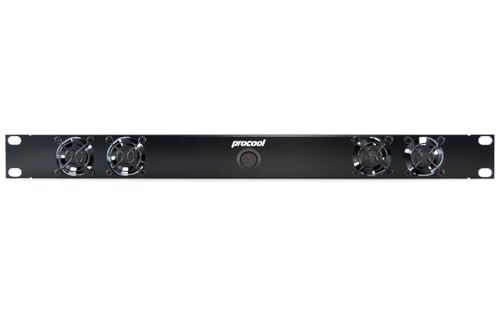
SX2240E
PROCOOL SX2240E / 1U Silent Rack Mount Fan/Airflow = Exhaust/Home Theater AV Cabinet Cooling Broadcast Network Server Recording Studio Rack Mount Fan Panel 19"
SX2240E

SX640
PROCOOL SX640 1U Silent Rack Mount Fan/Airflow = Intake/Home Theater AV Cabinet Cooling Broadcast Network Server Recording Studio Rack Mount Fan Panel 19"
SX640

SP640X
PROCOOL SP640X / 1U Temperature Controlled Silent Rack Fan/Airflow= INTAKE/Home Theater AV Cabinet Cooling Broadcast Server Recording Studio Rack Fan
SP640X
Rack temperature and environmental sensors
1 option
SR1UPNLTEMP
TRIPP LITE Blanking Panel with Digital Temperature Sensor, 1U Rack Panel, Front Panel LCD for Network Racks (SR1UPNLTEMP)
SR1UPNLTEMP
Interactive planning tool
AI Rack Cooling Requirements Planner
Use this as a screening calculation. It does not certify a server, predict benchmark performance, design high-voltage electrical work, or replace the current OEM and facility documentation.
Before you buy
Four checks that keep planning estimates in context
Start with current documentation
Use the exact platform or OEM system guide as the source of truth for supported configurations and limits.
Keep assumptions visible
Every calculator input is an assumption until it is replaced by a measurement, vendor limit or facility design value.
Separate nameplate from application performance
Port speed, SSD peak rate, GPU memory and power ratings do not guarantee end-to-end workload results.
Escalate facility decisions
High-voltage distribution, rack electrical work, cooling design and liquid loops require qualified professionals and current codes.
Buying decision
Buying decision: what changes the answer
Do not populate a rack to its mechanical capacity when cooling cannot sustain the electrical load. Spread servers, improve containment or use liquid cooling before accepting chronic throttling or hot spots.
Detailed buying guide
What to check before you commit to the hardware
Express rack cooling in kW
A rack’s heat load closely follows its IT electrical load, which makes kW a useful common planning unit.
use the same peak rack schedule for both electrical and mechanical reviews. Recheck the result after material changes.
Know the air-cooled limit of the room
Room capacity can be constrained by airflow distribution before the chiller or CRAH nameplate is exhausted.
measure rack inlet temperatures and pressure or airflow behavior as density rises. Recheck the result after material changes.
Use containment to stop recirculation
Hot and cold aisle separation reduces the mixing that sends exhaust back into server intakes.
inspect blanking panels, cable openings and aisle containment for bypass paths. Recheck the result after material changes.
Coordinate server and facility airflow
High-flow servers need enough cool air delivered to the rack without starving adjacent racks.
validate full-row behavior rather than testing one rack in isolation. Recheck the result after material changes.
Evaluate direct liquid cooling for dense racks
Rack-scale GPU systems increasingly move a large fraction of heat directly to liquid.
confirm CDU capacity, coolant temperatures, flow, pressure and supported facility-water interface with the OEM. Recheck the result after material changes.
Include residual air cooling
Even liquid-cooled systems may still reject some heat to air from PSUs, memory, networking or other components.
ask the vendor for the liquid-versus-air heat split and size room cooling for the residual load. Recheck the result after material changes.
Design cooling redundancy
A single CDU, pump or facility-water path can become a service-wide failure point.
map N, N+1 or other redundancy to the service availability objective. Recheck the result after material changes.
Monitor coolant and air conditions
Supply temperature alone does not reveal flow loss, return-temperature changes or rack hot spots.
collect inlet, return, flow, pressure and leak telemetry appropriate to the cooling system. Recheck the result after material changes.
Plan maintenance access
Dense racks with manifolds, hoses and large power connections can be difficult to service.
reserve clearances and isolation points so equipment can be replaced safely. Recheck the result after material changes.
Model failure response time
High-density racks can heat quickly when cooling stops, leaving little time for manual intervention.
automate alarms and workload reduction or shutdown based on approved thresholds. Recheck the result after material changes.
Include heat rejection upstream
A CDU moves heat but the building still needs to reject it through dry coolers, towers or chillers.
trace capacity from cold plate or rack loop to the final facility heat sink. Recheck the result after material changes.
Commission at maximum intended density
Cooling acceptance should reproduce the rack power level expected in production.
run simultaneous load, verify no throttling or thermal alarms and record environmental baselines. Recheck the result after material changes.
Frequently asked questions
What should I know about “Express rack cooling in kW”?
A rack’s heat load closely follows its IT electrical load, which makes kW a useful common planning unit. use the same peak rack schedule for both electrical and mechanical reviews.
How should I validate “Know the air-cooled limit of the room”?
Room capacity can be constrained by airflow distribution before the chiller or CRAH nameplate is exhausted. measure rack inlet temperatures and pressure or airflow behavior as density rises.
Why does “Use containment to stop recirculation” affect the final design?
Hot and cold aisle separation reduces the mixing that sends exhaust back into server intakes. inspect blanking panels, cable openings and aisle containment for bypass paths.
Which measurement matters most for “Coordinate server and facility airflow”?
High-flow servers need enough cool air delivered to the rack without starving adjacent racks. validate full-row behavior rather than testing one rack in isolation.
When can “Evaluate direct liquid cooling for dense racks” become a bottleneck?
Rack-scale GPU systems increasingly move a large fraction of heat directly to liquid. confirm CDU capacity, coolant temperatures, flow, pressure and supported facility-water interface with the OEM.
How much reserve is appropriate for “Include residual air cooling”?
Even liquid-cooled systems may still reject some heat to air from PSUs, memory, networking or other components. ask the vendor for the liquid-versus-air heat split and size room cooling for the residual load.
Can extra hardware solve “Design cooling redundancy” by itself?
A single CDU, pump or facility-water path can become a service-wide failure point. map N, N+1 or other redundancy to the service availability objective.
What should be documented for “Monitor coolant and air conditions”?
Supply temperature alone does not reveal flow loss, return-temperature changes or rack hot spots. collect inlet, return, flow, pressure and leak telemetry appropriate to the cooling system.
How should “Plan maintenance access” be tested before production?
Dense racks with manifolds, hoses and large power connections can be difficult to service. reserve clearances and isolation points so equipment can be replaced safely.
How does growth change the plan for “Model failure response time”?
High-density racks can heat quickly when cooling stops, leaving little time for manual intervention. automate alarms and workload reduction or shutdown based on approved thresholds.
Methodology and official references
The page uses rack IT kW as a thermal starting point and references NVIDIA high-density designs and ASHRAE datacom guidance. It does not design a CRAH, CDU or facility-water loop. Mechanical professionals must confirm the final heat-rejection system.
- NVIDIA GB300 NVL72
- NVIDIA Vera Rubin NVL72
- NVIDIA NVL72 AI Factory reference architecture
- NVIDIA Dynamic Power Management
- NVIDIA Mission Control power resiliency FAQ
- ASHRAE Datacom Series
As an Amazon Associate, Cloudzat may earn from qualifying purchases. Check the exact model, electrical specification, condition, warranty and installation requirements before purchase.