


Rack capacity screening
The AI Rack Power Calculator combines server loads with switches, storage, PDUs and redundancy headroom to show whether a proposed rack fits its electrical envelope. High-density AI makes simple “servers × watts” arithmetic risky because simultaneous peaks, dual feeds and failure states determine what each branch must carry.
Quick answer
How much power can this AI rack safely carry?
Use measured or OEM server power, add network and support equipment, then test normal and single-feed failure scenarios. The rack is ready only if every surviving electrical path remains within approved capacity.
Live Amazon options
Rack PDUs and UPS options for AI rack power planning
Compare metered rack PDUs and online UPS options for measuring, distributing and protecting rack power. Match voltage, current, plug type, outlet layout and rack design to your installation.
Metered and monitored rack PDU options
6 options
AP8958NA3
APC Switched Rack AP8958NA3 8-Outlets PDU
AP8958NA3

AP8831
APC AP8831 Rack PDU 2G Metered ZeroU 20A 100-120V 11 5-15
AP8831

B00DODZWBC
APC by Schneider Electric AP8841 Rack PDU 2G Metered ZeroU
B00DODZWBC

AP7802B
APC Rack PDU, Metered, 2U, 30A, 120V, 16 5-20
AP7802B

AP8853
APC Metered Rack AP8853 42-Outlets PDU
AP8853

AMERICAN P_AP8858NA3
APC American Power Conversion ap8858na3 Rack PDU 2g 208v 20a 0u 18-c13 2-c19 metered l620 Cord
AMERICAN P_AP8858NA3
Online rack UPS options
4 options
PR#-SUINT1500LCD2U
Tripp Lite SUINT1500LCD2U 1500VA 1350W Ups Smart Online Intl LCD Rackmount 208/230V USB 2U
PR#-SUINT1500LCD2U
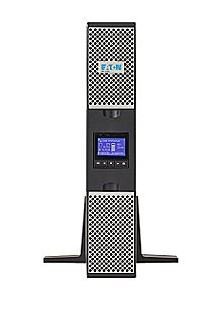
9PX3000RT
Eaton 9PX3000RT 3000VA, 2700W Uninterruptible Power Supply
9PX3000RT

ARSNX_4657984_L16A
APC SRT3000XLA Smart-Ups SRT 3000VA 120V
ARSNX_4657984_L16A

SRT3000RMXLW-IEC
APC SRT3000RMXLW-IEC Smart-UPS SRT 3000VA RM 208/230V IEC
SRT3000RMXLW-IEC
Interactive planning tool
AI Rack Power Calculator
Use this as a screening calculation. It does not certify a server, predict benchmark performance, design high-voltage electrical work, or replace the current OEM and facility documentation.
Before you buy
Four checks that keep planning estimates in context
Start with current documentation
Use the exact platform or OEM system guide as the source of truth for supported configurations and limits.
Keep assumptions visible
Every calculator input is an assumption until it is replaced by a measurement, vendor limit or facility design value.
Separate nameplate from application performance
Port speed, SSD peak rate, GPU memory and power ratings do not guarantee end-to-end workload results.
Escalate facility decisions
High-voltage distribution, rack electrical work, cooling design and liquid loops require qualified professionals and current codes.
Buying decision
Buying decision: what changes the answer
Lower rack density when distribution or cooling cannot support the planned load with redundancy. Empty rack units are not wasted if they preserve electrical and thermal reliability.
Detailed buying guide
What to check before you commit to the hardware
Inventory every powered device
Compute is the largest load in many AI racks, but top-of-rack switches, storage, management, pumps and other devices also consume branch capacity.
create a rack schedule with quantity and power boundary for each device class. Recheck the result after material changes.
Use realistic server values
Component-TDP sums can differ from supported server nameplate and measured wall power.
use OEM maximums for conservative planning and replace them with commissioned PDU data when available. Recheck the result after material changes.
Model simultaneous utilization
If all servers can train or serve at high load together, diversity assumptions may be unsafe.
use scheduler and workload evidence before applying any concurrency reduction. Recheck the result after material changes.
Split dual feeds explicitly
A and B feeds can share load in normal operation but each may need to carry more during a failure.
calculate the maximum surviving-feed demand and compare it with the approved continuous capacity. Recheck the result after material changes.
Check PDU rating and outlet layout
A rack can fit aggregate kW while overloading a phase, branch or individual outlet group.
map servers to outlets and phases rather than treating the PDU as one bucket. Recheck the result after material changes.
Reserve network and storage power
Switches with high-speed optics can add meaningful fixed load that is easy to omit from server-centric calculations.
include switch base power plus the expected transceiver population. Recheck the result after material changes.
Coordinate with cooling density
Rack kW approximates the heat load that must be removed from the room or liquid loop.
send the same peak rack schedule to the mechanical design so power and cooling stay synchronized. Recheck the result after material changes.
Plan maintenance states
A PDU, feed or cooling component may be taken out of service for maintenance without an equipment failure.
verify the rack can remain within safe limits during planned maintenance if continuous operation is required. Recheck the result after material changes.
Use metering for drift
Server additions, firmware changes or workload shifts can move rack power away from the original spreadsheet.
alert on sustained branch and rack utilization before the remaining reserve becomes operationally small. Recheck the result after material changes.
Treat very high density as a facility project
Racks approaching tens or hundreds of kilowatts require specialized distribution and cooling beyond conventional server-room practice.
engage the facility team before the hardware order, not after delivery. Recheck the result after material changes.
Document expansion limits
A rack plan should state how many additional nodes can be added under normal and redundant operation.
keep approved spare kW and outlet capacity visible in the rack record. Recheck the result after material changes.
Commission the populated rack
Individual server burn-in does not prove the rack survives all systems at high load together.
run a coordinated load test and confirm feed balance, PDU temperatures, cooling response and alarms. Recheck the result after material changes.
Frequently asked questions
What should I know about “Inventory every powered device”?
Compute is the largest load in many AI racks, but top-of-rack switches, storage, management, pumps and other devices also consume branch capacity. create a rack schedule with quantity and power boundary for each device class.
How should I validate “Use realistic server values”?
Component-TDP sums can differ from supported server nameplate and measured wall power. use OEM maximums for conservative planning and replace them with commissioned PDU data when available.
Why does “Model simultaneous utilization” affect the final design?
If all servers can train or serve at high load together, diversity assumptions may be unsafe. use scheduler and workload evidence before applying any concurrency reduction.
Which measurement matters most for “Split dual feeds explicitly”?
A and B feeds can share load in normal operation but each may need to carry more during a failure. calculate the maximum surviving-feed demand and compare it with the approved continuous capacity.
When can “Check PDU rating and outlet layout” become a bottleneck?
A rack can fit aggregate kW while overloading a phase, branch or individual outlet group. map servers to outlets and phases rather than treating the PDU as one bucket.
How much reserve is appropriate for “Reserve network and storage power”?
Switches with high-speed optics can add meaningful fixed load that is easy to omit from server-centric calculations. include switch base power plus the expected transceiver population.
Can extra hardware solve “Coordinate with cooling density” by itself?
Rack kW approximates the heat load that must be removed from the room or liquid loop. send the same peak rack schedule to the mechanical design so power and cooling stay synchronized.
What should be documented for “Plan maintenance states”?
A PDU, feed or cooling component may be taken out of service for maintenance without an equipment failure. verify the rack can remain within safe limits during planned maintenance if continuous operation is required.
How should “Use metering for drift” be tested before production?
Server additions, firmware changes or workload shifts can move rack power away from the original spreadsheet. alert on sustained branch and rack utilization before the remaining reserve becomes operationally small.
How does growth change the plan for “Treat very high density as a facility project”?
Racks approaching tens or hundreds of kilowatts require specialized distribution and cooling beyond conventional server-room practice. engage the facility team before the hardware order, not after delivery.
Methodology and official references
This tool aggregates user-entered kW and reserve factors. It does not select breaker sizes, wire gauges or code limits. Production rack distribution must follow facility standards, equipment documentation and qualified electrical engineering.
- NVIDIA GB300 NVL72
- NVIDIA Vera Rubin NVL72
- NVIDIA NVL72 AI Factory reference architecture
- NVIDIA Dynamic Power Management
- NVIDIA Mission Control power resiliency FAQ
- ASHRAE Datacom Series
As an Amazon Associate, Cloudzat may earn from qualifying purchases. Check the exact model, electrical specification, condition, warranty and installation requirements before purchase.