


Three-way NAS hard-drive comparison
Compare the three mainstream CMR NAS hard-drive families by capacity, performance strategy, support features, noise and current array cost.
Specifications reviewed August 2, 2026. Verify the exact model, seller and final Amazon price before buying.
Quick answer
Which one should you choose?
Toshiba N300 is the performance and high-capacity choice, with 7,200 RPM throughout the cited range and capacities to 22TB. Seagate IronWolf is the support-feature choice, offering model variety plus cited Rescue coverage and IronWolf Health Management on compatible NAS systems. WD Red Plus is the quiet-efficiency choice, with several lower-RPM and low-power revisions. All three overlap in the same 180TB/year, three-year-warranty NAS class, so select the exact capacity and model before comparing price.
Speed and capacity
7,200 RPM across the range, strong sequential ratings and sizes to 22TB.
Recovery and health features
Cited Rescue coverage and IronWolf Health Management on compatible systems.
Quiet and efficient revisions
Several model-specific low-power options for home and office NAS use.
Before you buy
Four checks for a better NAS drive decision
Live Amazon listings
Live Toshiba N300 prices on Amazon
Compare the exact model, capacity, seller, condition and warranty on Amazon before checkout.
Toshiba N300
7 listings
n300
HDWG760EZSTA
CheckedToshiba N300 NAS Hard Drive 6TB 512MB - Festplatte - Serial ATA (HDWG760EZSTA)
n300
MN10ADA600S
Checked
n300
MN10ADA800S
CheckedTOSHIBA N300 Internal Hard Drive 8 Tb 7200 RPM 512 Mb 3.5" Serial, W129162310 (7200 RPM 512 Mb 3.5 Serial Ata Iii)
n300
HDWG780EZSTA
CheckedHDWG780EZSTA

n300
MN10ADA10TS
CheckedToshiba 10TB N300 NAS Internal HDD - 3.5" SATA-3 512MB Cache 6GB/s 7200RPM Internal Hard Drive 7/24 NAS Unit Server and Security Disk (MN10ADA10TS)

n300
HDWG51CUZSVA
Checked
n300
MN11ACA16TS
CheckedTOSHIBA N300 16TB Internal NAS Hard Drive, 3.5" SATA HDD, 7200 RPM, 24/7 Operation, Supports 1-8 Bay Systems, 128MB Cache, 180TB/Year Workload, 3 Year Warranty (HDEXZ11ZNA51F)
Seagate IronWolf
5 listings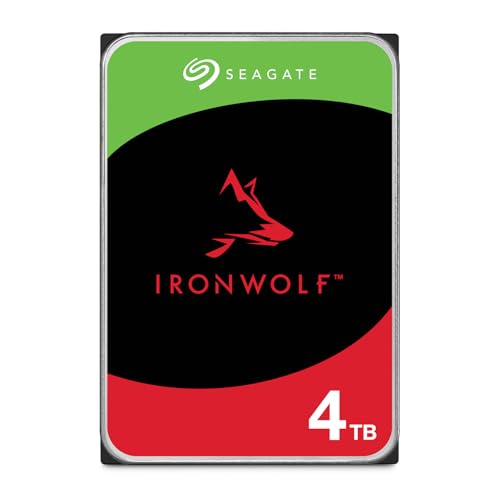
ironwolf
ST4000VN006
CheckedSeagate IronWolf 4TB NAS Internal Hard Drive CMR 3.5 Inch SATA 6Gb/s 5400 RPM 64MB Cache for RAID Network Attached Storage Rescue Services (ST4000VNZ06/006)

ironwolf
ST8000VN004
Checked
ironwolf
ST8000VN002
Checked
ironwolf
ST12000VN0008
CheckedSeagate IronWolf 3.5" 12TB Internal Hard Disk HDD 3 Year Warranty 256MB 7200rpm 24 Hours Service for PC NAS RV Sensor ST12000VN0008
ironwolf
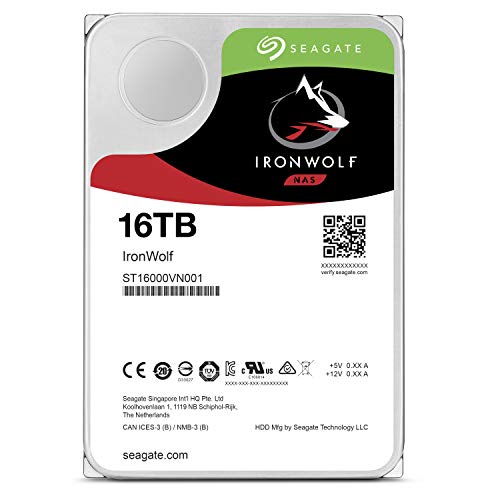
ST16000VN001
CheckedSeagate IronWolf 16TB SATA 256Mb 7200Rpm
WD Red Plus
5 listings
wd red plus
WD80EFZZ
CheckedWestern Digital 8TB WD Red Plus NAS Internal Hard Drive HDD - 5640 RPM, SATA 6 Gb/s, CMR, 128 MB Cache, 3.5" - WD80EFZZ

wd red plus
WD80EFPX
CheckedWestern Digital WD Red Plus Internal Hard Drive 8TB CMR 3.5 inch SATA 5640 RPM 256MB NAS WD80EFPX-AJP Eco Package

wd red plus
WD80EFBX
CheckedWestern Digital 8TB WD Red Plus NAS Internal Hard Drive HDD - 7200 RPM, SATA 6 Gb/s, CMR, 256 MB Cache, 3.5" - WD80EFBX

wd red plus
WD120EFGX
CheckedWestern Digital 12TB WD Red Plus NAS Internal Hard Drive HDD - 7200 RPM, SATA 6 GB/s, CMR, 512 MB Cache, 3.5" - WD120EFGX

wd red plus
WD120EFBX
CheckedWestern Digital 12TB WD Red Plus NAS Internal Hard Drive HDD - 7200 RPM, SATA 6 GB/s, CMR, 512 MB Cache, 3.5" - WD120EFBX
Latest successful price check: 2026-09-26 14:12:06 UTC.
Verified specifications
Side-by-side comparison
| Specification | Toshiba N300 | Seagate IronWolf | WD Red Plus |
|---|---|---|---|
| Current cited capacity range | 4TB to 22TB | 2TB to 16TB | 2TB to 12TB |
| Recording | CMR | CMR | CMR |
| Spindle-speed strategy | 7,200 RPM throughout | 5,400 or 7,200 by model | 5,400, 5,640 or 7,200 by model |
| Maximum cited transfer | Up to 281, 294 or 298MB/s by exact N300 model | Model-dependent; about 210MB/s on cited 8TB/12TB models | Up to 260MB/s in cited 12TB model |
| Workload | 180TB/year | 180TB/year | 180TB/year |
| Bay class | Up to 8 or 12 by exact N300 model | 1 to 8 | Up to 8 |
| MTTF | 1.0 to 1.2 million hours | 1 million hours | 1 million hours |
| Warranty | 3 years | 3 years | 3 years |
| Bundled recovery | Not stated | Three years Rescue on cited models | Not stated |
| Primary strength | Consistent performance and large capacities | Support ecosystem and model choice | Quiet and efficient exact revisions |
Specifications apply to the exact cited models or current family data sheets. Verify the suffix on the listing before buying.
Interactive planning tool
NAS drive decision helper
Choose capacity, priority and installation environment.
Buying guide
How to choose the right drive for this comparison
These three families share a class but not a personality
N300, standard IronWolf and WD Red Plus are all CMR NAS families aimed at home, office and small-business arrays. Their cited annual workload and warranty classes overlap, which means a family logo alone does not establish durability or suitability. The meaningful differences are capacity ceiling, spindle-speed strategy, exact-model power and acoustics, and the support services attached to the purchase.
Toshiba emphasizes consistent 7,200 RPM performance. Seagate offers different mechanical profiles and wraps the family in Rescue and IronWolf Health features. Western Digital offers the broadest variety of quiet and efficient exact revisions at common capacities. Buyers should first identify the priority that cannot be changed later, such as bay count or NAS location, then compare live prices among the models that satisfy it.
N300 wins the standard-family capacity ceiling
N300 currently reaches 22TB, standard IronWolf reaches 16TB and Red Plus reaches 12TB in the cited data sheets. That gives Toshiba a major advantage in compact enclosures. A two-bay mirror can reach 22TB usable with N300, while the same standard-family limit is 16TB with IronWolf and 12TB with Red Plus before moving to a Pro or enterprise product.
Current MN11 N300 models from 14TB through 22TB support up to twelve bays and use 1024MB cache, with 294MB/s ratings at 14TB to 20TB and 298MB/s at 22TB. They remain in the standard 180TB-per-year workload and three-year-warranty class, so the larger bay rating should not be confused with a Pro or enterprise workload rating. High capacity reduces mechanism count, but each failure represents more data and potentially longer rebuild time.
IronWolf has the clearest service bundle
Seagate's cited standard IronWolf models include three years of Rescue Data Recovery Services where eligible. That feature does not make a disk failure harmless, but it is a genuine differentiator when prices are close. IronWolf Health Management can also add platform-specific monitoring and recommended actions on compatible NAS systems.
N300 and Red Plus include NAS-tuned firmware and vibration features, but the cited standard-family sheets do not list the same bundled recovery service. Buyers should still evaluate the quality of local warranty handling, because a nominal service is less useful if the exact stock is an imported or OEM item outside the expected region. Every family still needs an independent backup.
WD Red Plus offers the strongest quiet-home options
Red Plus contains lower-RPM models such as WD80EFPX and quiet helium models such as WD120EFBX. Those drives can reduce idle power, heat and noise in a living-room or office NAS. The cost is lower peak sequential performance than the fastest N300 or WD's own WD120EFGX. For one-gigabit clients, that trade can be sensible because the network remains slower than the drive.
The difficulty is model ambiguity. WD80EFPX, WD80EFZZ and WD80EFBX are all 8TB Red Plus products with different specifications. WD120EFGX and WD120EFBX are both 12TB Red Plus drives with radically different noise and power. A retailer listing that hides the suffix should not be used for a precise purchase decision.
N300 is strongest when throughput and bays are constrained
Current N300 models are rated at 281MB/s from 4TB through 12TB, 294MB/s across current 14TB through 20TB profiles and 298MB/s at 22TB. That is a strong profile for faster networks, local backups, RAID scrubs and rebuilds. The all-7,200-RPM range also reduces uncertainty when a buyer wants consistent spindle speed across capacities.
The performance emphasis can increase noise and power at smaller capacities. The current N300 8TB lists 34dB typical idle and 5.74W active idle, making it a poor automatic recommendation for a quiet room. At 12TB and larger, the cited N300 acoustics and power improve considerably. Again, capacity-level comparison is more trustworthy than a blanket family judgment.
A one-gigabit NAS makes all three look similar
A single large-file transfer over 1GbE commonly stops around 110MB/s, below the sequential capability of every model in the comparison. In that environment, the practical differences are sound, energy, warranty support and purchase price. Faster drive ratings matter more with 2.5GbE, 5GbE, 10GbE, multiple users or local operations that bypass the client network.
Small-file performance, metadata and random access depend on more than maximum transfer rate. Spindle speed helps, but no mechanical drive provides SSD latency. Systems hosting virtual machines or active databases may need SSD storage or cache regardless of which NAS HDD is selected. Use these families for bulk capacity and design the storage tiers around the workload.
Array economics can reverse the per-drive winner
The lowest-priced drive is not always the cheapest array. A larger N300 may allow the same usable capacity with fewer mechanisms and a smaller NAS. A quieter Red Plus may reduce electricity and cooling cost over several years. IronWolf's included Rescue service may have value that is not visible in price per terabyte. Each benefit should be translated into the actual drive count and ownership period.
Compare complete new-stock arrays at the same RAID level, then add a backup target and spare strategy. An extra parity drive can cost more than the difference between brands but provide a much larger risk reduction. The calculator should guide budget allocation, not encourage filling every bay simply because a model has a favourable unit price.
A practical three-step buying process
First, choose the usable capacity, RAID tolerance and maximum bay count. Second, remove models that are unsuitable for the room, NAS compatibility list or workload. Third, compare exact model numbers, live checkout prices, warranty region and support features. This process prevents marketing labels from replacing engineering requirements.
For most quiet home systems, begin with a current Red Plus suffix or quieter IronWolf variant. For performance and high capacity, begin with N300. For buyers who value recovery coverage and compatible health integration, begin with IronWolf. The tool on this page applies those priorities but cannot replace checking the complete model number and NAS vendor list before ordering.
Frequently asked questions
Which is best: N300, IronWolf or WD Red Plus?
N300 is strongest for performance and high capacity, IronWolf for its support ecosystem, and Red Plus for quiet efficient exact models. The best choice depends on capacity and environment.
Do all three use CMR?
Yes. The cited current families use conventional magnetic recording.
Which family reaches the highest capacity?
The cited N300 range reaches 22TB, ahead of standard IronWolf at 16TB and WD Red Plus at 12TB.
Which family has the longest warranty?
All three cited standard families have three-year limited warranties.
Which is best for a quiet living-room NAS?
Start with a quiet exact Red Plus or lower-RPM IronWolf model. Some higher-capacity N300 models also have low cited idle acoustics, so compare the exact capacity.
Can the three brands be mixed in RAID?
They can often coexist when capacity, sector format and compatibility match, but uneven speed, vibration and warranty handling can make a uniform array easier to manage.
Sources and buying notes
Manufacturer specifications can change by exact model and region. Use these references with the exact model shown on the Amazon listing.
- Toshiba N300 May 2026 data sheet
- Seagate IronWolf current data sheet
- Western Digital WD Red Plus current data sheet
How Cloudzat checks listings
Cloudzat separates Toshiba N300, standard IronWolf and WD Red Plus by exact model, capacity and condition. Conflicting capacities, accessories and unrelated products are excluded.
As an Amazon Associate, Cloudzat may earn from qualifying purchases. Price and availability may change; Amazon at purchase time controls the final offer.