


Ryzen AI Max+ PRO 495 systems and NVIDIA RTX Spark PCs solve the same personal-AI problem with very different architectures. AMD offers up to 192GB of shared memory in an x86 Windows/Linux platform, while RTX Spark targets Windows-native agents with up to 128GB unified memory, full CUDA/RTX software and roughly one petaflop of AI performance.
NVIDIA says RTX Spark supports up to 128GB unified memory and targets 120B-parameter local LLMs with very long context. AMD PRO 495 supports up to 192GB system memory, so the central trade-off is capacity and x86 flexibility versus CUDA software depth and NVIDIA acceleration.
Ryzen AI Max+ PRO 495 or RTX Spark: which should you buy?
Choose a 192GB Ryzen AI Max+ PRO 495 system when memory capacity above 128GB or conventional x86 workstation compatibility is decisive. Choose RTX Spark when CUDA, NVIDIA AI software, graphics acceleration or Windows-native agent tooling is the stronger requirement and 128GB covers the workload.
Current Ryzen AI Max+ PRO 495, RTX Spark & Local AI Deals on Amazon
Compare actual complete computers from Amazon. Matching models appear first, followed by clearly identified alternative systems. Always verify the selected RAM and storage configuration.
7 suitable complete systems · 0 exact · 7 alternatives
NVIDIA DGX Spark
Different system2 offers
CyberGeek DGX Spark Personal AI Supercomputer, GB10 Grace Blackwell Superchip, 20-Core Arm CPU, 128GB LPDDR5x Unified Memory, 2TB NVMe SSD, Up to 1 PFLOP FP4 AI Performance, DGX OS
More specifications
- Condition
- New
- Seller
- Prime Distributor Global
- ASIN
- B0HHDSBTBQ

NVIDIA DGX Spark GB10 Grace Blackwell Superchip, 128 GB LPDDR5x, ARM Processor, 4 TB NVME M.2 SSD Storage
More specifications
- Condition
- New
- Seller
- Platinum Micro, Inc.
- ASIN
- B0GFY25JCR
Mac Studio M5 Ultra
Different system2 offers
Apple 2026 Mac Studio desktop computer M5 Ultra w/ AppleCare+ (3 years)
More specifications
- Condition
- New
- Seller
- Amazon.com
- ASIN
- B0HGN878Z1

Apple 2026 Mac Studio Desktop Computer M5 Ultra chip
More specifications
- Condition
- New
- Seller
- Amazon.com
- ASIN
- B0HGKZBTQD
Mac Studio M5 Max
Different system3 offers
(CTO) Apple Mac Studio: M5 Max 18C CPU - 32C GPU, 36GB, 1TB - Z1U4000E5
More specifications
- Condition
- New
- Seller
- Expercom - Apple Premier Partner
- ASIN
- B0HGV5QP4D
Apple 2026 Mac Studio desktop computer M5 Max chip w/ AppleCare+ (3 years)
More specifications
- Condition
- New
- Seller
- Amazon.com
- ASIN
- B0HGMPWY5W
Apple 2026 Mac Studio Desktop Computer M5 Max chip
More specifications
- Condition
- New
- Seller
- Amazon.com
- ASIN
- B0HGKSQMX6
Verified savings use an Amazon-reported reference price and a recently confirmed offer for the same ASIN. Last-verified prices can be older than today's checkout price. Confirm the model, installed memory, seller and stock before ordering.
Other Deals You Might Like
High-value upgrades for compatible local AI setups. Check system compatibility and the latest Amazon price before buying.
AI accelerator GPUs 4
Standalone GPUs for compatible workstations; confirm PCIe, power and enclosure clearance.

GIGABYTE AORUS RTX 5090 AI Box Graphics Card - 32GB GDDR7, 512Bit, PCI-E 5.0, 2407MHz Core Clock, 3X DP 2.1, 1x HDMI 2.1, GV-N5090IXEB-32GD 1.0
More specifications
- Condition
- New
- Seller
- MrReliable-USA
- ASIN
- B0FPDRFYT7
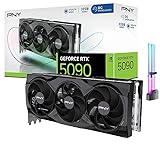
CyberGeek GeForce RTX 5090 Overclocked Triple Fan Graphics Card, 32GB GDDR7, 28 Gbps, 512-bit, 3352 AI Tops, DLSS 4, AI Content Creation, Local LLM Inference, DP 2.1b x3, HDMI 2.1b, with GPU Holder
More specifications
- Condition
- New
- Seller
- Prime Outlets Online
- ASIN
- B0GK8D8DJH

MSI GeForce RTX 5090 32G SUPRIM SOC Graphics Card VD8997
More specifications
- Condition
- New
- Seller
- MrReliable-USA
- ASIN
- B0DT6SN14V

ASUS ROG Matrix Platinum GeForce RTX 5090 OC 30th-Anniversary Edition Gaming Graphics Card, 32GB GDDR7, PCIe 5.0, 512-bit, Liquid Metal Cooling, DisplayPort 2.1b, HDMI 2.1b, MTX5090P32G30TH
More specifications
- Condition
- New
- Seller
- MrReliable-USA
- ASIN
- B0GRFXRSZV
Will this hardware class fit your workload?
Use workload, memory and software priorities to identify the strongest platform fit.
The result will focus on the trade-off that matters most for this decision.
Buying decision summary
| Decision factor | Ryzen AI Max+ PRO 495 vs RTX Spark | Alternative / implication |
|---|---|---|
| Memory fit | Up to 192GB | Choose capacity from the real model working set, not the headline alone |
| Software path | Windows/x86 and AMD-oriented unless noted | CUDA or MLX requirements can outweigh capacity |
| Storage | Plan active-model NVMe capacity | Large model libraries often need several terabytes |
| Networking | Match the workstation role | 2.5/5/10GbE matters for NAS and served inference |
| Buying timing | Verify exact configuration and stock | Newly announced hardware can have uneven availability |
Check these four things before choosing a system
Is more than 128GB required?
If the real working set crosses 128GB, PRO 495 has a capacity advantage. If it does not, compare other factors first.
Is CUDA mandatory?
A hard CUDA dependency can make RTX Spark the more practical choice even when the AMD system offers more memory.
Compare finished systems
Ports, storage, cooling, warranty and price can vary by vendor, so do not compare processor platforms in isolation.
Separate fit from speed
Establish that the model fits, then look for model-specific performance evidence rather than extrapolating from marketing TOPS.
Ryzen AI Max+ PRO 495 vs RTX Spark buying guide
The real choice is 192GB capacity versus CUDA convenience
Ryzen AI Max+ PRO 495 systems and RTX Spark target the same personal-AI buyer from opposite directions. PRO 495 systems can be configured with up to 192GB of shared memory in a conventional x86 Windows/Linux computer. NVIDIA positions RTX Spark around up to 128GB unified memory, Windows-native AI agents and the CUDA/RTX software ecosystem. If a workload exceeds 128GB after model weights, context and working reserve, the AMD platform has a clear capacity argument. If the workload fits inside 128GB and depends on CUDA, RTX Spark can be the easier path.
Do the fit calculation before comparing speed
A fair comparison starts by asking whether the desired model actually fits. A 120B model at an efficient quantization may fit inside both machines, while a larger quantization or much longer context can push a 128GB system into a tight state. Conversely, a 27B or 70B workload may leave so much spare memory on RTX Spark that paying for 192GB brings little practical benefit. Use the model-fit calculator to establish the memory boundary first; throughput measurements only become meaningful after both systems can run the same workload without swapping or severe compromise.
CUDA is a software advantage, not just a brand label
Many AI libraries, extensions and Windows applications are written around NVIDIA's CUDA stack. That can reduce setup time, provide better-tested kernels and make it easier to reproduce instructions from model communities. A PRO 495 system can still run a broad range of local models through AMD-compatible backends, but support varies by application. Buyers should list their non-negotiable tools before choosing hardware. If one critical package is CUDA-only, a larger AMD memory pool may not compensate for the engineering work required to replace that package.
PRO 495 keeps conventional x86 flexibility
A Ryzen AI Max+ PRO 495 machine behaves like a general-purpose Windows or Linux workstation rather than a specialized AI appliance. That is useful when the same computer must compile software, run virtual machines, host databases or support creator applications alongside inference. The price of that flexibility is shared resource pressure: CPU jobs and AI jobs draw from the same memory and power budget. RTX Spark is also a Windows PC class, but NVIDIA's positioning is more tightly connected to its AI and graphics ecosystem. The right architecture depends on how mixed the workload will be.
128GB can be enough for a large percentage of buyers
The jump from 128GB to 192GB sounds dramatic, yet unused capacity has no performance value. A buyer focused on 7B through 70B models, moderate context and one interactive session may never approach the RTX Spark ceiling. In that case, software support, purchase price, noise and storage can matter more than the extra 64GB. The 192GB tier becomes valuable when the user can identify a model, context size, concurrent workload or non-AI application that would otherwise force aggressive quantization or offloading.
192GB is more attractive for mixed-memory workloads
PRO 495's extra capacity is not reserved exclusively for model weights. Retrieval indexes, embeddings, data-processing tools, VMs and creator applications can stay resident while a model runs. That makes the 192GB configuration especially interesting for developers building end-to-end local systems rather than simply opening a chat interface. An RTX Spark buyer can achieve a similar workflow if the total working set remains within 128GB, but the smaller ceiling requires more discipline around background applications and parallel sessions.
NVIDIA claims about 1 PFLOP need context
NVIDIA promotes RTX Spark at roughly one petaflop of AI performance, but that figure is tied to particular precision and workload conditions. It should not be treated as a universal tokens-per-second prediction for every model. Model architecture, quantization, context, kernel support and runtime all influence observed performance. The same caution applies to AMD TOPS figures. For a purchase decision, benchmark the exact model and backend when credible results exist and avoid converting marketing arithmetic into a guaranteed application speed.
Storage and I/O can erase a good compute choice
Both platforms need enough local SSD capacity for model variants, datasets and caches. If the user repeatedly moves 100GB-plus files from slow external storage, model-loading friction can dominate the experience even when inference itself is fast. Compare internal NVMe capacity, expansion slots and external I/O before choosing a system. A fast NAS can also help centralize models for multiple machines, but active models are usually better served from local SSD when the software expects low-latency access.
Power, thermals and acoustics are system-specific
The processor platform does not tell you how loud a particular computer will be. PRO 495 vendors can choose different chassis sizes and power limits, while RTX Spark systems can also vary by OEM implementation. Review the finished machine, not just the silicon. A 192GB mini workstation running at a high sustained power limit may be less pleasant on a desk than a larger, slower-spinning design. Buyers who plan 24/7 model serving should value cooling stability and efficiency more than a short peak score.
Gaming and graphics can tilt the decision toward RTX
RTX Spark is also designed around NVIDIA RTX graphics capabilities, so buyers who combine local AI with graphics-heavy Windows applications may get more value from its ecosystem than from a capacity-first AMD system. The comparison should include the actual creator or graphics software you use, not only LLM tests. A PRO 495 machine can still handle conventional graphics workloads through Radeon 8065S, but specialized ray tracing, CUDA rendering or vendor-specific plugins may favor NVIDIA strongly.
Choose based on the hardest requirement
A simple way to decide is to identify the requirement that cannot be compromised. If it is more than 128GB of practical working memory, start with a 192GB PRO 495 system. If it is CUDA compatibility, start with RTX Spark. If neither is mandatory, compare complete computers on price, ports, storage, warranty, noise and availability. This prevents the decision from being distorted by one headline number and keeps the recommendation tied to the work the machine must actually perform.
Bottom line: neither platform wins every local-AI workload
Ryzen AI Max+ PRO 495 offers a compelling memory-capacity advantage and traditional x86 flexibility. RTX Spark offers a strong NVIDIA software path and a substantial 128GB unified-memory pool. A model that fits comfortably in both may run more smoothly on the platform with better runtime support; a workload that exceeds 128GB can make the PRO 495 system the practical choice before performance is even discussed. Use memory fit, software fit and complete-system quality as three separate gates in the purchase decision.
Availability can also settle a close decision. A well-supported system that is in stock with the required memory and warranty may be preferable to waiting for a theoretically better configuration with uncertain delivery.
Ryzen AI Max+ PRO 495 vs RTX Spark questions
Which has more memory, PRO 495 or RTX Spark?
Ryzen AI Max+ PRO 495 systems can be configured up to 192GB, while NVIDIA positions RTX Spark up to 128GB unified memory.
Which is better for CUDA?
RTX Spark is the natural choice when CUDA compatibility is a hard requirement because it is built around NVIDIA’s software ecosystem.
Which is better for a model that needs 150GB of working memory?
A 192GB PRO 495 system is the viable option of the two because a 150GB working set exceeds the stated 128GB RTX Spark ceiling.
Is RTX Spark faster?
That cannot be answered universally. Performance depends on the model, precision, backend and workload. Compare model-specific tests after confirming both systems can fit it.
Is 192GB wasted for 70B models?
It can be more than necessary for many 70B quantizations, though long context, concurrency and other applications can still use the headroom.
Can PRO 495 run Windows applications normally?
Yes, it is an x86 Windows/Linux platform. Exact OEM drivers and software support should still be checked.
Why would I pick RTX Spark with less memory?
CUDA support, NVIDIA AI tooling, graphics acceleration and application compatibility may matter more than the extra 64GB for workloads that fit in 128GB.
What is the simplest decision rule?
Choose the platform that satisfies your non-negotiable constraint first: memory above 128GB points to PRO 495; mandatory CUDA points to RTX Spark.
Specifications and reference material
Use manufacturer specifications for hardware details and confirm the exact retail configuration before buying.
- AMD Ryzen AI Max+ PRO 495 specifications
- NVIDIA RTX Spark announcement
- Apple Mac Studio M5 Max and M5 Ultra
As an Amazon Associate, Cloudzat may earn from qualifying purchases.