


Current CUDIMM market
CUDIMM pricing is easy to misread because the market spans mainstream clocked modules, high-speed enthusiast kits and emerging high-capacity products. A low sticker price can be a single module, while another listing may be a matched pair with twice the total capacity. Cloudzat therefore compares module count, capacity, data rate, timings and price per gigabyte before treating two listings as alternatives. The table below is designed to keep ordinary UDIMM, server RDIMM and unrelated memory products out of the CUDIMM view.
Compare CUDIMM prices inside the same capacity and speed tier. Use price per GB for capacity value, then check the premium for 7200, 8000, 8400 and higher bins separately. A cheap listing is not a bargain if it is a single module when you need a matched pair, or if the exact kit is unsupported by your motherboard.
Current product comparison
CUDIMM RAM Prices
| Product | Module type | Capacity / kit | Speed / timing | Last verified price | Amazon |
|---|---|---|---|---|---|
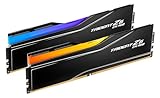 G.SKILL Trident Z5 CK RGB Series DDR5 RAM (Intel XMP 3.0) 48GB (2x24GB) Up to 8200MT/s* CL40-52-52-131 1.40V Desktop Computer Memory CU-DIMM - Mirror Black (F5-8200C4052G24GX2-TZ5CRK)G.SKILL | CUDIMM8,200 MT/s · CL40 | 48GB2 × 24GB | 8,200 MT/sCL40 | $899.99Verified September 16, 2026 · $18.75/GB | Buy on Amazon |
 G.SKILL Trident Z5 CK Series DDR5 RAM (Intel XMP 3.0) 48GB (2x24GB) Up to 8200MT/s* CL40-52-52-131 1.40V Desktop Computer Memory CU-DIMM - Mirror Black (F5-8200C4052G24GX2-TZ5CK)G.SKILL | CUDIMM8,200 MT/s · CL40 | 48GB2 × 24GB | 8,200 MT/sCL40 | $999.99Verified September 16, 2026 · $20.83/GB | Buy on Amazon |
 Crucial CT32G64C52CU5 32GB DDR5-6400 CUDIMM MemoryCrucial | CUDIMM6,400 MT/s · CL52 | 32GB1 × 32GB | 6,400 MT/sCL52 | $666.95Verified September 16, 2026 · $20.84/GB | Buy on Amazon |
 Kingston Fury Renegade DDR5 RGB Silver/White XMP 48GB (2x24GB) 8000MT/s CL38 DIMM Desktop Gaming Memory Kit with 2 - KF580C38RWAK2-48KINGSTON FURY | CUDIMM8,000 MT/s · CL38 | 48GB2 × 24GB | 8,000 MT/sCL38 | $1,248.25Verified September 16, 2026 · $26.01/GB | Buy on Amazon |
 Transcend JetRam 48GB DDR5 RAM 6400MHz CUDIMM 2Rx8 CL52 1.1V, JM6400ALE-48GTranscend | CUDIMM6,400 MT/s · CL52 · Dual-rank | 48GB1 × 48GB | 6,400 MT/sCL52 | $1,253.95Verified September 16, 2026 · $26.12/GB | Buy on Amazon |
 CORSAIR Vengeance DDR5 CUDIMM 48GB (2 x 24GB) DDR5 8400MHz CL40-52-52-135 1.40V Intel XMP iCUE Compatible Computer Memory – Silver (CMKC48GX5M2X8400C40)Corsair | CUDIMM8,400 MT/s · CL40 | 48GB2 × 24GB | 8,400 MT/sCL40 | $1,372.30Verified September 16, 2026 · $28.59/GB | Buy on Amazon |
 Kingston FURY Renegade DDR5 Silver/Black XMP 24GB 8400MT/s CL40 CUDIMM Desktop Gaming Memory - KF584CU40RS-24KINGSTON FURY | CUDIMM8,400 MT/s · CL40 | 24GB1 × 24GB | 8,400 MT/sCL40 | $1,273.39Verified September 16, 2026 · $53.06/GB | Buy on Amazon |
 Kingston Fury Renegade RGB Silver XMP 48GB 8400MT/s DDR5 CL40 CUDIMM (Kit of 2) Desktop Gaming Memory - KF584CU40RSAK2-48KINGSTON FURY | CUDIMM8,400 MT/s · CL40 | 48GB2 × 24GB | 8,400 MT/sCL40 | $2,561.21Verified September 16, 2026 · $53.36/GB | Buy on Amazon |
Buying sequence
Use this order before you buy
- Filter to the exact capacity
- Compare matched module counts
- Check the speed tier
- Compare price per GB
- Verify the part number
- Check seller, condition and return terms
Why CUDIMM price comparisons need stricter matching
CUDIMM listings use similar DDR5 language to ordinary UDIMM, and some marketplaces omit the clocked-module term from shortened titles. JEDEC baseline operation and an XMP profile are different layers of the specification. A kit can boot at a conservative default even when its advertised profile is not stable on a particular system. Confirm explicit CUDIMM identity on the exact product record rather than inferring it from 6400 or higher speed. For a high-capacity purchase, verify per-module capacity support, not only the system total. A board that advertises a large maximum may still have restrictions on new rank layouts or module densities. For this why cudimm price comparisons need stricter matching decision, keep physical fit, electrical support and the rated operating mode as three separate checks.
Exclude uncertain module types from the buying shortlist until the part number is verified. When two products remain on the shortlist, compare the exact manufacturer part numbers rather than relying on shortened retailer titles. High-capacity four-rank CUDIMM deserves a stricter standard: explicit platform support, exact board qualification and a return path should all be present before purchase. The useful outcome is a configuration that is stable at the capacity you need, with a clear reason for every extra dollar spent on speed or density.
Single modules and kits are different purchases
A low-price 24GB or 48GB stick should not be compared directly with a 48GB or 96GB two-stick kit. Memory support can change with BIOS revisions because training code and board qualification improve over time. That makes the current motherboard support page more useful than an old launch-day assumption. Check total capacity, module capacity and module count. For clocked modules, look for explicit CU-DIMM, CUDIMM, CSO-DIMM or CSODIMM wording in the source specification. Do not infer the class from 6400, 7200 or 8000 MT/s alone. For this single modules and kits are different purchases decision, keep physical fit, electrical support and the rated operating mode as three separate checks.
Compare 2x24 against other 2x24 kits, and 2x48 against other 2x48 kits. When two products remain on the shortlist, compare the exact manufacturer part numbers rather than relying on shortened retailer titles. Leave upgrade headroom deliberately. Two larger modules can be more useful than four smaller ones when the platform reaches higher speeds more easily with fewer populated slots. The useful outcome is a configuration that is stable at the capacity you need, with a clear reason for every extra dollar spent on speed or density.
Price per GB reveals capacity value
Price per GB normalizes different total capacities, making it easier to see the premium attached to a performance bin. Capacity, data rate and rank are linked in practice. Pushing all three upward at once places a greater burden on the memory controller than changing only one variable. Use it after matching module type and configuration. Record the module count as well as total capacity. A 96GB 2x48GB kit and four 24GB modules may satisfy the same capacity target while presenting a different training load to the controller. For this price per gb reveals capacity value decision, keep physical fit, electrical support and the rated operating mode as three separate checks.
Do not choose solely on price per GB if the cheaper kit misses a required speed or compatibility target. When two products remain on the shortlist, compare the exact manufacturer part numbers rather than relying on shortened retailer titles. This keeps the decision anchored to a configuration the machine can use, rather than paying for a headline specification that may downclock or fail to train. The useful outcome is a configuration that is stable at the capacity you need, with a clear reason for every extra dollar spent on speed or density.
7200-class pricing is the first useful high-speed benchmark
The 7200 tier aligns with current Intel 200S Plus CUDIMM support as an important reference point. For integrated graphics, memory bandwidth can affect graphics performance more directly than it does in a desktop with a discrete GPU, so compact-system memory choices deserve a workload check. Confirm the exact platform because board behavior still varies. Do not treat a marketplace compatibility badge as primary evidence. Prefer the CPU maker, system or motherboard maker, and memory-vendor part-number documentation. For this 7200-class pricing is the first useful high-speed benchmark decision, keep physical fit, electrical support and the rated operating mode as three separate checks.
Compare 7200 kits against both lower-cost 6400 options and faster 8000 options to see the real premium. When two products remain on the shortlist, compare the exact manufacturer part numbers rather than relying on shortened retailer titles. For portable systems, factor service access and return friction into the purchase. A slightly cheaper module is not a bargain if the system must be opened twice because the memory class was wrong. The useful outcome is a configuration that is stable at the capacity you need, with a clear reason for every extra dollar spent on speed or density.
8000 to 8400 pricing includes an enthusiast premium
Higher bins can cost more because of component selection, validation and market positioning. The clock driver improves the quality of the clock signal reaching the DRAM devices, but it does not remove the limits imposed by memory-controller topology, firmware or rank count. Compare the premium with the performance benefit in your workload and the likelihood of running the rated profile. Use the processor specification for the controller baseline, the motherboard or system page for implementation limits, and the memory maker page for the exact module. Agreement across those three layers is the strongest signal. For this 8000 to 8400 pricing includes an enthusiast premium decision, keep physical fit, electrical support and the rated operating mode as three separate checks.
A cheaper 7200 kit can be better value if an 8400 kit would be downclocked. When two products remain on the shortlist, compare the exact manufacturer part numbers rather than relying on shortened retailer titles. For maximum reliability, change one variable at a time during setup: update firmware, load defaults, install the matched kit, confirm training, then enable the intended memory profile if the platform supports it. The useful outcome is a configuration that is stable at the capacity you need, with a clear reason for every extra dollar spent on speed or density.
9000+ prices can be poor general-purpose value
Extreme speed bins are aimed at narrower enthusiast use cases. A printed data rate is best read as a module capability. The speed you actually see after training is a property of the entire CPU, board, firmware and memory combination. Require strong board evidence before paying the premium. When the system vendor publishes a service manual, use it to confirm replaceable slots and supported memory type before opening the chassis. This is especially important for notebooks with soldered-plus-slot designs. For this 9000+ prices can be poor general-purpose value decision, keep physical fit, electrical support and the rated operating mode as three separate checks.
Treat the difference as a platform-tuning expense, not a universal PC-performance upgrade. When two products remain on the shortlist, compare the exact manufacturer part numbers rather than relying on shortened retailer titles. For an enthusiast build, preserve the exact BIOS settings that proved stable. That makes later firmware updates or component changes easier to diagnose if memory training behavior changes. The useful outcome is a configuration that is stable at the capacity you need, with a clear reason for every extra dollar spent on speed or density.
RGB and heat spreaders can distort price comparisons
Aesthetic variants can cost more than non-RGB modules with similar memory specifications. DDR5 naming can hide important electrical differences, so the form factor, module class, rank layout and profile support should be treated as separate specifications rather than one label. Separate appearance features from memory speed and timings. Where ECC is mentioned, distinguish on-die ECC inside DDR5 devices from side-band or system-visible ECC support. The labels solve different reliability problems and are not interchangeable. For this rgb and heat spreaders can distort price comparisons decision, keep physical fit, electrical support and the rated operating mode as three separate checks.
Pay for RGB only when the design is part of the build goal. When two products remain on the shortlist, compare the exact manufacturer part numbers rather than relying on shortened retailer titles. When the price gap is large, calculate what the faster or larger kit changes for the actual workload. Extra capacity has enormous value when it prevents paging, while unused frequency headroom may have little practical return. The useful outcome is a configuration that is stable at the capacity you need, with a clear reason for every extra dollar spent on speed or density.
Condition and seller matter
Renewed, used or third-party offers can undercut new retail kits but change the warranty and return-risk picture. Higher transfer rates increase theoretical bandwidth, while timings and controller behavior influence latency. Neither figure alone predicts the result in every workload. Check condition, seller and warranty source alongside price. Check whether the rated speed is a JEDEC value or an overclocking profile. That distinction helps explain why two listings with the same headline MT/s can have different voltage and compatibility expectations. For this condition and seller matter decision, keep physical fit, electrical support and the rated operating mode as three separate checks.
For extreme-speed memory, a clear return path is especially valuable because compatibility can be platform dependent. When two products remain on the shortlist, compare the exact manufacturer part numbers rather than relying on shortened retailer titles. On compact systems, prioritize the vendor-supported capacity and module class first. Thermal and firmware limits usually make speculative tuning less attractive than on a desktop enthusiast board. The useful outcome is a configuration that is stable at the capacity you need, with a clear reason for every extra dollar spent on speed or density.
Watch for server-memory contamination
High-capacity DDR5 listings can include RDIMM or ECC server modules that are incompatible with ordinary consumer CUDIMM platforms. One-DIMM-per-channel configurations usually give the controller an easier electrical job than heavily populated layouts, which is why DIMM count belongs in the buying decision from the beginning. Reject registered-memory wording unless you are intentionally shopping for a server platform. Check the seller condition and exact kit suffix as well as the brand family. Similar-looking part numbers can represent different capacities, timings, colors or single-module versus matched-kit packages. For this watch for server-memory contamination decision, keep physical fit, electrical support and the rated operating mode as three separate checks.
Do not let a low RDIMM price distort a consumer CUDIMM comparison. When two products remain on the shortlist, compare the exact manufacturer part numbers rather than relying on shortened retailer titles. If the documentation is ambiguous, the safest choice is the explicitly qualified memory class at a supported baseline speed. Extreme profiles can be revisited after the core configuration is proven stable. The useful outcome is a configuration that is stable at the capacity you need, with a clear reason for every extra dollar spent on speed or density.
When to buy rather than wait
Memory prices move, but compatibility certainty usually matters more than timing a small market fluctuation. The same capacity can be built from different module counts and rank layouts. Those alternatives can train differently even when their combined gigabytes are identical. If a validated kit is available at a reasonable price and the build is ready, compare the current premium against the cost of delaying the system. If a retailer title is vague, open the manufacturer specification before buying. Words such as desktop memory, laptop memory or DDR5-6400 are not specific enough to prove CUDIMM or CSODIMM identity. For this when to buy rather than wait decision, keep physical fit, electrical support and the rated operating mode as three separate checks.
Wait when the desired capacity or 4R support is still emerging and your platform evidence is incomplete. When two products remain on the shortlist, compare the exact manufacturer part numbers rather than relying on shortened retailer titles. If two kits remain viable, compare effective price, warranty source, timings and return policy after compatibility has been established, not before. The useful outcome is a configuration that is stable at the capacity you need, with a clear reason for every extra dollar spent on speed or density.
How to verify a memory purchase
Use three levels of evidence: the processor or system memory specification, the motherboard or device support documentation, and the exact RAM part number. Match the module type, capacity, module count, rated data rate and timings. A marketplace title is useful for discovery, but it should not overrule the manufacturer documentation for a high-speed or high-capacity configuration.
Prices can change at any time. Product rows below keep the most recently verified positive price and image available until a newer verified observation replaces that field. Always confirm the current Amazon price, seller, condition and exact part number before ordering.
Questions answered
CUDIMM RAM Prices FAQ
Why are there fewer CUDIMM listings than ordinary DDR5?
CUDIMM is a newer and more platform-specific consumer memory category, so selection is still narrower than conventional UDIMM.
What is a good CUDIMM price per GB?
There is no fixed good number because speed, capacity and market conditions change. Compare price per GB among kits with the same capacity, module count and similar MT/s.
Why is an 8400 kit much more expensive than a 7200 kit?
The higher bin can carry an enthusiast premium for component selection, validation and lower-volume positioning.
Can a cheap RDIMM be used instead?
No. Registered server DIMMs are a different memory class and should not be treated as a substitute for CUDIMM.
Should I buy one CUDIMM now and another later?
For a high-speed system, a matched kit is safer than combining separate purchases that may use different revisions.
Do prices shown here stay current forever?
Amazon pricing can change. Cloudzat labels the last verified price and updates it when a newer verified observation is available.
Amazon prices and availability can change. Links may be affiliate links. Verify the exact part number, module type, capacity, system support and warranty before ordering.