


CUDIMM compatibility checker
CUDIMM compatibility is a chain: the memory class must match the platform, the CPU must support the desired configuration, the motherboard must route and train the memory correctly, and the selected capacity and DIMM count must stay within the supported population. The checker is deliberately conservative. It flags configurations that rely on assumptions such as treating every 288-pin DDR5 module as equivalent, treating a rated XMP speed as a guaranteed operating rate, or assuming new 4-rank 128GB modules work on every 800-series board.
A CUDIMM is a candidate only when the CPU and motherboard explicitly support CUDIMM or the exact kit. Then check DIMM count, capacity, target speed and 4-rank requirements. For 128GB-per-module 4R CUDIMM, require explicit motherboard support rather than relying on chipset name alone.
128GB-per-module 4-rank CUDIMM support is still platform specific. A compatible chipset family does not by itself prove that a given motherboard supports the module.
Interactive buying tool
Check this memory configuration
Enter the exact system details
The result will separate hard compatibility checks from speed and value choices.
Current matching memory
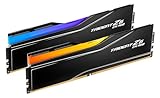
Products in this module class


Buying sequence
Use this order before you buy
- Identify the exact module class
- Select the exact CPU family
- Enter motherboard or system model
- Choose DIMM count and capacity
- Choose target MT/s
- Require explicit 4R support for 128GB modules
Identify the module type first
The first compatibility branch is whether the candidate is CUDIMM, ordinary UDIMM, CSODIMM, SODIMM or registered server memory. A CKD-equipped module is still dependent on the host platform. The extra clocking component is an enabler for cleaner signaling, not a promise that any motherboard will expose every profile. Use exact listing wording and part-number documentation. Compare the current BIOS support notes with the board memory list. A product can be physically compatible but require a newer firmware revision before the intended memory topology is qualified. For this identify the module type first decision, keep physical fit, electrical support and the rated operating mode as three separate checks.
Stop the check if the module class cannot be established. When two products remain on the shortlist, compare the exact manufacturer part numbers rather than relying on shortened retailer titles. Use price per GB only among products that solve the same job. It is misleading to rank a single module, a dual-channel kit and a server-oriented part together simply because their total capacities are close. The useful outcome is a configuration that is stable at the capacity you need, with a clear reason for every extra dollar spent on speed or density.
Match the processor family
Processor memory support defines the broad electrical and configuration envelope. Consumer, workstation and server DDR5 products can share capacity and speed numbers while using very different module classes. Product identity therefore matters more than a broad DDR5 keyword match. Use the exact CPU model and current official support table. Cross-check the exact part number against the motherboard QVL or system-vendor memory list when one is available, and read the notes attached to that entry because slot population can change the qualified speed. For this match the processor family decision, keep physical fit, electrical support and the rated operating mode as three separate checks.
Do not transfer a 200S Plus memory rate to a different CPU family without evidence. When two products remain on the shortlist, compare the exact manufacturer part numbers rather than relying on shortened retailer titles. A successful boot is only the first check. Confirm the reported capacity and data rate, then run a proper memory stability test before relying on the system for long workloads. The useful outcome is a configuration that is stable at the capacity you need, with a clear reason for every extra dollar spent on speed or density.
Match the motherboard
The board determines routing, DIMM slot layout, firmware support and practical memory validation. JEDEC baseline operation and an XMP profile are different layers of the specification. A kit can boot at a conservative default even when its advertised profile is not stable on a particular system. Check the exact board model, BIOS version and memory support list. For a high-capacity purchase, verify per-module capacity support, not only the system total. A board that advertises a large maximum may still have restrictions on new rank layouts or module densities. For this match the motherboard decision, keep physical fit, electrical support and the rated operating mode as three separate checks.
A chipset name alone is not enough evidence for a high-speed or 4R kit. When two products remain on the shortlist, compare the exact manufacturer part numbers rather than relying on shortened retailer titles. High-capacity four-rank CUDIMM deserves a stricter standard: explicit platform support, exact board qualification and a return path should all be present before purchase. The useful outcome is a configuration that is stable at the capacity you need, with a clear reason for every extra dollar spent on speed or density.
Check one-DIMM-per-channel and two-DIMM-per-channel rules
Memory speed support can fall as more electrical loads are added. Memory support can change with BIOS revisions because training code and board qualification improve over time. That makes the current motherboard support page more useful than an old launch-day assumption. Confirm which slots are populated for one module per channel and what the board documents for four-module operation. For clocked modules, look for explicit CU-DIMM, CUDIMM, CSO-DIMM or CSODIMM wording in the source specification. Do not infer the class from 6400, 7200 or 8000 MT/s alone. For this check one-dimm-per-channel and two-dimm-per-channel rules decision, keep physical fit, electrical support and the rated operating mode as three separate checks.
Use two matched modules when the required capacity allows it. When two products remain on the shortlist, compare the exact manufacturer part numbers rather than relying on shortened retailer titles. Leave upgrade headroom deliberately. Two larger modules can be more useful than four smaller ones when the platform reaches higher speeds more easily with fewer populated slots. The useful outcome is a configuration that is stable at the capacity you need, with a clear reason for every extra dollar spent on speed or density.
Check total capacity and module density
A board can support a memory type but not every module density. Capacity, data rate and rank are linked in practice. Pushing all three upward at once places a greater burden on the memory controller than changing only one variable. Confirm both total system capacity and per-module capacity. Record the module count as well as total capacity. A 96GB 2x48GB kit and four 24GB modules may satisfy the same capacity target while presenting a different training load to the controller. For this check total capacity and module density decision, keep physical fit, electrical support and the rated operating mode as three separate checks.
Treat 64GB, 96GB, 128GB and 256GB configurations as separate compatibility questions. When two products remain on the shortlist, compare the exact manufacturer part numbers rather than relying on shortened retailer titles. This keeps the decision anchored to a configuration the machine can use, rather than paying for a headline specification that may downclock or fail to train. The useful outcome is a configuration that is stable at the capacity you need, with a clear reason for every extra dollar spent on speed or density.
Handle four-rank CUDIMM as a special path
Intel describes early 4R CUDIMM support as emerging and tied to selected 800-series motherboards. For integrated graphics, memory bandwidth can affect graphics performance more directly than it does in a desktop with a discrete GPU, so compact-system memory choices deserve a workload check. Require an explicit 4R or 128GB-per-module statement from the board vendor. Do not treat a marketplace compatibility badge as primary evidence. Prefer the CPU maker, system or motherboard maker, and memory-vendor part-number documentation. For this handle four-rank cudimm as a special path decision, keep physical fit, electrical support and the rated operating mode as three separate checks.
Return an uncertain result rather than a false compatible result when the evidence is missing. When two products remain on the shortlist, compare the exact manufacturer part numbers rather than relying on shortened retailer titles. For portable systems, factor service access and return friction into the purchase. A slightly cheaper module is not a bargain if the system must be opened twice because the memory class was wrong. The useful outcome is a configuration that is stable at the capacity you need, with a clear reason for every extra dollar spent on speed or density.
Separate baseline speed from profile speed
A kit can advertise an XMP speed above the processor baseline. The clock driver improves the quality of the clock signal reaching the DRAM devices, but it does not remove the limits imposed by memory-controller topology, firmware or rank count. Record the platform baseline and the kit profile separately. Use the processor specification for the controller baseline, the motherboard or system page for implementation limits, and the memory maker page for the exact module. Agreement across those three layers is the strongest signal. For this separate baseline speed from profile speed decision, keep physical fit, electrical support and the rated operating mode as three separate checks.
Treat profile operation as conditional on board and CPU support. When two products remain on the shortlist, compare the exact manufacturer part numbers rather than relying on shortened retailer titles. For maximum reliability, change one variable at a time during setup: update firmware, load defaults, install the matched kit, confirm training, then enable the intended memory profile if the platform supports it. The useful outcome is a configuration that is stable at the capacity you need, with a clear reason for every extra dollar spent on speed or density.
Check ECC wording carefully
DDR5 on-die ECC is not the same as platform-visible ECC, and consumer CUDIMM listings can use confusing wording. A printed data rate is best read as a module capability. The speed you actually see after training is a property of the entire CPU, board, firmware and memory combination. Confirm whether the CPU and board expose ECC support and what the module actually implements. When the system vendor publishes a service manual, use it to confirm replaceable slots and supported memory type before opening the chassis. This is especially important for notebooks with soldered-plus-slot designs. For this check ecc wording carefully decision, keep physical fit, electrical support and the rated operating mode as three separate checks.
Do not buy an ECC-labelled product for reliability goals without checking end-to-end support. When two products remain on the shortlist, compare the exact manufacturer part numbers rather than relying on shortened retailer titles. For an enthusiast build, preserve the exact BIOS settings that proved stable. That makes later firmware updates or component changes easier to diagnose if memory training behavior changes. The useful outcome is a configuration that is stable at the capacity you need, with a clear reason for every extra dollar spent on speed or density.
Use the board memory list as evidence, not a universal catalog
A memory support list proves tested combinations but can never include every compatible kit. DDR5 naming can hide important electrical differences, so the form factor, module class, rank layout and profile support should be treated as separate specifications rather than one label. Prefer exact matches when buying extreme speed or unusual capacity. Where ECC is mentioned, distinguish on-die ECC inside DDR5 devices from side-band or system-visible ECC support. The labels solve different reliability problems and are not interchangeable. For this use the board memory list as evidence, not a universal catalog decision, keep physical fit, electrical support and the rated operating mode as three separate checks.
For mainstream capacities, a family match can be helpful, but the exact part number remains the safest evidence. When two products remain on the shortlist, compare the exact manufacturer part numbers rather than relying on shortened retailer titles. When the price gap is large, calculate what the faster or larger kit changes for the actual workload. Extra capacity has enormous value when it prevents paging, while unused frequency headroom may have little practical return. The useful outcome is a configuration that is stable at the capacity you need, with a clear reason for every extra dollar spent on speed or density.
Validate after installation
Compatibility is not complete when the machine reaches the desktop. Higher transfer rates increase theoretical bandwidth, while timings and controller behavior influence latency. Neither figure alone predicts the result in every workload. Confirm the active data rate, module count and profile, then run memory stability tests. Check whether the rated speed is a JEDEC value or an overclocking profile. That distinction helps explain why two listings with the same headline MT/s can have different voltage and compatibility expectations. For this validate after installation decision, keep physical fit, electrical support and the rated operating mode as three separate checks.
If errors appear, return to a supported baseline before changing voltage or timings. When two products remain on the shortlist, compare the exact manufacturer part numbers rather than relying on shortened retailer titles. On compact systems, prioritize the vendor-supported capacity and module class first. Thermal and firmware limits usually make speculative tuning less attractive than on a desktop enthusiast board. The useful outcome is a configuration that is stable at the capacity you need, with a clear reason for every extra dollar spent on speed or density.
How to verify a memory purchase
Use three levels of evidence: the processor or system memory specification, the motherboard or device support documentation, and the exact RAM part number. Match the module type, capacity, module count, rated data rate and timings. A marketplace title is useful for discovery, but it should not overrule the manufacturer documentation for a high-speed or high-capacity configuration.
Prices can change at any time. Product rows below keep the most recently verified positive price and image available until a newer verified observation replaces that field. Always confirm the current Amazon price, seller, condition and exact part number before ordering.
Questions answered
CUDIMM Compatibility Checker FAQ
Does a 288-pin CUDIMM fit a DDR5 UDIMM slot?
The form factor can be physically similar, but functional compatibility must still be confirmed for the exact CPU and motherboard.
Does Z890 automatically support every CUDIMM?
No. Support varies by motherboard, BIOS, capacity, rank and target speed.
Is 7200 MT/s guaranteed on Core Ultra 200S Plus?
Intel lists a 7200 CUDIMM tier for the Plus desktop family under stated conditions, but the exact SKU and motherboard still matter.
Can the checker guarantee XMP stability?
No. It can flag known configuration rules, but memory-controller variation and firmware behavior mean profile stability must be tested on the actual system.
How should I check 128GB CUDIMM modules?
Require explicit support for the 4-rank 128GB module class on the exact motherboard.
Why does the checker ask for DIMM count?
High DDR5 data rates are sensitive to memory population. Two and four installed modules can have very different supported-rate behavior.
Amazon prices and availability can change. Links may be affiliate links. Verify the exact part number, module type, capacity, system support and warranty before ordering.