


Canada · CAD · Deal Watch
Home Assistant UPS Black Friday Deals Canada 2026: What to Buy
This Black Friday, give your Home Assistant host and network a backup-power plan built around their real load.
Choose a locally appropriate UPS and calculate the host, router and radio load together. Compare runtime and replacement-battery support alongside the delivered price. A Black Friday offer becomes worth buying when the compatible device costs less than its recent normal price, with any required hub, power supply and delivery included.
Start with APC Back-UPS BE600M1 for a small automation host, router and radio setup that stays within its output limits. Compare CyberPower CP1000PFCLCD for a larger installation needing more capacity. Choose from the equipment's combined load and the runtime you want, rather than the VA figure alone.
Which Home Assistant UPS option should you choose?
Start here
APC Back-UPS BE600M1
Choose it for a small host, router and radio setup within its power limits.
Buy on AmazonChoose this alternative
CyberPower CP1000PFCLCD
Choose it for a larger setup needing more output capacity and suitable monitoring.
Buy on AmazonCurrent Home Assistant UPS Listings on Amazon
Black Friday sale dates and offer timing
Dates for 2026: Black Friday — November 27; Amazon.ca — November 19–30. Individual offer periods and eligibility vary.
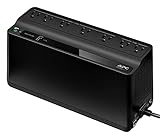
APC UPS Battery Backup & Surge Protector with USB Charger, 600VA APC Back-UPS (BE600M1)
Last verified 2026-11-13 08:41:55 UTC

APC UPS Battery Backup & Surge Protector, 600VA Backup Battery Power Supply, BE600M1 Back-UPS with USB Charging Port, Pack of 2
Last verified 2026-11-13 08:41:55 UTC

APC UPS Battery Backup & Surge Protector with USB Charger, 600VA APC Back-UPS (BE600M1), 600 VA (Pack of 2)
Last verified 2026-11-13 03:23:25 UTC

CyberPower CP1000PFCLCD PFC Sinewave UPS Battery Backup and Surge Protector | 1000VA/600W, 10 Outlets, AVR, Mini-Tower, UL Certified
Last verified 2026-11-13 08:42:00 UTC

9% below the Amazon reference price
ASUS RT-BE58U WiFi 7 Router - Dual-WAN, 3.6 Gbps, Mesh + VPN Compatible | Triple-level Network Security, Parental Controls Included, 2.5G Port x1, 1G Port x4, VPN support
Last verified 2026-11-14 18:32:17 UTC

ASUS RT-BE92U WiFi 7 Router - Tri-Band (6GHz), 9.7 Gbps, x2 WAN, Mesh | Coverage up to 2,500 Sq. Ft., Subscription Free Network Security, Parental Controls Included, 2.5G Port x4, VPN support
Last verified 2026-11-14 18:32:17 UTC

ASUS RT-BE82U WiFi 7 Router - Dual-Band, 6.5 Gbps, Mesh + VPN Compatible | Subscription Free Network Security, Parental Controls Included, 2.5G Port x5, VPN support
Last verified 2026-11-14 18:31:42 UTC

ASUS RT-BE90U WiFi 7 Router - Tri-Band (6GHz), 9.4 Gbps, 2.5G WAN, Mesh | Coverage up to 2,500 Sq. Ft., Subscription Free Network Security, Parental Controls Included, 2.5G Port x4, VPN support
Last verified 2026-11-14 18:31:42 UTC
As an Amazon Associate, Cloudzat earns from qualifying purchases. Prices and availability can change; Amazon shows the final price for your chosen item.
Home Assistant UPS buying guide
| Choice | Best for |
|---|---|
| APC Back-UPS BE600M1 | a small host, router and radio setup within its power limits |
| CyberPower CP1000PFCLCD | a larger setup needing more output capacity and suitable monitoring |
Which Home Assistant UPS option should you choose?
For a small host, router and radio setup within its power limits, choose APC Back-UPS BE600M1.
For a larger setup needing more output capacity and suitable monitoring, choose CyberPower CP1000PFCLCD.
Define what must stay alive
Start with the automation path, not the UPS model. A Home Assistant host may still be running while the household loses local control because the router or switch shut down. List every device required for the automations you want to preserve during an outage.
For a simple setup that may be Home Assistant Green, a router and a small switch. A larger self-hosted stack can include a mini PC, PoE switching, NAS, access point and coordinator infrastructure. The UPS should be sized against that actual load.
Watts determine load capacity
VA is an important UPS rating, but equipment consumes watts. Two UPS models with similar VA labels can support different watt loads, and the protected devices may have very different power factors and startup behavior. Use watt capacity as a hard check before thinking about runtime.
Estimate or measure the steady draw of the equipment, then leave headroom. A Black Friday model that operates near its maximum rating from day one is less attractive than a slightly larger unit that has reserve capacity and avoids nuisance overloads.
Runtime is a battery question
The number printed in VA does not tell you how long Home Assistant will remain online. Runtime depends on battery size, load, efficiency, battery age and UPS design. Manufacturer charts are more useful when they show time at several watt levels.
Choose a service target such as enough time for graceful shutdown, fifteen minutes of continuity or an hour for common local outages. Compare products at that target instead of using generic “up to” runtime language from a lightly loaded test.
Protect the router and switch when they are required
Home Assistant automations can be local, but local still depends on the network when devices communicate through Ethernet, Wi-Fi or network-attached coordinators. If the router or core switch is required for control, it belongs on battery backup with the host.
PoE changes the calculation because one switch can power coordinators, proxies and access points. Protecting that switch can preserve several automation paths at once, but it also adds the switch and PoE load to the UPS requirement.
Waveform matters for some equipment
Many low-power network devices tolerate common UPS output waveforms, but some power supplies and active-PFC equipment can be more comfortable with a pure sine wave design. Check the protected hardware and manufacturer guidance when compatibility or noise is a concern.
Do not pay a premium for pure sine wave solely because it sounds more advanced. Use it when the equipment benefits from it or when the UPS will protect a broader home-server stack. The correct feature set depends on the actual load.
Battery-backed outlet count is easy to overlook
UPS products often combine battery-backed outlets with surge-only outlets. A listing can advertise a large outlet count while only part of the bank remains powered during an outage. Map every required device to a battery-backed outlet before choosing the unit.
This becomes important with router power bricks and wall-wart adapters that can block neighboring receptacles. Physical outlet layout is a deployment detail that a percentage-off badge will not reveal.
NUT monitoring does not replace the UPS server role
Home Assistant can integrate with Network UPS Tools, but the integration acts as a client of a NUT server. Monitoring visibility is useful for automations and alerts; it does not change the electrical runtime or eliminate the need for the appropriate server connection.
Plan how UPS telemetry will be exposed to the network and which machine will communicate with the UPS. A sale model without a workable monitoring path may still protect power, but it should not be purchased on the assumption that every USB or network function will integrate identically.
Replacement batteries are a different market
A low-priced replacement battery can make UPS search results look artificially cheap. Compare complete new UPS systems first, then price replacement batteries separately when evaluating long-term ownership.
Battery replacement remains part of long-term ownership, but it should be compared separately. For the initial purchase, verify that the listing is a complete UPS with the capacity and outlets expected.
Use tracked pricing after the load is fixed
Once the required watt load, runtime tier and outlet count are known, price history becomes useful. Compare regular observations with event offers for the same UPS model instead of relying only on retailer reference prices.
The best Black Friday UPS is therefore not the cheapest unit in the category. It is the lowest-risk product that supports the measured Home Assistant stack and reaches a favorable price relative to its own pre-event market.
Plan the battery replacement horizon
UPS ownership continues after the Black Friday purchase because sealed batteries age and eventually need replacement. A very cheap unit with uncommon replacement parts can become more expensive over its service life than a mainstream model with readily available batteries and clear maintenance guidance. Replacement-battery availability is therefore part of the buying decision.
Write the purchase date on the maintenance record and review battery health periodically. When the unit reaches the age where runtime has declined materially, replacement planning should happen before the next outage. That lifecycle view makes the original discount more meaningful because it connects the sale price with years of predictable protection.
Choose a host and a radio plan that can stay dependable
A dedicated Home Assistant appliance keeps the installation straightforward. A mini PC can be useful when other light services will share the host, but it adds choices about virtualisation, updates and recovery. Keep the installation understandable to the people who will maintain the home. Automation that controls important household routines should have a clear backup and restore procedure.
Zigbee, Z-Wave, Matter and Thread have different roles. A radio adapter is not a replacement for the Home Assistant host. A Thread radio also needs the relevant border-router and controller arrangement; a Zigbee coordinator runs a Zigbee network. Pick the devices and integration path you intend to use before choosing the discounted adapter.
Place radios and backup power where they help
Keep USB radios away from sources of interference and inconvenient server positions. A supported extension or network-connected coordinator can make placement easier when the host is in a cabinet. Check that the chosen coordinator is supported by the integration and firmware you plan to use. Regional frequency requirements are especially important for Z-Wave devices.
For backup power, include the router, switch and any powered coordinator that must stay online alongside the automation host. A UPS keeping only the computer alive may not preserve useful control if the network shuts down. Compare real output watts, expected runtime at your load and the supported shutdown or monitoring connection.
Keep a working recovery copy of the automation system
Save the configuration and a current recoverable backup before replacing the host or radio. Understand which network and radio information must move with the installation. A discounted coordinator is less attractive if the change requires rebuilding a large collection of devices without a practical migration plan. Where possible, test the new component with a small part of the setup first.
Document the location of the host, power supply, radio and network connection. Keep simple manual controls available for important household functions when the automation platform is unavailable. A convenient smart-home installation should remain understandable when a family member needs to restart or recover it.
Buying Home Assistant UPS in Canada
For a Canadian automation setup, compare APC Back-UPS BE600M1 and CyberPower CP1000PFCLCD with the host, router and network switch included in the load. Use the output-watt limit and the runtime curve, since the VA number alone does not tell you how long the equipment will stay on. Confirm the supplied plug, outlet arrangement and monitoring connection on the Canadian listing. Keep the network connection alive alongside the computer, otherwise the automation host may remain powered while the devices it controls become unreachable. Choose extra capacity for equipment you expect to add, rather than for an impressive sale percentage.
Electricity cost calculator
Replace the example values with your own measurements, capacity or prices.
Questions buyers ask
Which Home Assistant UPS option should I choose?
Choose APC Back-UPS BE600M1 for a small host, router and radio setup within its power limits. Choose CyberPower CP1000PFCLCD for a larger setup needing more output capacity and suitable monitoring.
What size UPS do I need for Home Assistant?
Add the watts of the Home Assistant host plus router, switch and other required devices, then choose a unit with load headroom and the desired runtime.
Is 600VA enough for Home Assistant?
It can be for a small low-power setup, but runtime and watt capacity must be checked against the actual protected devices.
Should my router be on the same UPS?
Usually yes when the network is required for local control or access to Home Assistant during an outage.
Do I need pure sine wave?
Some equipment benefits from it, especially broader server stacks. Check the power supplies you plan to protect rather than choosing by label alone.