


A 192GB AI PC is becoming a real buying category rather than a one-off workstation specification. Ryzen AI Max+ PRO 495 creates the clearest Windows/x86 route, while vendors including GMKtec, ACEMAGIC and MINISFORUM are shipping or announcing compact 192GB systems and Framework has publicly previewed a 192GB Desktop tier.
“192GB AI PC” should describe a system that can expose a large shared memory pool to local AI workloads, not merely any computer with 192GB of conventional RAM. GPU addressability, runtime support and memory bandwidth matter alongside capacity.
Who should buy a 192GB AI PC?
The best 192GB AI PC is the one whose software path and I/O fit the workload. PRO 495 systems are the leading x86 option; RTX Spark is a strong CUDA alternative at 128GB, while M5 Ultra Mac Studio reaches much higher memory tiers for buyers committed to macOS and MLX.
Current 192GB AI PC, Ryzen PRO 495 & Workstation Deals on Amazon
Compare actual complete computers from Amazon. Matching models appear first, followed by clearly identified alternative systems. Always verify the selected RAM and storage configuration.
7 suitable complete systems · 0 exact · 7 alternatives
NVIDIA DGX Spark
Different system2 offers
CyberGeek DGX Spark Personal AI Supercomputer, GB10 Grace Blackwell Superchip, 20-Core Arm CPU, 128GB LPDDR5x Unified Memory, 2TB NVMe SSD, Up to 1 PFLOP FP4 AI Performance, DGX OS
More specifications
- Condition
- New
- Seller
- Prime Distributor Global
- ASIN
- B0HHDSBTBQ

NVIDIA DGX Spark GB10 Grace Blackwell Superchip, 128 GB LPDDR5x, ARM Processor, 4 TB NVME M.2 SSD Storage
More specifications
- Condition
- New
- Seller
- Platinum Micro, Inc.
- ASIN
- B0GFY25JCR
Mac Studio M5 Ultra
Different system2 offers
Apple 2026 Mac Studio desktop computer M5 Ultra w/ AppleCare+ (3 years)
More specifications
- Condition
- New
- Seller
- Amazon.com
- ASIN
- B0HGN878Z1

Apple 2026 Mac Studio Desktop Computer M5 Ultra chip
More specifications
- Condition
- New
- Seller
- Amazon.com
- ASIN
- B0HGKZBTQD
Mac Studio M5 Max
Different system3 offers
(CTO) Apple Mac Studio: M5 Max 18C CPU - 32C GPU, 36GB, 1TB - Z1U4000E5
More specifications
- Condition
- New
- Seller
- Expercom - Apple Premier Partner
- ASIN
- B0HGV5QP4D
Apple 2026 Mac Studio desktop computer M5 Max chip w/ AppleCare+ (3 years)
More specifications
- Condition
- New
- Seller
- Amazon.com
- ASIN
- B0HGMPWY5W
Apple 2026 Mac Studio Desktop Computer M5 Max chip
More specifications
- Condition
- New
- Seller
- Amazon.com
- ASIN
- B0HGKSQMX6
Verified savings use an Amazon-reported reference price and a recently confirmed offer for the same ASIN. Last-verified prices can be older than today's checkout price. Confirm the model, installed memory, seller and stock before ordering.
Other Deals You Might Like
High-value upgrades for compatible local AI setups. Check system compatibility and the latest Amazon price before buying.
AI accelerator GPUs 4
Standalone GPUs for compatible workstations; confirm PCIe, power and enclosure clearance.

GIGABYTE AORUS RTX 5090 AI Box Graphics Card - 32GB GDDR7, 512Bit, PCI-E 5.0, 2407MHz Core Clock, 3X DP 2.1, 1x HDMI 2.1, GV-N5090IXEB-32GD 1.0
More specifications
- Condition
- New
- Seller
- MrReliable-USA
- ASIN
- B0FPDRFYT7
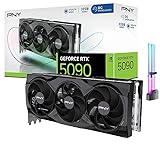
CyberGeek GeForce RTX 5090 Overclocked Triple Fan Graphics Card, 32GB GDDR7, 28 Gbps, 512-bit, 3352 AI Tops, DLSS 4, AI Content Creation, Local LLM Inference, DP 2.1b x3, HDMI 2.1b, with GPU Holder
More specifications
- Condition
- New
- Seller
- Prime Outlets Online
- ASIN
- B0GK8D8DJH

MSI GeForce RTX 5090 32G SUPRIM SOC Graphics Card VD8997
More specifications
- Condition
- New
- Seller
- MrReliable-USA
- ASIN
- B0DT6SN14V

ASUS ROG Matrix Platinum GeForce RTX 5090 OC 30th-Anniversary Edition Gaming Graphics Card, 32GB GDDR7, PCIe 5.0, 512-bit, Liquid Metal Cooling, DisplayPort 2.1b, HDMI 2.1b, MTX5090P32G30TH
More specifications
- Condition
- New
- Seller
- MrReliable-USA
- ASIN
- B0GRFXRSZV
Will this hardware class fit your workload?
Use workload, memory and software priorities to identify the strongest platform fit.
The result will focus on the trade-off that matters most for this decision.
Buying decision summary
| Decision factor | 192GB AI PC | Alternative / implication |
|---|---|---|
| Memory fit | 192GB | Choose capacity from the real model working set, not the headline alone |
| Software path | Windows/x86 and AMD-oriented unless noted | CUDA or MLX requirements can outweigh capacity |
| Storage | Plan active-model NVMe capacity | Large model libraries often need several terabytes |
| Networking | Match the workstation role | 2.5/5/10GbE matters for NAS and served inference |
| Buying timing | Verify exact configuration and stock | Newly announced hardware can have uneven availability |
Check these four things before choosing a system
Identify why you need 192GB
Name the model, context or parallel workload that crosses 128GB before paying for the larger memory tier.
Choose the software ecosystem
AMD/x86, CUDA/RTX and macOS/MLX have different strengths; memory capacity is only one part of the platform choice.
Compare exact retail SKUs
Use verified installed memory, processor and storage rather than vendor family names when comparing prices.
Plan storage and backup
A machine capable of very large models needs enough SSD capacity and a reliable home for datasets, indexes and project files.
How to choose the best 192GB AI PC
192GB AI PC is becoming a real buying category
The 192GB AI PC category exists because unified-memory processors can now place far more model data near an integrated accelerator than ordinary consumer GPUs can hold in dedicated VRAM. Ryzen AI Max+ PRO 495 systems are the clearest Windows/x86 examples, with vendors announcing compact machines around a 192GB LPDDR5X pool. This does not replace every GPU workstation. It creates a new middle tier for buyers who want to run large quantized models locally without moving immediately to multi-GPU servers or very high-memory Mac Studio configurations.
The category is larger than one processor
This page treats 192GB AI PCs as a buying category rather than a single processor family. PRO 495 is the main current route, but future CPUs and system designs can join the page if they genuinely provide the same memory class and local-AI use case. That keeps product pages focused on their exact hardware while this page answers the broader purchasing question: which 192GB-class computer is the best fit for a workload, budget and software stack. Compare systems by the memory configuration they actually offer, not by the vendor family name alone.
GMKtec EVO-X5 Pro emphasizes compact capacity
GMKtec's EVO-X5 Pro combines PRO 495 with up to 192GB memory and a vendor-stated bandwidth around 273GB/s. GMKtec also promotes a very large graphics allocation and local use of extremely large quantized models. Its appeal is a compact x86 box with enough shared memory to explore workloads that exceed a typical discrete GPU's VRAM. Buyers should still verify final retail memory, storage and port configuration because early launch families can include several SKUs under closely related names.
ACEMAGIC F9A PRO495 emphasizes expansion
ACEMAGIC takes a more expansion-oriented route with the F9A PRO495. Alongside the 192GB memory option, the published design includes dual NVMe, OCuLink, Wi-Fi 7 and dual 2.5GbE. Those features can matter to users building a homelab or creator workstation because the system can connect to external graphics, multiple networks and more local storage. The F9A is therefore not simply another box with the same processor; its value depends on whether those expansion paths solve needs you actually have.
MINISFORUM MS-S1 MAX-P495 emphasizes workstation modes
MINISFORUM's MS-S1 MAX-P495 offers 192GB memory with selectable 60W, 95W and 120W modes, plus internal NVMe expansion. It is best viewed as the compute-focused sibling to MINISFORUM's storage-oriented N5 MAX-P495. Buyers who already have NAS storage may prefer the MS-S1, while users seeking an all-in-one storage and AI appliance may find the N5 architecture more suitable. The shared processor does not make the two products interchangeable, which is why Cloudzat keeps their product pages separate.
Framework is a roadmap entry, not yet a confirmed PRO 495 product
Framework says a 192GB Desktop tier is coming, but its detailed specifications still show the existing Ryzen AI Max 385 and Max+ 395 lineup. Until Framework publishes the final CPU for the 192GB configuration, it should be listed as an upcoming high-memory option rather than as a confirmed PRO 495 system. This distinction is important because buyers searching for a specific processor deserve exact product identity. The category can track Framework's 192GB roadmap without inventing a processor specification that the manufacturer has not announced.
RTX Spark is the 128GB CUDA counterpoint
NVIDIA RTX Spark belongs in the buying conversation even though its stated memory ceiling is 128GB, because it targets a similar personal-AI use case with a different software advantage. NVIDIA pairs unified memory with CUDA, RTX acceleration and Windows-native AI tooling. For a model that fits comfortably within 128GB, that ecosystem can be more valuable than another 64GB of capacity. For workloads that genuinely exceed the limit, a 192GB system gains a practical advantage before speed is compared.
Mac Studio M5 Ultra covers the higher-memory path
Apple's M5 Ultra Mac Studio extends the unified-memory idea far beyond 192GB, with configurations up to 512GB and very high memory bandwidth. It is the obvious alternative for users who need substantially more capacity and are comfortable with macOS and MLX-oriented workflows. It also sits in a different price and software category from compact x86 systems. A buyer should not treat 512GB as automatically better; the question is whether the additional memory and Apple software path justify the total system cost for the intended models.
What 192GB actually buys in local AI
The extra memory can support larger weight files, less aggressive quantization, longer context, more concurrent sessions or a combination of AI and conventional workstation tasks. Which benefit matters depends on the workload. A user running one 32B model may see no meaningful gain over 64GB or 128GB. A user serving a larger model while keeping embeddings, retrieval services and development tools active can use the extra capacity immediately. The correct way to value 192GB is to calculate the working set rather than treating memory as a status feature.
The best 192GB system may not have the fastest accelerator
This category often prioritizes model fit over maximum accelerator throughput. A discrete RTX 5090 can be dramatically faster for supported CUDA workloads but carries only 32GB of dedicated VRAM. A 192GB shared-memory PC can hold far larger models while running them at a different performance level. Some buyers will prefer speed and use smaller models; others will accept slower inference to keep a larger model fully local. That tradeoff should be explicit on every product recommendation.
Build the rest of the system around large models
High-memory AI PCs need proportionally serious storage, backup and networking. Multiple 100GB-plus model files can consume several terabytes, and private datasets may be more valuable than the hardware itself. Plan internal NVMe capacity, a backup destination and a wired network path before the machine becomes production infrastructure. For team use, a fast NAS or 10GbE network can simplify model distribution and data access. For a single desk, a large secondary NVMe may be the simplest and fastest solution.
Bottom line for buying a 192GB AI PC
Buy into the 192GB class when a specific model or mixed workload needs the capacity and when the chosen runtime works well on the platform. Compare GMKtec, ACEMAGIC, MINISFORUM and future Framework configurations as complete systems, not as identical PRO 495 boxes. If 128GB is enough and CUDA is important, RTX Spark deserves serious consideration. If 192GB is still too small, a higher-memory Mac Studio or server-class design may be the correct next step. The category is useful precisely because it makes those boundaries visible.
As the category matures, pricing and availability should become part of the ranking. A technically excellent 192GB machine that is unavailable or sold only through uncertain channels is less useful than a verified alternative with clear support and warranty terms. Cloudzat should therefore rank current retail evidence separately from platform potential.
192GB AI PC questions buyers ask
What is a 192GB AI PC?
It is a personal or workstation-class computer with roughly 192GB of high-bandwidth memory that can be shared with an integrated accelerator for local AI workloads.
Why not just buy an RTX 5090?
RTX 5090 offers strong CUDA performance but 32GB of dedicated VRAM. A 192GB shared-memory system targets models that need far more capacity, usually at different throughput.
Which 192GB systems are most relevant now?
GMKtec EVO-X5 Pro, ACEMAGIC F9A PRO495 and MINISFORUM MS-S1 MAX-P495 are key announced PRO 495 examples; Framework has announced a coming 192GB Desktop tier but not a confirmed PRO 495 CPU for it.
Is RTX Spark a 192GB PC?
No. NVIDIA positions RTX Spark up to 128GB, but it is an important alternative because of CUDA and the broader NVIDIA software stack.
Is Mac Studio part of this comparison?
Yes as an alternative. M5 Ultra can be configured far beyond 192GB, but it uses macOS and MLX-oriented workflows and sits in a different price class.
Who actually needs 192GB?
Users running models or mixed workloads that exceed a comfortable 128GB memory budget, especially with long context or multiple services, are the clearest candidates.
Does 192GB guarantee a 300B model will work well?
No. Quantization, context, runtime support, memory reserve and performance all matter. A capacity claim is not a universal speed guarantee.
What else should I buy with a 192GB AI PC?
Plan sufficient NVMe storage, backup, wired networking and power protection so the expensive memory platform is not limited by the rest of the setup.
Specifications and reference material
Use manufacturer specifications for hardware details and confirm the exact retail configuration before buying.
- AMD Ryzen AI Max+ PRO 495 specifications
- NVIDIA RTX Spark announcement
- Apple Mac Studio M5 Max and M5 Ultra
- GMKtec EVO-X5 Pro
- ACEMAGIC F9A
- Framework Desktop
- MINISFORUM MS-S1 MAX-P495
As an Amazon Associate, Cloudzat may earn from qualifying purchases.