


SSD market direction
See whether SSD prices are rising, falling or broadly stable, compare the direction by SSD class and capacity, and use that movement to decide whether buying now makes sense.
SSD price crisis explained
Are SSD prices really going up or down?
During a volatile SSD market, the most common question is not simply "what does a 2TB SSD cost?" It is whether prices are moving up or down and whether waiting is likely to improve the buying position. Retail SSD pricing can react to NAND supply, inventory levels, capacity demand, product-generation transitions and major promotional periods, so the direction can change faster than many buyers expect.
The difficulty is that the entire market does not move as one unit. PCIe 5.0 can behave differently from PCIe 4.0, SATA can remain relatively stable while NVMe moves, and 1TB can show a different pattern from 4TB or 8TB. One heavily discounted model can also make the market feel cheaper even when the broader median has barely changed.
This page therefore treats trend as an observed direction, not a forecast. Cloudzat compares dated median price-per-TB observations over recent periods and reports whether the selected segment is falling, edging lower, broadly stable, edging higher or rising. That gives you a practical market signal without pretending anyone knows the exact future bottom or top.
The buying decision then becomes easier. A falling trend is useful, but if the SSD you need is already near the recent low, waiting may save little and can leave you without the storage you need. A rising trend does not mean you should panic-buy, but it makes a genuinely strong current offer more meaningful. A stable trend shifts the focus away from timing and toward the exact model, capacity, controller, endurance, warranty and compatibility.
Quick answer
Prices are rising for all ssds.
The median is +20.53% versus roughly 90 days ago. Compare the exact drive with the recent range before paying above the current median.
Market direction
SSD price trend by market segment
Capacity trend
Current SSD options
Current SSD prices to compare
Compare these SSDs with the market range above before buying. A strong deal should combine a competitive price per TB with the right capacity, interface, form factor, endurance and warranty for your system.

MINISFORUM N5 Air 5-Bay Desktop NAS with up to 174 GB Storage, AMD Ryzen 7 255 (8C/16T) CPU, Dual DDR5 RAM Slots (up to 96 GB), 1x 10GbE, 1x 5GbE, 2X USB4 (8K), HDMI 8K, OCuLink, 3X M.2 Slots

TEAMGROUP T-Force Vulcan Z 1TB SLC Cache 3D NAND QLC 2.5 Inch SATA III Internal Solid State Drive SSD (R/W Speed up to 550/470 MB/s) T253TY001T0C101

Crucial X8 4TB Portable SSD - Up to 1050MB/s - PC and Mac - USB 3.2 External Solid State Drive - CT4000X8SSD9

TEAMGROUP T-Force Vulcan Z 1TB SLC Cache 3D NAND TLC 2.5 Inch SATA III Internal Solid State Drive SSD, PC Upgrade (Read/Write Speed up to 550/500 MB/s) T253TZ001T0C101

Crucial MX500 2TB 3D NAND SATA 2.5 Inch Internal SSD, up to 560MB/s - CT2000MX500SSD1

Western Digital 4TB WD Blue SA510 Internal Solid State Drive SSD - SATA III 6 Gb/s, 2.5"/7mm, Up to 560 MB/s - WDS400T3B0A
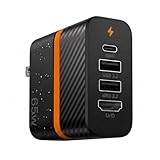
1TB SSD Storage Hub, 65W USB-C Hub with HDMI, USB 3.2 & PD

Western Digital 2TB WD Blue SA510 SATA Internal Solid State Drive SSD - SATA III 6 Gb/s, 2.5"/7mm, Up to 560 MB/s - WDS200T3B0A

Sandisk 8TB Desk Drive SSD, Up to 1000MB/s Read Speeds, Black

Kingston NV3 1TB M.2 2230 NVMe SSD | Up to 6000MB/s | SNV3SM3/1T0

Kingston NV3 2TB M.2 2280 NVMe SSD | PCIe 4.0 Gen 4x4 | Up to 6000 MB/s | SNV3S/2000G

TEAMGROUP T-Force Vulcan Z 4TB SLC Cache 3D NAND QLC 2.5 Inch SATA III Internal Solid State Drive SSD (R/W Speed up to 550/470 MB/s) T253TY004T0C101

SP Silicon Power 4TB SSD 3D NAND A55 SLC Cache Performance Boost SATA III 2.5'' 7mm (0.28'') Internal Solid State Drive (SP004TBSS3A55S25)

Crucial BX500 2TB 3D NAND SATA 2.5-Inch Internal SSD, up to 540MB/s - CT2000BX500SSD1, Solid State Drive

GiGimundo 2TB Magnetic Portable SSD, External SSD Up to 2000MB/s with USB-C 3.2 Gen 2x2, 4K ProRes HDR Record and Store, External Solid State Drives Compatible with iPhone 17/16/15 Pro Max, Tablet

GiGimundo 2TB Magnetic Portable SSD, Up to 2000MB/s, External Solid State Drives with USB-C 3.2 Gen 2x2 Compatible with iPhone 15/16/17 Series and Other USB-C Devices– Fast File Transfer

nusyn NSU53 1TB External SSD/USB Drive - Up to 1050MB/s, 2-in-1 USB-C + USB-A, USB 3.2 Gen2, Portable Solid State Drive for iPhone, Android Phones/Tablets, PS4, Windows & Mac

Fikwot FP107 4TB Magnetic Portable SSD, 2050MB/s USB 3.2 Gen 2x2 Portable SSD with RGB Lighting, 4K Video Storage, External Solid State Drives for iPhone15/16, Android/PC/Mac, PS5/PS4(Pro) etc.
Buying timing
Should you buy an SSD now or wait?
Use the trend as a decision aid, not a prediction. The best choice depends on direction, the current range, the exact drive and how soon you need the storage.
If prices are falling
Do not wait automatically. Check whether the current offer is already near the recent low. If it is and you need the SSD soon, buying now can be reasonable even though the broader trend still points down.
If prices are rising
A rising market makes a strong current offer more important, but it is not a reason to overpay. Compare the exact drive with the recent median and low. Buy when the model is still competitively priced and the specification fits.
If prices are stable
Market timing adds less value. Focus on capacity, interface, controller, NAND type, endurance, warranty and the model-level discount. In a flat market, the right product at a fair price matters more than waiting for a broad move.
How to act on the SSD price trend
If prices are falling
Compare the current offer with the recent low. If you need the drive now and the offer is already near that range, the broad downtrend alone is not a reason to postpone indefinitely.
If prices are rising
Do not chase the market blindly. A strong model-specific deal can still be worthwhile, but compare it with the 30- and 90-day range before paying above the recent median.
If prices are stable
Broad timing matters less. Capacity, controller, NAND, endurance, warranty and the discount on the exact model become more important than waiting for a market-wide move.
How Cloudzat measures SSD prices
Same metric across the market
Cloudzat compares price per terabyte so 500GB, 1TB, 2TB, 4TB and 8TB drives can be judged on a consistent basis while still showing the total price of each current offer.
Dated observations, not reconstructed history
The history comes from prices Cloudzat actually captured on each tracked date. If a selected segment does not have enough history, the page says so rather than filling the gap with estimates.
Confirm the final price before checkout
SSD prices can change quickly. If a card is marked as a last-verified price, use it as a comparison point and confirm the current Amazon price and availability before buying.
SSD Price Trend FAQ
Are SSD prices going up or down?
The answer depends on the selected SSD class and capacity. This page calculates direction from Cloudzat’s 30- and 90-day median price-per-TB changes instead of assuming the whole SSD market moves together.
Does the trend predict future SSD prices?
No. It describes observed direction in the tracked data. It does not claim to forecast NAND pricing or future retail prices.
Should I buy an SSD now or wait?
Use the trend together with the current market range and your need date. A current offer near the recent low can be attractive even in a falling market, while an above-range price deserves more caution in a rising market.