


Exos generation comparison
Exos generations overlap heavily in retail listings. This comparison shows what changed from X16 through X24 and helps you decide whether an older model is still a good buy at its current price.
Quick answer
X24 is the cleanest current-generation choice for 12TB, 16TB, 20TB and 24TB, with 512MB cache and current channel positioning. X16, X18, X20 and X22 can still offer excellent value, but only when the exact model, interface, condition and warranty source are verified.
Exact model data
Representative standard SATA models by generation
| Capacity | Model | Generation | Interface | Sector format | Security | Recording | Cache | Max sustained | Status |
|---|---|---|---|---|---|---|---|---|---|
| 16TB | ST16000NM001G | Exos X16 | SATA | 512e/4Kn FastFormat | Standard | CMR | 256MB | 261MB/s | Older generation |
| 18TB | ST18000NM000J | Exos X18 | SATA | 512e/4Kn FastFormat | Standard | CMR | 256MB | 270MB/s | Older generation |
| 20TB | ST20000NM007D | Exos X20 | SATA | 512e/4Kn FastFormat | Standard | CMR | 256MB | 285MB/s | Older generation |
| 22TB | ST22000NM001E | Exos X22 | SATA | 512e/4Kn FastFormat | Standard | CMR | 512MB | 285MB/s | Older generation |
| 24TB | ST24000NM002H | Exos X24 | SATA | 512e/4Kn FastFormat | ISE | CMR | 512MB | 285MB/s | Current channel generation |
Representative models are used for generation comparison. Every generation also has interface and security variants that require exact-model verification.
Interactive decision tool
Compare two Exos generations
Choose representative exact models to compare capacity, cache, transfer speed, interface and current status.
Live catalogue
Current offers across Exos X16 through X24
Compare exact-model Exos listings by model number, generation, interface, capacity and price per terabyte. Amazon price and availability can change, so confirm the final offer before purchase.

Seagate EXOS X20 18TB SAS 3.5IN 7200RPM 6GB/S 512E/4K
ST18000NM000D · 18TB · Exos X20 · SAS · New

Seagate Enterprise ST18000NM004J Internal Hard Drive 3.5" 18TB SAS
ST18000NM004J · 18TB · Exos X18 · SAS · New

Seagate 20TB Exos Enterprise Hard Drive | SATA (ST20000NM002H)
ST20000NM002H · 20TB · Exos X24 · SATA · New

Seagate Exos X24 24TB SAS 512e/4Kn
ST24000NM007H · 24TB · Exos X24 · SAS · New

Seagate ST18000NM003D 18TB Exos X20 SATA Hard Drive, 3.5" HDD, SATA 6Gb/s, 7200rpm, 256MB Cache, 512E, 4.16ms, NCQ
ST18000NM003D · 18TB · Exos X20 · SATA · New

Seagate Exos X18 Enterprise Class, 16TB, Enterprise Internal Hard Drive, SATA, 3,5" 6Gbit/s, 128MB Cache (ST16000NM000J)
ST16000NM000J · 16TB · Exos X18 · SATA · New
Seagate Technology ST16000NM007H 16TB Exos X24 HDD 3.5 SAS 7200 ISE Bare Hard Drive
ST16000NM007H · 16TB · Exos X24 · SAS · New
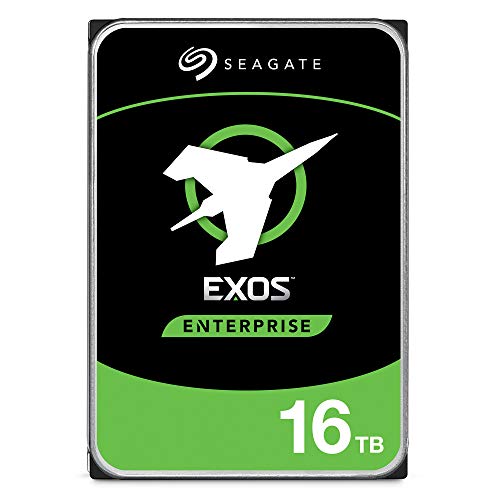
Seagate Exos X16 3.5" 16000 GB SAS
ST16000NM002G · 16TB · Exos X16 · SAS · New
Seagate Exos X24 3.5" Internal Hard Drive - 12TB, Single, SATA III 6 Gb/s
ST12000NM002H · 12TB · Exos X24 · SATA · New

Seagate Exos X20 ST20000NM007D 20TB 7.2K RPM SATA 6Gb/s 3.5in Hard Drive
ST20000NM007D · 20TB · Exos X20 · SATA · New

18TB Hard Drive X18 ST18000NM000J 7200 RPM SATA 6Gb/s 256MB Cache 3.5-inch 18TB Enterprise Server Computer Hard Drive
ST18000NM000J · 18TB · Exos X18 · SATA · New

Seagate Exos X18 3.5" 16000 GB SAS
ST16000NM004J · 16TB · Exos X18 · SAS · New
12 exact products shown. Prices and availability can change; confirm the final Amazon offer before purchase.
Detailed buying guide
Seagate Exos buying guide: models, interfaces and deployment choices
X16 remains a common value option
X16 established 14TB and 16TB enterprise capacities and remains common in used and recertified markets. New-stock value depends on the exact warranty and price.X18 raised capacity and sequential speed
X18 brought 18TB models and representative sustained transfer rates around 270MB/s while retaining 256MB cache on common models.X20 reached 20TB
X20 extended the family to 20TB and published transfer rates up to 285MB/s on key models. It remains widely available in home-server and NAS markets.X22 moved to 512MB cache
X22 brought 20TB and 22TB models with 512MB cache. It can be attractive when 22TB fits the array plan better than 20TB or 24TB.X24 is the current conventional CMR line
X24 covers 12TB, 16TB, 20TB and 24TB and provides separate SATA ISE, SATA SED and SAS configurations. It is the simplest current reference point before moving to Exos M.Newer does not guarantee better value
A discounted older-generation model may have a lower cost per terabyte. Compare price, warranty source, acoustics, power and array uniformity, not the generation name alone.Avoid mixing interfaces and sector formats
An array can only use drives the controller understands. Mixing sector formats or installing SAS in a SATA-only chassis can prevent detection or complicate replacement.Compare exact offers, not family averages
Cloudzat filters Amazon results to exact models and new condition, then links to the existing Exos price engine for broader live pricing.How Cloudzat evaluates Exos drives
Cloudzat attaches generation, interface, sector format, security class, recording technology, cache, transfer rate and warranty only to an exact model. Exos X16, X18, X20, X22, X24 and Exos M remain separate, as do IronWolf Pro and WD Gold comparison products. This prevents a SATA listing from inheriting SAS specifications or an Exos M drive from inheriting X24 data.
Live offers are screened for new single internal 3.5-inch drives and matched to an exact model. SATA and SAS are kept separate. SSDs, external drives, accessories, enclosures, servers, multipacks, MACH.2, Exos Xz host-managed SMR, other drive families and non-new listings are rejected. Warranty source and delivered-label verification remain essential.
Frequently asked questions
Exos generation questions
Is X24 always better than X20?
Can I mix X18 and X20 in one RAID?
Does a larger cache guarantee faster real-world performance?
Is Exos M part of this comparison?
Are all listed models SATA?
Which generation is quietest?
Primary sources
- Seagate Exos X16 data sheet
- Seagate Exos X18 data sheet
- Seagate Exos X20 data sheet
- Seagate Exos X22 data sheet
- Seagate Exos X24 data sheet
- Cloudzat Exos prices
Cloudzat may earn a commission from qualifying purchases. Product availability, pricing and specifications can change. Confirm the exact Exos model, generation, interface, sector format, security variant, seller, condition and regional warranty route before buying.