


Interactive RAM identification
A RAM part number can encode more information than a retailer title: product family, DDR generation, speed, capacity, module type, rank, device width, kit size or profile. The exact fields vary by manufacturer, so a useful decoder must know when to stop and say that a field is not encoded.
Paste the exact manufacturer part number or full label. The decoder reports fields it can support from documented patterns or explicit text and marks anything else for verification instead of guessing.
A decoder cannot prove that a module works in a specific PC from the part number alone. CPU, motherboard or OEM memory support remains the final compatibility check.
Questions answered first
What most people need to know
Can the decoder identify every RAM stick?
No. Vendor numbering systems differ, and some part numbers do not encode rank, ECC or form factor. Paste the full label when possible.
What does “Not encoded / verify” mean?
The entered string does not safely prove that field. Use the manufacturer datasheet, label or system documentation instead of guessing.
Does a decoded part number prove compatibility?
No. It identifies the module. You still need to compare its fields with the target CPU, motherboard, laptop, NAS or server requirements.
What should I paste?
Use the exact manufacturer part number. For Samsung and SK hynix OEM modules, paste the complete label text when available.
Quick comparison
What the decoder can and cannot establish
| Field | Decoder can report | Final verification source |
|---|---|---|
| Vendor/product line | Often from prefix | Manufacturer page |
| DDR generation | Often | Datasheet/system spec |
| Capacity | Often | Datasheet/label |
| Rank / x8/x16 | Only when encoded or explicit | Label/datasheet/SPD |
| ECC/module type | When encoded or explicit | Datasheet/system spec |
| Compatibility | No automatic guarantee | Target system documentation |
Interactive compatibility tool
Decode a RAM part number or module label
Paste a part number to begin
The decoder will show identified fields, confidence and what still needs verification.
Current matching memory
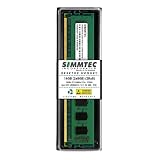
Replacement modules worth checking


Choose your situation
What should you do?
Retail Kingston/Corsair/Crucial part
Use the exact part number. These brands expose several useful fields in documented naming patterns.
Decode, then verify systemSamsung/SK hynix OEM module
Paste the full label because rank and organization may be printed separately from the base part number.
Use full label textUnknown marketplace module
If the listing omits a verifiable part number, do not let the decoder invent missing compatibility fields.
Find a documented SKUFinal compatibility check
Check these fields before you buy
- Paste the exact part number or full label text
- Confirm the detected manufacturer
- Review DDR generation, capacity and speed
- Check module type, ECC, rank and organization fields
- Open the official vendor datasheet when a field is not encoded
- Compare the decoded module against the target system specification
What a part number can reveal
Manufacturer part numbers can encode product line, generation, speed, capacity, rank, DRAM width, kit size, latency, profile or module type. The exact fields depend on the vendor’s numbering system.
A useful decoder must therefore be vendor-aware. Treating every string as if it followed one universal RAM code produces confident-looking errors.
Why Kingston can be decoded deeply
Kingston publishes a memory part-number decoder that documents fields for ValueRAM and other memory families. Where the pattern matches that published schema, Cloudzat can decode fields such as module type, rank, DRAM width, speed and capacity with high confidence.
When a Kingston string falls outside a documented pattern, the tool should fall back to explicit label text rather than force a match.
Corsair and Crucial retail patterns
Corsair retail kit numbers commonly expose total capacity, DDR generation, module count, speed and CAS latency. Crucial retail part numbers can similarly encode capacity, speed, latency and module form.
Those fields are useful for identification, but they do not replace checking the target system’s supported capacity, module type and memory rate.
Samsung, SK hynix and OEM memory
OEM modules are frequently labeled with a base manufacturer part number plus separate text for capacity, speed, rank or organization. The safest input is therefore the complete label rather than only one token.
If the label says 1Rx8 or 2Rx8 explicitly, the decoder can use that. If it does not, the tool should report rank as unknown rather than infer it from capacity.
Confidence is part of the answer
A high-confidence decode means the string matched a documented vendor pattern or an explicit label field. Partial means some fields were recognized but others were not encoded. Label-dependent means the vendor was recognized but the full label is needed for a useful technical decode.
This distinction is more valuable than filling every box. Unknown data is safer than a fabricated compatibility field.
Turn the decode into a buying decision
After decoding, compare DDR generation, form factor, buffering/registration, ECC requirement, supported capacity, rank/device organization where specified, and speed with the target system.
If the system vendor provides a qualified-memory list or service part, use that as the final compatibility authority. The decoder tells you what the module is; the platform documentation tells you whether it belongs in that machine.
How to verify a RAM identification or replacement decision
Start with the exact system or motherboard memory specification, then read the label on the installed module and compare the replacement part number. Separate DDR generation, form factor, buffering, ECC, rank, DRAM organization, capacity and speed because one matching field does not make two modules interchangeable. When a vendor part number does not encode a field, verify it from the official product page or datasheet rather than guessing.
Prices can change at any time. The table shows the latest price and image Cloudzat has verified for each matching product. Always confirm the current Amazon price, seller, condition and exact part number before ordering.
Questions answered
RAM Part Number Decoder FAQ
Can the decoder identify every RAM part number?
No. It only decodes documented or explicit fields and leaves the rest unknown.
Can it decode Kingston ValueRAM?
Yes, many documented ValueRAM patterns can be decoded deeply.
Can it decode Corsair RAM?
Many retail kit patterns can expose generation, capacity, module count, speed and latency.
Can it decode Crucial part numbers?
Many retail Crucial patterns can expose core module specifications.
Why are some Samsung or SK hynix fields unknown?
OEM labels often carry information outside the base part number; paste the complete label or check the datasheet.
Does a decoded match guarantee compatibility?
No. Compatibility still depends on the target platform.
Amazon prices and availability can change. Links may be affiliate links. Verify the exact part number, module type, capacity, system support and warranty before ordering.