


Cloudzat Apple Local AI Intelligence
M4 Pro is not automatically the better local-AI purchase. A regular M4 with more unified memory can be more useful than an M4 Pro configuration that cannot comfortably hold the intended model. This tool weighs capacity, bandwidth and workload together.
Compare M4 and M4 Pro for your workload
The tool prioritizes memory fit first, then bandwidth and concurrency.
M4 and M4 Pro Mac mini offers
7 matching listings from the connected Amazon catalogue. Only positive-price offers verified in stock within 336 hours appear. Historical price and image records stay stored when a listing is hidden. Confirm the final price and configuration on Amazon.

Mac mini
Apple 2024 Mac Mini with Apple M4 Chip with 10-Core CPU, 16GB RAM, 256GB SSD Storage, Silver (Renewed)
M4 · 16GB memory · 256GB SSD · Renewed
Last verified: September 27, 2026
Mac mini
Apple 2024 Mac mini Desktop Computer with M4 chip with 10‑core CPU and 10‑core GPU: Built for Apple Intelligence, 16GB Unified Memory, 512GB SSD Storage, Gigabit Ethernet. Works with iPhone/iPad
M4 · 16GB memory · 512GB SSD · New
Last verified: September 27, 2026Mac mini
Apple 2024 Mac mini Desktop Computer with M4 chip with 10‑core CPU and 10‑core GPU: Built for Apple Intelligence, 16GB Unified Memory, 256GB SSD Storage, Gigabit Ethernet. Works with iPhone/iPad
M4 · 16GB memory · 256GB SSD · New
Last verified: September 27, 2026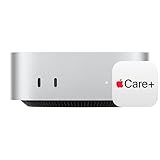
Mac mini
Apple 2024 Mac mini Desktop Computer with M4 chip with 10‑core CPU and 10‑core GPU: Built for Apple Intelligence, 16GB Unified Memory, 512GB SSD Storage with AppleCare+ (3 Years)
M4 · 16GB memory · 512GB SSD · New
Last verified: September 27, 2026
Mac mini
Apple 2024 Mac Mini with Apple M4 Chip with 12CPU & 16GPU (24GB RAM, 512GB SSD Storage) Silver (Renewed)
M4 · 24GB memory · 512GB SSD · Renewed
Last verified: September 27, 2026Mac mini
Mac mini with M4 10‑core CPU and 10‑core GPU, 24GB Memory, 1TB Storage
M4 · 24GB memory · 1TB SSD · New
Last verified: September 27, 2026Mac mini
Apple 2024 Mac mini with M4 chip; 10‑core CPU and 10‑core GPU, 24GB Memory, 512GB SSD, 10 Gigabit Ethernet.
M4 · 24GB memory · 512GB SSD · New
Last verified: September 27, 2026Capacity decides whether the workload fits
The model weights, runtime, context cache and operating system must all fit in unified memory. Extra compute does not solve an out-of-memory workload.
Bandwidth decides how comfortably it runs
Once a model fits, memory bandwidth can materially affect token generation and prompt processing. M4 Pro is better positioned for larger models, long context and repeated concurrent requests.
Storage and networking still matter
An AI server may need hundreds of gigabytes for models and a faster network when several devices connect to it. Those costs should be included before choosing the chip tier.
Frequently asked questions
Is M4 Pro always faster for local LLMs?
It normally has more memory bandwidth and compute capability, but actual performance depends on model format, runtime, context and thermal behavior. The difference is less important for small models.
Can a regular M4 with 32GB beat an M4 Pro with 24GB?
For a model that needs more than 24GB of practical memory, the 32GB system is more useful because the model can fit with better headroom. For workloads that fit both systems, M4 Pro may be faster.
Do I need 10Gb Ethernet for a personal AI server?
Not for text chat alone. It becomes more useful when the Mac also serves large datasets, model files, media or several high-speed workstations.