


Cloudzat Apple Local AI Intelligence
A Mac mini can become a quiet always-on AI server, but reliable deployment requires more than installing a model runtime. This planner checks remote users, privacy, network access, model storage, backups and power-recovery needs before producing a practical setup checklist.
Plan an always-on Mac mini AI server
Complete the deployment details, then click Build my server plan. The checklist remains hidden until calculation.
Mac mini offers for an always-on AI server
17 matching listings from the connected Amazon catalogue. Only positive-price offers verified in stock within 336 hours appear. Historical price and image records stay stored when a listing is hidden. Confirm the final price and configuration on Amazon.

Mac mini
Apple 2023 Mac Mini with Apple M2 Pro Chip with 10-core CPU, 16GB RAM, 512GB SSD Storage, Silver (Renewed)
M2 Pro · 16GB memory · 512GB SSD · Renewed
Last verified: September 27, 2026
Mac mini
Apple 2024 Mac Mini with Apple M4 Chip with 10-Core CPU, 16GB RAM, 256GB SSD Storage, Silver (Renewed)
M4 · 16GB memory · 256GB SSD · Renewed
Last verified: September 27, 2026
Mac mini
Apple 2020 Mac Mini with Apple M1 Chip 16GB RAM, 256GB SSD Storage Silver (Renewed)
M1 · 16GB memory · 256GB SSD · Renewed
Last verified: September 27, 2026
Mac mini
Apple 2026 Mac mini Desktop Computer M6 chip
M6 · 16GB memory · 256GB SSD · New
Last verified: September 27, 2026
Mac mini
Apple 2023 Mac Mini with Apple M2 Pro Chip with 10-Core CPU, 32GB Memory, 1TB SSD Storage Silver (Renewed)
M2 Pro · 32GB memory · 1TB SSD · Renewed
Last verified: September 27, 2026
Mac mini
Apple 2024 Mac mini Desktop Computer with M4 chip with 10‑core CPU and 10‑core GPU: Built for Apple Intelligence, 16GB Unified Memory, 512GB SSD Storage, Gigabit Ethernet. Works with iPhone/iPad
M4 · 16GB memory · 512GB SSD · New
Last verified: September 27, 2026
Mac mini
Apple 2020 Mac Mini with Apple M1 Chip, 16GB RAM, 512GB SSD Storage, Silver (Renewed)
M1 · 16GB memory · 512GB SSD · Renewed
Last verified: September 27, 2026
Mac mini
Apple 2026 Mac mini desktop computer M6 chip with AppleCare+ (3 years)
M6 · 16GB memory · 256GB SSD · New
Last verified: September 27, 2026Mac mini
Apple 2024 Mac mini Desktop Computer with M4 chip with 10‑core CPU and 10‑core GPU: Built for Apple Intelligence, 16GB Unified Memory, 256GB SSD Storage, Gigabit Ethernet. Works with iPhone/iPad
M4 · 16GB memory · 256GB SSD · New
Last verified: September 27, 2026Mac mini
Apple 2020 Mac Mini with Apple M1 Chip, 16GB RAM, 1TB SSD Storage, Silver (Renewed)
M1 · 16GB memory · 1TB SSD · Renewed
Last verified: September 27, 2026Mac mini
Apple 2026 Mac mini Desktop Computer M6 chip
M6 · 16GB memory · 512GB SSD · New
Last verified: September 27, 2026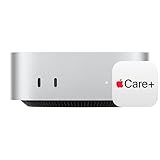
Mac mini
Apple 2024 Mac mini Desktop Computer with M4 chip with 10‑core CPU and 10‑core GPU: Built for Apple Intelligence, 16GB Unified Memory, 512GB SSD Storage with AppleCare+ (3 Years)
M4 · 16GB memory · 512GB SSD · New
Last verified: September 27, 2026
Mac mini
Apple 2020 Mac Mini with Apple M1 Chip, 16GB RAM, 2TB SSD Storage, Silver (Renewed)
M1 · 16GB memory · 2TB SSD · Renewed
Last verified: September 27, 2026Mac mini
Apple 2026 Mac mini desktop computer M6 chip with AppleCare+ (3 years)
M6 · 16GB memory · 512GB SSD · New
Last verified: September 27, 2026
Mac mini
Apple 2024 Mac Mini with Apple M4 Chip with 12CPU & 16GPU (24GB RAM, 512GB SSD Storage) Silver (Renewed)
M4 · 24GB memory · 512GB SSD · Renewed
Last verified: September 27, 2026Mac mini
Mac mini with M4 10‑core CPU and 10‑core GPU, 24GB Memory, 1TB Storage
M4 · 24GB memory · 1TB SSD · New
Last verified: September 27, 2026Mac mini
Apple 2024 Mac mini with M4 chip; 10‑core CPU and 10‑core GPU, 24GB Memory, 512GB SSD, 10 Gigabit Ethernet.
M4 · 24GB memory · 512GB SSD · New
Last verified: September 27, 2026Start with private network access
Keep the local model endpoint on a trusted LAN or VPN. If outside access is required, place authentication and encryption in front of the service rather than exposing the runtime port directly to the internet.
Separate model storage from backups
An external SSD can hold model files, but it should not be the only copy of prompts, indexes, configuration and important documents. Back up irreplaceable data to a separate destination.
Design for unattended recovery
An always-on server should restart cleanly after power loss, launch its required services predictably and remain reachable without a monitor. Test recovery before depending on it.
Frequently asked questions
Can a Mac mini run headless as an AI server?
Yes. Configure remote administration, startup behavior, power recovery and secure network access before removing the display and keyboard.
Should I expose Ollama directly to the internet?
No. Use a VPN or an authenticated gateway. A local runtime endpoint should not be left publicly reachable without access controls.
Is Gigabit Ethernet enough?
It is usually sufficient for text prompts and responses. Faster networking is more useful when several users transfer large model files, datasets or media through the same Mac.