


Black Friday 2026 · Our buying decision
USB Podcast Microphones Black Friday 2026 Deals
Black Friday offers
Shop the latest matching Amazon offers below. A Black Friday label appears only on a promotion verified by Amazon.

Black Friday Deal
FIFINE AmpliGame AM8 USB/XLR Dynamic Microphone for Gaming Streaming | Podcast Mic with RGB Light, Mute Button, Headphones Jack, Desktop Stand, for Vocal Recording Singing YouTube
−21% · Amazon · List Price: $56.99
Verified 2026-11-23 21:01:05 UTC
Black Friday Deal
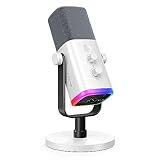
FIFINE AmpliGame AM8W XLR/USB Gaming Microphone for Streaming Podcasting | Dynamic PC Computer RGB Mic, with Gain Knob, Mute Button, Monitoring Jack, for Gamer Recording Video Creation, White
−15% · Amazon · List Price: $58.99
Verified 2026-11-23 20:35:08 UTC
Black Friday Deal
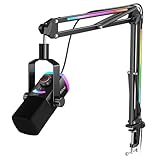
FIFINE AmpliGame AM8PROT Gaming Microphone Kit, XLR/USB Dynamic PC Mic | Streaming Mic Set with Boom Arm, RGB, Tap-to-Mute, Mix Control, Headphone Jack, Volume Knob for Podcast Recording
−15% · Amazon · Typical price: $79.99
Verified 2026-11-23 20:35:08 UTC

Black Friday Deal
FIFINE K669B USB Microphone, Condenser Recording Mic for Vocals, Meeting | Metal Cardioid Laptop Mic for MAC OS, Windows, Voice Overs, Streaming, Online Meeting and YouTube Videos
−38% · Amazon · List Price: $36.99
Verified 2026-11-23 20:35:08 UTC
No fresh priced listing is available right now. Check the matching Amazon results below.
Search AmazonIf you are buying a USB podcast microphone for a new show or a cleaner home studio, this is the right moment to make a confident choice instead of piecing together a confusing setup.
The practical question is not whether a mic can connect by USB, but which model gives you the cleanest path to speaking, monitoring, and upgrading without forcing extra gear you do not need.
For most ordinary podcast buyers, the best buy is the Shure MV7+ Podcast Microphone because it is clearly designed for podcasting, offers USB-C and XLR in one body, and gives you a straightforward route from simple USB recording to a more advanced setup later. If you want the lower-cost route, the FIFINE AmpliGame AM8 is the practical value pick because it is a USB/XLR dynamic microphone with live monitoring and plug-and-play operation. Choose the Shure if you want the safest all-around long-term purchase. Choose the FIFINE if your priority is keeping the setup simple and affordable. Spend more only if you already know you need broader routing or multi-source recording, in which case a RØDECaster Duo-based setup makes more sense than just buying a more expensive mic alone. Avoid an XLR-only microphone if your goal is a USB podcast mic, and do not assume a console-first setup is the right answer when you want zero extra hardware.
Current matching Amazon listings
Current local Amazon listings in USD. Only confirmed public campaign data earns a Black Friday badge; savings use the reference price for that exact listing. Model, quantity, included parts and regional version remain explicit.
As an Amazon Associate, Cloudzat earns from qualifying purchases. Amazon provides the final price and availability. A live listing is not automatically a Black Friday discount.
Matching product · exact contents shown
Black Friday Deal
FIFINE AmpliGame AM8 USB/XLR Dynamic Microphone for Gaming Streaming | Podcast Mic with RGB Light, Mute Button, Headphones Jack, Desktop Stand, for Vocal Recording Singing YouTube
−21% · Amazon · List Price: $56.99
Verified 2026-11-23 21:01:05 UTC
Matching product · exact contents shown
Black Friday Deal
FIFINE AmpliGame AM8W XLR/USB Gaming Microphone for Streaming Podcasting | Dynamic PC Computer RGB Mic, with Gain Knob, Mute Button, Monitoring Jack, for Gamer Recording Video Creation, White
−15% · Amazon · List Price: $58.99
Verified 2026-11-23 20:35:08 UTC
Matching product · exact contents shown
Black Friday Deal
FIFINE AmpliGame AM8PROT Gaming Microphone Kit, XLR/USB Dynamic PC Mic | Streaming Mic Set with Boom Arm, RGB, Tap-to-Mute, Mix Control, Headphone Jack, Volume Knob for Podcast Recording
−15% · Amazon · Typical price: $79.99
Verified 2026-11-23 20:35:08 UTC
Matching product · exact contents shown
Black Friday Deal
FIFINE K669B USB Microphone, Condenser Recording Mic for Vocals, Meeting | Metal Cardioid Laptop Mic for MAC OS, Windows, Voice Overs, Streaming, Online Meeting and YouTube Videos
−38% · Amazon · List Price: $36.99
Verified 2026-11-23 20:35:08 UTC

Matching product · exact contents shown
Black Friday Deal
FIFINE AmpliGame A6V USB Gaming Microphone, Condenser RGB Mic for Streaming | Quick Mute, RGB, Gain Control, Tripod Stand, Pop Filter, Shock Mount, for PC/PS5 Discord Twitch Podcasts Videos YouTube
−15% · Amazon · Typical price: $32.99
Verified 2026-11-23 20:35:08 UTC

Matching product · exact contents shown
Black Friday Deal
FIFINE AmpliGame A6T USB Gaming Microphone Kit, Condenser Mic for Streaming | Mute Button, RGB Indicator, Boom Arm, Gain Control, Pop Filter, Shock Mount, for PC PS4/5 Discord Twitch Podcasts YouTube
−25% · Amazon · Typical price: $49.99
Verified 2026-11-23 20:35:08 UTC
No matching live listing is available right now. Use the product search below to see current Amazon results.
How to judge a good Black Friday buy without getting distracted
A good deal on a USB podcast microphone is not just about the lowest price tag. The real win is getting the right connection type, the right monitoring behavior, and the right upgrade path for the way you actually record. A microphone that is easy to live with every session is more valuable than a flashy spec sheet that makes you add an interface, mixer, or other accessory immediately. That is why USB-C and plug-and-play support matter so much here: they reduce the number of decisions between you and a usable show. For this category, the best deal is often the model that removes friction, not the one that looks largest on the page. Also, because these are podcast mics, you should value a clear voice-focused design over features that belong to gaming or studio hybrid products unless you truly need them. The goal is not to build a complicated chain; it is to get consistently good spoken audio with as little setup trouble as possible.
The configuration we would buy
| Buyer situation | Recommended option | Practical reason |
|---|---|---|
| Ordinary buyer who wants the safest all-around choice | Shure MV7+ Podcast Microphone | It is explicitly a podcast microphone with USB-C and XLR, so it gives you a straightforward start and a real upgrade path later. |
| Buyer who wants the lowest-cost sensible pick | FIFINE AmpliGame AM8 USB/XLR Dynamic Microphone with RGB | It offers USB/XLR connectivity, live monitoring, and plug-and-play use without forcing a complicated setup. |
| Buyer who already needs more routing or multi-source recording | RØDECaster Duo | It supports two combo inputs and is designed for use with a range of USB microphones, which suits more complex podcast workflows. |
| Buyer who wants to avoid future replacement | Shure MV7+ Podcast Microphone | The dual USB-C and XLR design means the mic can grow with the show instead of becoming obsolete quickly. |
| Buyer who wants a simple first podcast rig | FIFINE AmpliGame AM8 USB/XLR Dynamic Microphone with RGB | Its direct USB path and monitoring make it a practical entry point for a straightforward computer-based show. |
| Buyer tempted by a console-first setup but wants zero extra hardware | Shure MV7+ Podcast Microphone | It keeps the experience centered on a single microphone rather than an added control surface you may not need. |
1) The main buy for most podcast buyers
The Shure MV7+ Podcast Microphone is the strongest verified USB podcast pick in this group because Shure explicitly positions it as a podcast microphone and gives it both USB-C and XLR outputs. That combination matters for Black Friday shoppers because it protects you from buying a dead-end starter mic. You can begin with a simple USB connection and still have an upgrade path if your setup later grows into a more demanding production chain. The touch LED panel also reinforces that this is a modern creator mic, not just a basic computer peripheral. For most buyers, that is the ideal balance: direct USB convenience today and more serious connectivity later without replacing the microphone itself. In practical terms, it is the model to choose if you want one purchase that can stay relevant through several stages of your podcast setup.
It is also the safest recommendation when you want a microphone whose purpose is unambiguous. Some products in this space are general-purpose or cross-branded for gaming and streaming, but the MV7+ is clearly framed for podcast use. That makes the buying decision easier because you are not paying for features that only matter in a different content category. If you are building your first serious show, or if you want to reduce the chance of outgrowing the mic too quickly, the MV7+ should be the first option to evaluate.
2) When the lower-cost option makes more sense
The FIFINE AmpliGame AM8 is the lower-cost pick because the official product page confirms the essentials that matter to a budget-conscious podcaster: it is a USB/XLR dynamic microphone with a cardioid pickup pattern and live monitoring. That means it is still a serious spoken-voice tool rather than a random accessory or a novelty mic. The plug-and-play nature is important for ordinary buyers who want to connect the microphone and start recording without immediately buying extra gear. For a solo podcaster, that simplicity often matters more than premium branding. If the complete-package price is clearly better for your budget, the AM8 is the sensible value choice.
The key advantage of the AM8 is that it keeps the purchase practical. You can use USB now, then retain the option to move to XLR later if your workflow grows. That flexibility is useful, but it should not be overhyped: it is valuable because it gives you choice, not because every buyer needs to use both modes. If your goal is straightforward podcast recording on a computer with minimal fuss, the AM8 covers that need well. It is the right kind of budget recommendation because it solves the core problem instead of pretending to be a higher-end studio system. If the price gap to the Shure is large, the AM8 becomes especially attractive. If the gap is small, the Shure remains the stronger long-term buy.
3) When spending more is actually justified
Some buyers should spend more, but only for a specific reason: they need a setup that goes beyond a single USB microphone. The right moment to move up is when you already know you need more routing, more inputs, or a broader recording hub for a show with multiple sources. In that case, the RØDECaster Duo becomes the meaningful upgrade path because it supports two combo inputs and is designed to work with a range of USB microphones. This is not a recommendation to buy a bigger box just because it looks more serious. It is a recommendation for buyers who already know their show structure demands more than a direct-to-computer mic.
That distinction matters because a console-first setup is not the simplest path for everyone. If you want zero extra hardware, you should not force yourself into a controller, mixer, or interface workflow you do not need. But if your podcast plans include more complicated signal routing or multiple recording sources, then a more capable hub can be a better investment than stepping up only in microphone price. The practical rule is simple: buy the advanced recording path when your workflow requires it, not when you are merely tempted by the idea of being more professional. For one-person podcasting, the MV7+ or AM8 remains the cleaner answer. For more complex production, the RØDECaster Duo starts to make sense.
4) USB-C, cables, and the non-negotiable compatibility basics
USB podcast microphones are convenient, but the convenience still depends on the right connection and operating system support. A USB mic is not a universal magic device; it still needs the correct USB-C or USB-A cable path and a computer or device that supports it properly. The MV7+ uses USB-C, which is the cleaner modern choice, while the broader compatibility question is really about how you plan to connect it in your room. If you only have older ports or a very specific device setup, that practical detail matters more than a marketing slogan. The good news is that both top picks are built around straightforward computer use, which is exactly what most podcast buyers need.
It is also important not to confuse a USB podcast microphone with a more complex audio chain. If your whole goal is to get into recording quickly, then avoid a setup that assumes extra hardware from the start. The compatibility question should be answered by your recording method, not by wishful thinking about future expansion. In other words, buy the mic that fits your present workflow first. If you later want more routing, then move into the upgrade path deliberately. This keeps the purchase grounded and avoids the common mistake of overbuying a system that feels powerful but is less convenient than a simple USB setup for day-to-day podcasting.
5) Monitoring, mute behavior, and why mode details matter
For podcasting, monitoring is not a luxury; it is how you catch problems before they become permanent in your recording. The FIFINE AM8 explicitly includes live monitoring, which makes it a particularly practical budget pick for people who want to hear themselves while speaking. The MV7+ also has creator-focused controls through its touch LED panel, but the broader caution here is that microphone features can behave differently depending on whether you are using USB or XLR. That is why buyers should not assume every function behaves identically in every mode. In this category, mode details are not trivia; they are part of the product’s real usability.
This is also why the best choice is usually the one with the least ambiguity for your intended setup. If you want a microphone that is easy to run as a pure USB podcast tool, the AM8 and MV7+ both fit that need in different ways. The AM8 emphasizes plug-and-play simplicity and monitoring. The MV7+ emphasizes premium podcast design and future flexibility. But if you move into XLR later, remember that USB-side DSP does not process the passive XLR output in the same way. That practical limit matters because it keeps expectations realistic. Buy for the mode you will actually use most often, and treat the secondary mode as a future option rather than the reason to buy the microphone in the first place.
6) Why the MV7+ is the safest long-term value
The MV7+ earns the strongest recommendation because it is not just a USB microphone; it is a microphone that can serve as the center of a growing podcast setup. That long-term value is what makes it stand out during Black Friday. Many buyers start with a simple USB recording plan and later realize they want a more advanced chain. With the MV7+, you are not boxed into a dead-end design. You get a podcast-first microphone that can start simple and remain useful if your ambitions increase. That makes it a smart purchase for buyers who are tired of replacing starter gear too quickly.
Its value is also practical rather than theoretical. You do not need to imagine a studio overhaul for this recommendation to make sense. Even a solo creator can benefit from a mic that clearly supports both straightforward computer recording and a future move into XLR. That versatility makes the purchase easier to justify when the price difference versus a simpler model is modest. If the price spread is small, the MV7+ is the better buy. If the spread is large and your setup is uncomplicated, the AM8 remains a fair lower-cost alternative. The important point is that the MV7+ gives you a better chance of still feeling satisfied with the purchase after your show grows.
7) Why the AM8 is the right value call for simple shows
The FIFINE AmpliGame AM8 deserves its place because budget buyers do not always need premium branding to get a usable podcast setup. Its official spec sheet confirms the features that matter most for value: USB/XLR connectivity, dynamic design, cardioid pickup, and live monitoring. That is enough for a lot of podcasters, especially anyone recording solo episodes, interviews at a desk, or early-stage shows where the priority is clarity and ease of use. It is not a consolation prize; it is a practical tool that gives you a direct path to recording without extra fuss.
The reason to choose it is straightforward: if the complete-package price is materially better for your budget, you get a microphone that does the job and still leaves room in the budget for other essentials. That can matter more than buying a fancier mic and cutting corners everywhere else. A podcast setup is a system, not a single item. The AM8 is a smart budget choice when it lets you get the whole system started correctly. If you are a first-time buyer and you want to keep the process simple, this is the kind of lower-cost recommendation that makes sense without pretending to be the premium answer.
8) The incompatible configuration to avoid
The clearest mistake to avoid is buying an XLR-only microphone when what you actually need is a USB podcast microphone. That mismatch creates unnecessary complexity and defeats the point of a USB-focused buying guide. It also applies in reverse: if you want simple direct-to-computer recording, do not talk yourself into a console-first setup just because it sounds more advanced. The right choice is the one that matches your actual recording path. In this category, the wrong configuration is not just inconvenient; it can force you to buy extra hardware you did not budget for and did not want to manage.
A second compatibility trap is assuming every microphone feature behaves the same in every connection mode. The MV7+ has both USB-C and XLR, and that USB DSP does not process the passive XLR output. That is a meaningful limitation, not a footnote. It means you should think carefully about which mode you will rely on most. Buy the microphone for the workflow you intend to use now, and treat any future upgrade path as a bonus. That is the cleanest way to avoid regret in a category where setup complexity can creep in very quickly.
9) Final buying direction for Black Friday
Black Friday is the right time to make a practical, not emotional, microphone decision. If you are an ordinary buyer, start with the Shure MV7+ because it is the strongest all-around USB podcast microphone in this group and gives you the best long-term flexibility. If you want to spend less and still get a legitimate podcast microphone, choose the FIFINE AM8. If your show already needs a broader recording hub, consider the RØDECaster Duo instead of overthinking microphone-only upgrades. The correct answer depends on workflow, not status.
That is the clean conclusion for this page. A USB podcast microphone should make recording easier, not more complicated. The best purchase is the one that fits your device, your room, and your current level of ambition. For most people, that means the MV7+ as the main pick and the AM8 as the budget pick. Spend more only when you truly need the routing flexibility of a larger setup. That keeps your Black Friday purchase focused, useful, and easy to live with after the sale hype fades.
Black Friday dates and offer eligibility
Black Friday falls on 27 November 2026. Manufacturer and marketplace campaigns have different schedules, stock and eligibility. A calendar date does not establish a discount on the recommended configuration.
Direct answers before buying
Is the Shure MV7+ a better buy than a basic USB microphone for most podcasters?
Yes, for most buyers it is the better long-term purchase because it is built as a podcast microphone and includes both USB-C and XLR. That makes it easier to start simply and still leaves room to expand later. If you are only trying to record solo episodes on a computer, a cheaper mic can still be fine. But if you want the safest all-around choice and the least chance of needing a replacement soon, the MV7+ is the stronger recommendation.
When should I choose the FIFINE AM8 instead of the Shure MV7+?
Choose the AM8 when price and simplicity matter more than premium positioning. Its official page confirms USB/XLR dynamic operation, cardioid pickup, and live monitoring, which are the core features many podcasters need. If the complete-package price is clearly better for your budget, it is the right value decision. The AM8 is especially attractive for a first podcast rig or a straightforward desk setup where you want good usability without paying for extra prestige or future-proofing you may not use.
Do I need an XLR setup if I am buying a USB podcast microphone?
No. If your goal is a USB podcast microphone, you should not force yourself into XLR hardware just because it sounds more advanced. USB is the right path for people who want direct recording with minimal extra gear. XLR only becomes worthwhile if your workflow genuinely needs more routing or a broader recording hub. For ordinary podcast buyers, the sensible approach is to buy a USB-capable mic first and only move to a more complex setup when the show actually demands it.
What is the main compatibility mistake to avoid?
The biggest mistake is buying the wrong connection type for your intended workflow. An XLR-only microphone is not a USB podcast microphone, and a console-first setup is not ideal if you want zero extra hardware. Also remember that mode behavior can differ, especially when a microphone offers both USB and XLR. For example, the MV7+ has both outputs, but USB-side processing does not carry over in the same way to passive XLR use. Buy for the mode you will actually use most.
Related buying guides
Sources and research notes
Researched on 23 November 2026 using manufacturer documentation and local Amazon observations. Editorial recommendations, without claims of hands-on testing. Prices expire after 24 hours; public promotion badges after one hour or the offer end. No unsupported historic-low claims.