


United States · USD · Deal Watch
Frigate AI Accelerator Black Friday Deals 2026: What to Buy
Unlock the next stage of your Frigate project this Black Friday with a detection accelerator chosen for your actual software setup.
Compare Coral and Hailo options with the detector supported by your software and host. Check the complete module or kit; a carrier board alone is not an accelerator. Price the supported accelerator and required adapter as a complete kit, then compare recent selling prices. That gives a Black Friday discount a useful compatibility and cost test.
Choose Google Coral USB for a compatible EdgeTPU installation with a spare usable USB connection. Choose a Raspberry Pi AI HAT+ for a supported Hailo-based Raspberry Pi setup. A PCIe host may instead suit a Hailo M.2 accelerator, but the connector and software must match that host.
Which Frigate AI Accelerator option should you choose?
Start here
Google Coral USB Accelerator
Choose it for a compatible EdgeTPU detection setup with a usable USB connection.
Buy on AmazonChoose this alternative
Raspberry Pi AI HAT+
Choose it for a Hailo-based Raspberry Pi installation with a supported model and host.
Buy on AmazonCurrent Frigate AI Accelerator Listings on Amazon
Black Friday sale dates and offer timing
Dates for 2026: Black Friday — November 27; Amazon.com — November 19–30. Individual offer periods and eligibility vary.
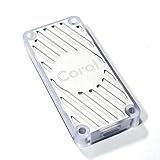
G950-01456-01/ G950-06809-01Coral USB Edge TPU ML Accelerator coprocessor for Raspberry Pi and Other Embedded Single Board Computers
Last verified 2026-11-12 01:13:48 UTC

seeed studio Coral USB Accelerator Accelerator coprocessor for Raspberry Pi and Other Embedded Single Board Computers
Last verified 2026-10-23 21:04:41 UTC

Google Coral USB Edge TPU ML Accelerator coprocessor for Raspberry Pi and Other Embedded Single Board Computers
Last verified 2026-08-26 10:22:47 UTC
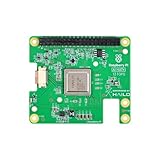
Raspberry Pi AI HAT+ 13Top Artificial Intelligence Hailo-8 or Hailo-8L Accelerator (8L-13TOP AI HAT+)
Last verified 2026-11-16 04:44:38 UTC

Raspberry Pi AI HAT+ 26Top Artificial Intelligence Hailo-8 or Hailo-8L Accelerator (8-26TOP AI HAT+)
Last verified 2026-11-16 04:33:58 UTC

Raspberry Pi AI HAT+ Add-on Board, 26 Tops, PCIe Interface, for Raspberry Pi 5, 65 x 56.5mm
Last verified 2026-11-13 04:52:30 UTC

Raspberry Pi 5 Official AI HAT+2 Kit with Hailo-10H 40TOPS PCIe M.2 Board 8GB RAM for LLM, VLM & AI Vision Acceleration, Compatible with Pi 5 Only
Last verified 2026-11-13 04:52:30 UTC

Raspberry Pi AI HAT+ Add-on Board, 13 Tops Hailo AI Accelerator, PCIe Interface for Pi 5, 65mm x 56.5mm
Last verified 2026-11-13 04:52:30 UTC
As an Amazon Associate, Cloudzat earns from qualifying purchases. Prices and availability can change; Amazon shows the final price for your chosen item.
Frigate AI Accelerator buying guide
| Choice | Best for |
|---|---|
| Google Coral USB Accelerator | a compatible EdgeTPU detection setup with a usable USB connection |
| Raspberry Pi AI HAT+ | a Hailo-based Raspberry Pi installation with a supported model and host |
Which Frigate AI Accelerator option should you choose?
For a compatible EdgeTPU detection setup with a usable USB connection, choose Google Coral USB Accelerator.
For a Hailo-based Raspberry Pi installation with a supported model and host, choose Raspberry Pi AI HAT+.
Object detection is only one part of Frigate
A detector processes frames selected for inference; it does not automatically accelerate video decoding, recording or every enrichment feature. Moving object detection to dedicated hardware can free CPU resources, but a weak or misconfigured decode path can still bottleneck the host.
Size the accelerator in the context of the complete NVR. Black Friday should reduce the cost of the correct architecture rather than encourage an accelerator-first build.
Software support comes before silicon capability
Accelerator marketing often centers on TOPS and supported neural-network frameworks. Frigate support is narrower than a chip's theoretical capability because the application must implement a detector path, supported model formats and runtime integration. Check the current Frigate detector documentation before buying any module.
This is especially important for newer accelerators. A product can be technically powerful and still be a poor Frigate purchase if the required detector backend is experimental, unsupported in your release or dependent on a different model workflow than you plan to use. Treat current software support as a required specification.
Interface compatibility can be the hidden cost
Coral and Hailo products appear as USB devices, M.2 modules, PCIe cards and Raspberry Pi-oriented kits. The physical connector name is not enough: keying, PCIe lanes, slot wiring, occupied Wi-Fi/storage slots and carrier requirements all matter.
Before comparing sale prices, map the accelerator to a specific host port. If a $70 module needs a $50 carrier and forces replacement of the existing SSD, the installed cost is not $70. Cloudzat's dedicated Coral and Hailo pages make that interface decision explicit.
TOPS is not a Frigate benchmark
Trillions of operations per second is a hardware capability metric, not a guaranteed object-detection rate in your configuration. Model architecture, precision, runtime, batch behavior, host overhead and the detector implementation influence actual performance. Comparing Coral and Hailo solely by their headline TOPS can therefore mislead buyers.
Use TOPS as one piece of technical context after confirming support and interface. The practical question is whether the selected accelerator can process your detection stream set with enough latency headroom. A modest device that comfortably meets that requirement can be the better value and lower-power choice.
Detection FPS should be purposeful
Running every camera at a high detect frame rate increases inference demand and may not improve useful event detection proportionally. For many scenes, a moderate detect FPS catches people and vehicles adequately. Faster motion or specialized scenes may justify more, but the number should come from the surveillance goal.
The decision tool uses detect FPS as a workload input rather than an achievement target. Lowering unnecessary FPS can allow a smaller accelerator or more cameras on the same device. That efficiency often saves more than chasing the largest Black Friday accelerator discount.
Use substreams to reduce accelerator demand
Object detection frequently works on a lower-resolution stream than the recording stream. Camera configuration and accelerator sizing are therefore connected decisions.
If your cameras cannot provide a suitable detect substream, the accelerator may need to process larger frames or the host may perform more preprocessing. That can change which device is adequate. Validate the camera stream design before treating any published camera-per-accelerator number as transferable to your system.
Thermals and continuous duty matter
An accelerator in a compact host can run for long periods under repeated inference load. M.2 modules and small HAT configurations depend on the airflow and thermal design of the enclosure. A kit that works on an open bench may behave differently inside a fanless mini PC or a crowded small-form-factor case.
Check vendor thermal guidance and any required heatsink or airflow separately from the accelerator price. A heatsink-only listing is not an accelerator deal, but cooling can still be necessary for a particular installation.
Buy one detector path before building redundancy
It can be tempting to buy multiple accelerators when prices fall, but a second device is useful only if your configuration can use it or you have a planned spare strategy. Small Frigate systems can waste money by stocking hardware before the first deployment has established its real inference load.
Start with the capacity justified by the camera plan, then measure. If future expansion is likely, verify that the host exposes additional compatible interfaces. A Black Friday spare can make sense for an important system, but treat that as resilience spending rather than required performance.
Compare the event price with complete installed cost
Include carriers, adapters, cables, cooling and any host changes when comparing an accelerator's regular and event price. A USB Coral may have a higher device price yet lower installed complexity than an internal module that needs additional hardware.
Once the detector path and complete cost are clear, the price history becomes useful. If the price difference is small, software support and host compatibility should dominate the decision.
Budget for decoding, detection and recording separately
The host decodes video, the detector performs object inference, and storage keeps the recordings. These are separate workloads. An accelerator can improve detection without fixing a slow recording drive or an unsuitable video-decoding path. Choose the camera streams, recording plan and detector together so that one part does not remain the bottleneck.
A lower-resolution detection stream can reduce processing work while a higher-quality stream is recorded. Confirm that the camera provides the streams and local access your setup requires. Battery cameras, vendor-cloud features and a high advertised resolution do not by themselves establish suitability for continuous local recording.
Choose the detector for the software and connector you have
Coral USB, Coral M.2 and Hailo devices are different hardware paths. Match the exact connector, host support, driver and model format to the Frigate version you plan to use. An M.2-shaped accelerator does not automatically fit or operate in an SSD slot. A Raspberry Pi HAT is not a complete general-purpose computer.
Before adding cameras, leave capacity for the busiest scene and concurrent recording activity. Check inference and video-processing behaviour with the intended streams. A fixed number of cameras is not a universal hardware rating because resolution, frame rate, scene activity, recording settings and software choices change the work.
Keep recording storage and recovery separate from the camera price
Estimate storage from the camera bitrate, recording duration and retention period, then leave room for overhead and growth. A resolution label alone does not determine the storage needed. Continuous recording and event-based retention can produce very different capacity requirements. Use the settings you intend to keep rather than the smallest file size demonstrated by a seller.
Place important event exports or required evidence on another recoverable device when losing the recorder would also lose the recordings. A camera purchase is only part of a complete local recording setup. Include the switch or PoE supply, host, storage and a sensible recovery procedure in the budget.
Electricity cost calculator
Replace the example values with your own measurements, capacity or prices.
Questions buyers ask
Which Frigate AI Accelerator option should I choose?
Choose Google Coral USB Accelerator for a compatible EdgeTPU detection setup with a usable USB connection. Choose Raspberry Pi AI HAT+ for a Hailo-based Raspberry Pi installation with a supported model and host.
Does Frigate require an AI accelerator?
No. A dedicated detector can improve efficiency, but the requirement depends on workload, detector path and host resources.
Is Hailo faster than Coral for Frigate?
Headline capability can be higher, but real value depends on current Frigate support, model path, host interface and the specific workload.
Can I use a Coral USB Accelerator with any mini PC?
USB is broadly convenient, but verify current Frigate support, available USB bandwidth/power and the exact operating environment.
Will any M.2 slot accept a Coral or Hailo module?
No. M.2 keying and electrical wiring vary; some slots are storage-only or used by Wi-Fi. Verify the exact host.