


LGA1851 DDR5 guide
Intel Core Ultra 200S desktop processors use DDR5 on LGA1851 and support up to DDR5-6400 in specified one-DIMM-per-channel CUDIMM configurations. Motherboard chipset, DIMM technology, module count and XMP support all influence the practical result. This selector ranks current DDR5 products while keeping the official 6400 figure and overclocked XMP ratings separate.
For a new Core Ultra 200S build, prefer a matched two-module DDR5 kit. DDR5-6400 is the key official target for supported one-DIMM-per-channel CUDIMM configurations, while faster XMP settings depend on the motherboard and should be checked against its memory support list.
Platform compatibility engine
Choose a Core Ultra 200S memory kit
Intel Core Ultra 200S
Intel's up-to-DDR5-6400 figure is tied to one-DIMM-per-channel CUDIMM configurations. Additional DIMM loading can reduce the maximum supported speed.
Live catalogue matches
Recommended kits for these settings


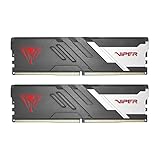
Core Ultra 200S uses DDR5 only
The desktop Core Ultra 200S platform does not provide a DDR4 alternative. Choose desktop DDR5 memory in a form supported by the motherboard. Laptop SODIMMs and registered server modules are not substitutes for ordinary desktop memory.
What the DDR5-6400 figure means
Intel's product brief associates the maximum 6400 MT/s rate with one DIMM per channel CUDIMM configurations. A two-channel board normally reaches one DIMM per channel with two installed modules. Standard UDIMMs, different ranks or additional module loading can change the supported rate.
CUDIMM and ordinary UDIMM are not identical labels
CUDIMMs add a clock driver to support higher signal integrity targets. The motherboard manual should explicitly describe support and slot rules. Do not assume that every product marketed as DDR5-6400 is a CUDIMM or that every LGA1851 board treats CUDIMM and conventional UDIMM identically.
XMP support depends on chipset and board
Intel's 800-series lineup includes chipsets with different memory-overclocking capabilities. B860, Z890 and workstation options can support memory overclocking, while H810 and Q870 do not advertise it in the same way. The tool flags a high XMP target when the selected chipset does not support memory overclocking.
Two modules are the performance-first layout
One DIMM per channel usually means two modules across a dual-channel desktop platform. Four modules increase loading and can reduce the maximum stable speed. A 2x16GB or 2x32GB kit is therefore the cleaner starting point for a performance build.
Capacity planning up to 192GB
Intel lists up to 192GB for Core Ultra 200S desktop processors. Reaching that capacity may require high-density 48GB modules and a supported board layout. Check the board's per-slot support and validated module list before buying a 4x48GB configuration.
XMP is not a universal guarantee
Intel XMP stores tested overclocking settings, but the final operating speed depends on the processor, board, BIOS and DIMM population. A kit can fall back to a standard setting when XMP is disabled or unsupported. Treat the advertised speed as a profile target rather than automatic plug-and-play behavior.
Latency still matters at the same speed
Two DDR5-6400 kits can have very different CAS latency and secondary timings. Lower timings can reduce calculated access delay, but the price premium should be compared with the workload. Capacity and stability should remain the first priorities.
Use the exact motherboard memory list
LGA1851 boards vary in trace layout, BIOS maturity and supported CUDIMM behavior. Look up the complete memory part number in the board's QVL where possible. A listing that omits the code deserves lower compatibility confidence.
Validate the installed settings
After enabling XMP, confirm the actual data rate and capacity, then run a sustained memory test. If errors appear, restore defaults, update firmware and test a lower speed. Do not assume that booting once proves a high XMP profile is reliable.
How Cloudzat compares RAM
Cloudzat compares capacity, module count, DDR generation, form factor, data rate, CAS latency, memory profile, condition and warranty information before calculating price per gigabyte. Accessories, lighting-only dummy modules and complete computers are excluded from ordinary RAM comparisons. Price history starts with the first observed marketplace price rather than an estimated earlier baseline.
Compatibility guidance is rules-based. Confirm the exact motherboard, laptop or processor specification with the manufacturer before purchase. Intel publishes XMP-certified memory information, AMD documents EXPO profiles for compatible AM5 systems, and system vendors or memory manufacturers may provide device-specific compatibility tools.
Questions answered
Best RAM for Intel Core Ultra 200S FAQ
What RAM does Core Ultra 200S use?
Desktop Core Ultra 200S processors use DDR5 on LGA1851 motherboards.
Does every kit run at DDR5-6400?
No. Intel's headline rate is configuration-specific, and module type, rank, board and DIMM count matter.
What is a CUDIMM?
It is a DDR5 module with an onboard clock driver intended to improve signal integrity at higher speeds.
Can H810 use XMP memory?
The memory can physically be compatible, but H810 does not provide the same memory-overclocking support as B860 or Z890. Expect standard settings unless the board documentation states otherwise.
Is 2x32GB better than 4x16GB?
For a new 64GB performance build, two modules generally offer an easier high-speed configuration and leave slots free.
Can I use EXPO memory on Intel?
A dual-profile kit may include XMP, and some EXPO-only kits can run at JEDEC settings, but choose an XMP-capable kit for the clearest Intel profile support.
Amazon prices and availability can change. Links may be affiliate links. Verify the exact part number, capacity, module type and warranty before ordering.