


UK · Black Friday 2026 · Our buying decision
USB Podcast Microphones UK Black Friday 2026 Deals
Black Friday offers
Shop the latest matching Amazon offers below. A Black Friday label appears only on a promotion verified by Amazon.

Black Friday Big Deal
FIFINE AM8 Dynamic XLR/USB Gaming Microphone | Streaming Computer Mic. Podcast, Studio, Voiceover, Recording. RGB, Mute, Monitoring Headphone Jack, Gain Knob. Black.
−36% · Amazon · RRP: £69.99
Verified 2026-11-23 20:34:34 UTC

Black Friday Big Deal
FIFINE AM8W White Gaming XLR/USB Microphone | Dynamic PC Gaming Mic for Podcast Recording, Voice-Over, Vocal. RGB, Mute, Monitoring Headphone Jack. for Computer/PS4/PS5
−20% · Amazon · RRP: £56.99
Verified 2026-11-23 20:34:34 UTC

Black Friday deal
FIFINE AM8T Dynamic XLR/USB Gaming Microphone Kit | AM8 Mic Set with Boom Arm Stand, RGB, Mute, Gain Knob, for PC/MAC/PS5/Mixer, Podcast Streaming, Vocal Recording, Gaming
−19% · Amazon · RRP: £74.99
Verified 2026-11-23 20:34:34 UTC

Black Friday deal
FIFINE K669B USB Condenser Recording Microphone | Metal Recording Mic for Laptop, Mac, Windows. Cardioid Studio Recording Vocals, Voice Overs, Streaming Broadcast, YouTube.
−19% · Amazon · Was: £29.99
Verified 2026-11-23 20:34:34 UTC
No fresh priced listing is available right now. Check the matching Amazon results below.
Search AmazonIf you are buying a USB podcast microphone in the UK this Black Friday, the smartest move is to choose for workflow first, not logo first. For most ordinary buyers, the Shure MV7+ is the cleanest premium pick because it is built specifically as a podcast microphone and gives you USB-C now with XLR later if you ever need it.
There is also a very sensible lower-cost route in the FIFINE AmpliGame AM8 if you want a plug-and-play dynamic mic with USB/XLR and live monitoring without spending on a full studio chain. Only move up to a console-style setup such as the RØDECaster Duo when you genuinely need multi-source recording, more routing, or a broader production rig rather than a simple one-mic computer setup.
Buy the Shure MV7+ if you want the safest all-round USB podcast microphone: it is purpose-built for podcasting, uses USB-C, and still leaves you the option of XLR later. Choose the FIFINE AM8 if value matters more than brand prestige and you want a straightforward dynamic USB/XLR microphone with live monitoring. Spend more only if your setup is expanding into multiple sources, extra routing, or a dedicated production desk; then the RØDECaster Duo makes sense. Avoid buying an XLR-only microphone for a USB-first podcast setup, because it adds complexity without solving the actual need.
Current matching Amazon listings
Current local Amazon listings in GBP. Only confirmed public campaign data earns a Black Friday badge; savings use the reference price for that exact listing. Model, quantity, included parts and regional version remain explicit.
As an Amazon Associate, Cloudzat earns from qualifying purchases. Amazon provides the final price and availability. A live listing is not automatically a Black Friday discount.
Matching product · exact contents shown
Black Friday Big Deal
FIFINE AM8 Dynamic XLR/USB Gaming Microphone | Streaming Computer Mic. Podcast, Studio, Voiceover, Recording. RGB, Mute, Monitoring Headphone Jack, Gain Knob. Black.
−36% · Amazon · RRP: £69.99
Verified 2026-11-23 20:34:34 UTC
Matching product · exact contents shown
Black Friday Big Deal
FIFINE AM8W White Gaming XLR/USB Microphone | Dynamic PC Gaming Mic for Podcast Recording, Voice-Over, Vocal. RGB, Mute, Monitoring Headphone Jack. for Computer/PS4/PS5
−20% · Amazon · RRP: £56.99
Verified 2026-11-23 20:34:34 UTC
Matching product · exact contents shown
Black Friday deal
FIFINE AM8T Dynamic XLR/USB Gaming Microphone Kit | AM8 Mic Set with Boom Arm Stand, RGB, Mute, Gain Knob, for PC/MAC/PS5/Mixer, Podcast Streaming, Vocal Recording, Gaming
−19% · Amazon · RRP: £74.99
Verified 2026-11-23 20:34:34 UTC
Matching product · exact contents shown
Black Friday deal
FIFINE K669B USB Condenser Recording Microphone | Metal Recording Mic for Laptop, Mac, Windows. Cardioid Studio Recording Vocals, Voice Overs, Streaming Broadcast, YouTube.
−19% · Amazon · Was: £29.99
Verified 2026-11-23 20:34:34 UTC

Matching product · exact contents shown
Black Friday deal
FIFINE AmpliGame A6V RGB USB Gaming Microphone | USB Condenser Mic for PC, PS5. Tap-to-mute, Shock Mount, Pop Filter, Gain Control. for Streaming, Podcast, Discord, Twitch.
−35% · Amazon · RRP: £43.99
Verified 2026-11-23 20:34:34 UTC
Matching product · exact contents shown
Black Friday deal
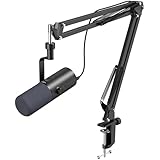
TONOR Dynamic Podcast Microphone for Studio, Cardioid XLR/USB Mic, AI Noise Cancellation, Tap Mute, 3.5mm Headphone Jack for Monitoring, Volume Control, Microfono with Boom Arm, Black, TD510 AIR+H
−29% · Amazon · RRP: £46.99
Verified 2026-11-23 20:47:54 UTC
No matching live listing is available right now. Use the product search below to see current Amazon results.
How to judge a good Black Friday deal without overbuying
For this category, the right deal is the one that improves your recording setup without forcing an unnecessary change in workflow. A USB podcast microphone should give you straightforward computer connection, usable monitoring, and a sensible voice-oriented pickup pattern. If a premium model such as the Shure MV7+ is only a modest step above a lower-tier option in the package you actually need, that is the kind of offer worth favouring because it buys flexibility rather than just a badge. But if the deal bundles features you will never use, the lower-cost mic is often the more practical win. The value is in the fit, not the flashiness. Watch the complete package carefully. Some offers include a boom arm, cables, or recording extras, while others are just the microphone itself. Those differences matter more than a vague marketing discount because they determine whether you can plug in and start recording immediately or still need to buy support hardware afterwards.
The configuration we would buy
| Buying situation | Recommended option | Practical reason |
|---|---|---|
| Most buyers wanting the safest all-round choice | Shure MV7+ Podcast Microphone | Purpose-built for podcasting, with USB-C now and XLR later if the setup expands |
| Budget-conscious buyer wanting a real podcast mic | FIFINE AmpliGame AM8 USB/XLR Dynamic Microphone with RGB | Gives USB/XLR connectivity and live monitoring without forcing a more complex workflow |
| Buyer planning a bigger desk setup with routing and multiple sources | RØDECaster Duo | Useful when the project needs two combo inputs and a broader production hub |
| Buyer who wants the simplest direct-to-computer setup | Shure MV7+ | Keeps the recording path straightforward while leaving room to upgrade later |
| Buyer who wants a lower-cost voice mic and will stay on USB | FIFINE AM8 | Strong value when the complete package is the priority and the feature set is enough |
1. The right Black Friday choice for most buyers
For most UK buyers, the strongest default choice is the Shure MV7+. It is explicitly positioned as a podcast microphone and gives you USB-C plus XLR, which makes it a rare “buy once, grow later” option in this category. That matters because a USB podcast microphone should make recording simpler now, not create a future replacement problem. If you are starting a show, streaming from a computer, or recording voiceovers at a desk, the MV7+ gives you the cleanest path with the least risk of outgrowing it quickly. The other reason it stands out is practical rather than glamorous: its touch LED panel and USB-C connection make it feel designed for modern desk use, not as a repurposed general-purpose mic. Black Friday is the moment to buy this kind of microphone because you are less likely to regret paying for flexibility when the package is already built around podcasting rather than music-first studio work. The key is to treat the MV7+ as a serious long-term voice tool, not as a toy upgrade.
2. When the lower-cost pick is the smarter buy
The FIFINE AmpliGame AM8 is the lower-cost route that still makes sense because it is a USB/XLR dynamic microphone with a cardioid pattern and live monitoring. That means it covers the essentials for spoken-word use without pretending to be a console or a studio chain. If you need a straightforward mic for podcasting, voice chat, or simple content creation, and you want to keep the setup light, the AM8 can be the better buy when the package price is meaningfully lower than the premium alternative you were considering. Its live monitoring is a genuine practical benefit, because hearing your own voice while recording makes it easier to maintain a consistent level and distance from the mic. It is also the kind of option that suits buyers who do not want to commit to a more complex desk layout. In short: choose the AM8 when value and simplicity matter most, and when you are happy with a strong core feature set rather than premium finishing and brand cachet.
3. Why USB-C and XLR together matter
A microphone with both USB-C and XLR gives you an escape route. That is the real value of the Shure MV7+ and the FIFINE AM8, and it is why they are both better Black Friday targets than a single-connection mic for many buyers. With USB, you can record straight to a computer. With XLR, you can later move to a mixer, interface, or more advanced audio chain if your podcast grows. You do not have to buy that extra gear on day one. The important practical point is that USB and XLR do not mean the same thing in every use case. Shure notes that the MV7+ uses USB-C and XLR, but the USB DSP does not process the passive XLR output. That means you should not assume every software feature travels with every connection type. For most ordinary buyers, USB mode is the point: keep it simple at first, and only treat XLR as a future option. That is the right way to view a dual-output mic during Black Friday shopping.
4. The setup mistake to avoid
The main mistake to avoid is buying an XLR-only microphone when what you actually need is a USB podcast microphone for direct computer use. That sounds obvious, but it happens because some buyers get pulled towards “studio” language and overlook the practical requirement: they need something that works cleanly with a computer and does not force them to assemble a separate audio chain. If the goal is a simple podcast desk, an XLR-only mic adds another layer of purchasing and setup with no immediate reward. Another common mistake is assuming that any microphone marketed for audio work will behave the same in USB mode. It will not. Monitoring, mute behaviour, and software features can vary by connection type. For a Black Friday purchase, the safest rule is simple: if you want one mic that can start on USB and remain useful later, buy one that is clearly sold that way. That is why the MV7+ and AM8 belong on this page, while non-USB or console-first products do not.
5. What makes the Shure MV7+ the premium pick
The Shure MV7+ is the premium recommendation because it is not just compatible with USB podcasting; it is built around it. Shure explicitly markets it as a podcast microphone, and the dual USB-C and XLR outputs make it unusually flexible for a single desk mic. The touch LED panel also signals a more polished day-to-day experience, which matters when the microphone sits in front of you every session. If you are recording regularly, the convenience of a microphone that feels purpose-designed can be worth more than a cheaper alternative with a looser identity. Black Friday shoppers often focus on visible extras, but the more important benefit here is confidence: you know the mic is meant for voice work and can stay relevant if your setup becomes more ambitious. That is why the MV7+ is the one to spend more on when you want the safest upgrade path. It is also the one to choose if you prefer a mainstream brand with a clear product story rather than a bargain that depends on you tolerating compromises.
6. What the FIFINE AM8 offers for the price-conscious buyer
The FIFINE AmpliGame AM8 is appealing because it covers the essentials without overcomplicating the purchase. The official details confirm USB/XLR support, a cardioid pattern, and live monitoring, which is a useful trio for speech recording. That makes it a practical lower-cost option for people who want to start recording quickly, especially if they do not need the more polished feature set of a premium model. The presence of live monitoring is a practical plus, not a gimmick, because voice work is easier when you can hear yourself and make immediate adjustments. The AM8 is also a sensible choice for buyers who are not yet sure how far they want to scale their podcast hardware. If the microphone does the job well enough on USB, you can keep the rest of the setup modest. If your workflow evolves, XLR remains available. The important condition is that the purchase should be the complete package you actually need; a cheap microphone is only a bargain if it is genuinely ready to use in your room and not missing the support gear you expected.
7. When to step up to a control surface instead
The RØDECaster Duo is not the default answer for somebody simply wanting a USB podcast microphone, but it is the right upgrade path when the setup grows beyond one mic into a more deliberate production environment. RØDE states that it supports two combo inputs and can be used with a range of USB microphones. That makes it useful if you need more routing, multiple sources, or a central recording hub rather than a single direct-to-computer microphone. For a solo beginner, though, this is usually more machine than needed. The reason to include it here is to mark the point where a buyer should stop thinking about a microphone as the only purchase and start thinking about the whole desk. If you are planning co-hosted recording, more complex monitoring, or a more integrated studio workflow, then a console-style device becomes worthwhile. If you are not, the simple USB mic remains the better Black Friday buy. In other words, buy the microphone first unless your actual production needs already justify a control centre.
8. USB microphone compatibility and local buying practicalities
Even when a microphone is USB-first, compatibility still matters. The practical requirement is simple: you need the correct cable connection for your computer, and your operating system must support the device properly. That sounds basic, but it is the difference between a smooth first session and a frustrating evening of setup. In the UK market, the model names are the same, but bundle variants can differ, so it is worth treating the included accessories as part of the value, not as an afterthought. The plug type on any bundled accessories also matters if a box contains extras beyond the microphone itself. One more useful rule: do not assume that a USB microphone’s monitoring or mute behaviour works identically in every mode. Shure’s MV7+ and FIFINE’s AM8 both support USB and XLR, but those modes are not interchangeable in every detail. The practical conclusion is to buy for the way you will actually record most of the time, not for a hypothetical studio setup you may never build.
9. The final value call for Black Friday 2026
For an ordinary buyer, the decision tree is refreshingly clear. If you want the strongest overall USB podcast microphone and are happy to pay for flexibility, buy the Shure MV7+. If you want a cheaper but still credible spoken-word microphone with real utility, buy the FIFINE AM8. If your project has already outgrown a single-mic computer setup and you need more routing or multiple inputs, move up to the RØDECaster Duo. That is the whole practical picture. The best Black Friday purchase is not the one with the loudest discount language; it is the one that fits your recording plan without forcing a second round of spending. In this category, that usually means choosing a USB-C microphone with a clear voice focus, good monitoring behaviour, and an upgrade path you can actually use. The more advanced the setup, the more you should pay. The simpler the setup, the more you should resist buying extra features you will not touch. That is the cleanest way to spend well.
Black Friday dates and offer eligibility
Black Friday falls on 27 November 2026. Manufacturer and marketplace campaigns have different schedules, stock and eligibility. A calendar date does not establish a discount on the recommended configuration.
Direct answers before buying
Is the Shure MV7+ the best USB podcast microphone for most people?
Yes. For most buyers, it is the strongest all-round choice because Shure positions it specifically as a podcast microphone and gives it both USB-C and XLR. That combination keeps the setup simple now and avoids forcing a replacement later if your recording needs grow. It is the best pick when you want one microphone that feels premium, is clearly made for voice work, and still leaves an upgrade path open. If price matters more than flexibility, the lower-cost AM8 is the sensible alternative.
When should I choose the FIFINE AM8 instead of the MV7+?
Choose the AM8 when you want a cheaper USB/XLR dynamic microphone and the feature set is already enough for your podcast or voice setup. Its official page confirms live monitoring and cardioid pickup, which are both practical for spoken-word recording. It is the better choice if you would rather save money on the microphone itself and keep the rest of the setup modest. If you value the most polished all-round package and a more clearly premium identity, the MV7+ is still the stronger buy.
Do I need the RØDECaster Duo for a USB podcast microphone setup?
Not usually. The RØDECaster Duo is an upgrade path, not the default answer, because it becomes worthwhile when you need more routing, multi-source recording, or a more central production desk. It supports two combo inputs and works with a range of USB microphones, so it is useful in a more advanced workflow. If you are recording solo from a computer and just want a good USB microphone, buying the mic first is usually the smarter and simpler choice.
What compatibility issue should I avoid with these microphones?
The main issue is buying the wrong connection type for your actual setup. If you need a direct-to-computer podcast microphone, do not accidentally choose an XLR-only model, because that creates extra hardware and complexity. Also remember that USB and XLR modes are not always identical in how monitoring or DSP behaves. In the UK, the model names remain the same, but bundle contents and included accessories can vary, so the complete package matters just as much as the microphone itself.
Related buying guides
Sources and research notes
Researched on 23 November 2026 using manufacturer documentation and local Amazon observations. Editorial recommendations, without claims of hands-on testing. Prices expire after 24 hours; public promotion badges after one hour or the offer end. No unsupported historic-low claims.