


SEAGATE PRICE INTELLIGENCE
Seagate Hard Drive Prices
Live Seagate prices, price per TB, price history and purchase-timing signals for IronWolf, IronWolf Pro and Exos hard drives.
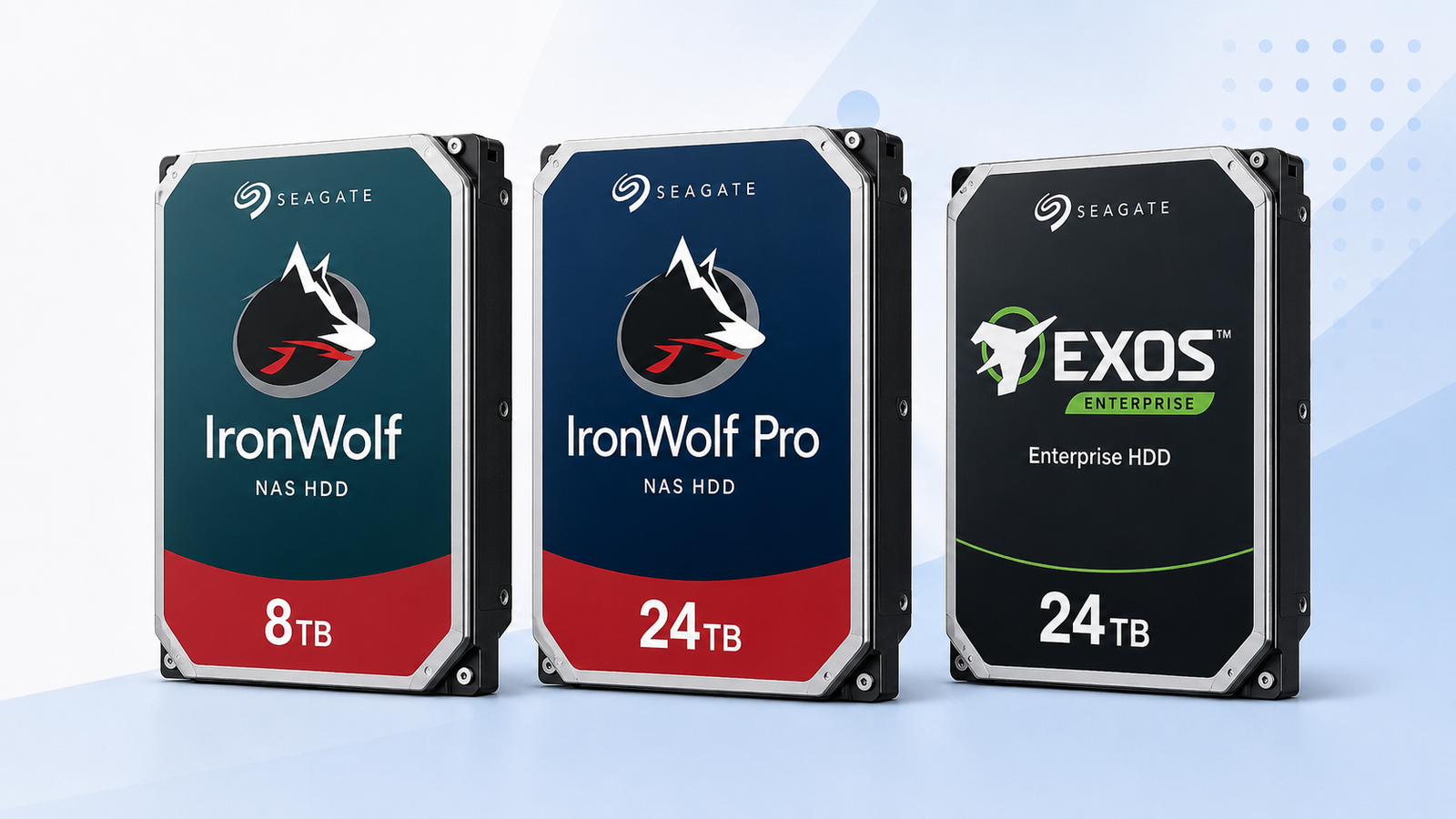
Start with the best current value, then compare the family and capacity that match your NAS or server. The dashboard is designed to answer not only what a Seagate drive costs today, but whether the price is attractive relative to nearby capacities and the price record available for that drive.
Price Trend
90-Day Price History
Seagate Deal Score
Live value by model or family
| Family / model | Capacity | $/TB | 30-Day | Historical position | Deal Score | Signal |
|---|---|---|---|---|---|---|
| IronWolf 8TBST8000VN004 | 8TB | $105.97 | -9.1% | 0th percentile | 98Medium history | BUY |
| IronWolf Pro 16TBST16000NT001 | 16TB | $36.25 | -15.5% | 0th percentile | 98Medium history | BUY |
| IronWolf Pro 24TBST24000NT002 | 24TB | $35.83 | 0.0% | History in progress | 85Early history | WATCH |
| Exos 24TBST24000NM000C | 24TB | $33.33 | 48.7% | 88th percentile | 25Medium history | WAIT |
Historical position compares today’s price per TB with recent tracked prices for new drives. Renewed, recertified, refurbished and used offers are kept separate.
Is this a good price?
Seagate Price Check Calculator
Amazon Live
Current Seagate Hard Drive Prices offers
| Drive | Model | Capacity | Amazon price | $/TB | Checked | |
|---|---|---|---|---|---|---|
 Seagate ExosNew · goHardDrive Seagate ExosNew · goHardDrive | ST24000NM000C | 24TB | $799.99 | $33.33 | Checked 29 min ago | Buy on Amazon |
 Seagate IronWolf ProNew · QuickDealStore Seagate IronWolf ProNew · QuickDealStore | ST20000NT001 | 20TB | $719.99 | $36.00 | Checked 29 min ago | Buy on Amazon |
 Seagate IronWolf ProNew · QuickDealStore Seagate IronWolf ProNew · QuickDealStore | ST16000NT001 | 16TB | $579.99 | $36.25 | Checked 29 min ago | Buy on Amazon |
 Seagate IronWolf ProNew · Best Products Prime Seagate IronWolf ProNew · Best Products Prime | ST14000NE0008 | 14TB | $519.99 | $37.14 | Checked 30 min ago | Buy on Amazon |
 Seagate IronWolfNew · Brute Networks Corporation Seagate IronWolfNew · Brute Networks Corporation | ST16000VN001 | 16TB | $639.75 | $39.98 | Checked 29 min ago | Buy on Amazon |
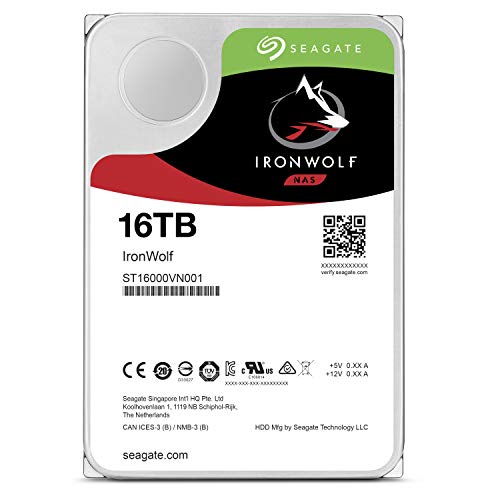 Seagate IronWolfNew · Brute Networks Corporation Seagate IronWolfNew · Brute Networks Corporation | ST16000VN001 | 16TB | $639.75 | $39.98 | Checked 30 min ago | Buy on Amazon |
 Seagate ExosNew · QuickDealStore Seagate ExosNew · QuickDealStore | ST20000NM002H | 20TB | $799.99 | $40.00 | Checked 29 min ago | Buy on Amazon |
 Seagate ExosNew · Prime MegaStore Seagate ExosNew · Prime MegaStore | ST28000NM003K | 28TB | $1,119.99 | $40.00 | Checked 29 min ago | Buy on Amazon |
 Seagate ExosNew · QuickDealStore Seagate ExosNew · QuickDealStore | ST30000NM004K | 30TB | $1,199.99 | $40.00 | Last verified 2d ago | Buy on Amazon |
 Seagate IronWolf ProNew · TechnoDealsUSA Seagate IronWolf ProNew · TechnoDealsUSA | ST14000NE0008 | 14TB | $565.92 | $40.42 | Checked 30 min ago | Buy on Amazon |
 Seagate IronWolf ProNew · Brute Networks Corporation Seagate IronWolf ProNew · Brute Networks Corporation | ST14000NT001 | 14TB | $578.45 | $41.32 | Checked 30 min ago | Buy on Amazon |
 Seagate IronWolf ProNew · GO VIRTUAL IT STORE Seagate IronWolf ProNew · GO VIRTUAL IT STORE | ST16000NE000 | 16TB | $675.76 | $42.24 | Checked 29 min ago | Buy on Amazon |
 Seagate IronWolf ProNew · Best Products Prime Seagate IronWolf ProNew · Best Products Prime | ST12000NE0008 | 12TB | $534.99 | $44.58 | Checked 30 min ago | Buy on Amazon |
 Seagate IronWolfNew · Brute Networks Corporation Seagate IronWolfNew · Brute Networks Corporation | ST18000VN000 | 18TB | $844.45 | $46.91 | Checked 30 min ago | Buy on Amazon |
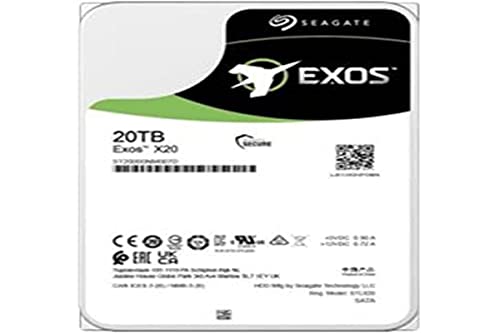 Seagate ExosNew · Brute Networks Corporation Seagate ExosNew · Brute Networks Corporation | ST20000NM000D | 20TB | $944.45 | $47.22 | Checked 29 min ago | Buy on Amazon |
 Seagate ExosNew · Amazon.com Seagate ExosNew · Amazon.com | ST24000NM002H | 24TB | $1,163.08 | $48.46 | Checked 29 min ago | Buy on Amazon |
 Seagate ExosNew · ITCP Technologies Seagate ExosNew · ITCP Technologies | ST20000NM007D | 20TB | $988.13 | $49.41 | Checked 29 min ago | Buy on Amazon |
 Seagate IronWolfNew · Brute Networks Corporation Seagate IronWolfNew · Brute Networks Corporation | ST12000VN0007 | 12TB | $594.45 | $49.54 | Checked 30 min ago | Buy on Amazon |
 Seagate IronWolfNew · junxianfengshaoshangmaoyouxiangongsi Seagate IronWolfNew · junxianfengshaoshangmaoyouxiangongsi | ST14000VN0008 | 14TB | $729.96 | $52.14 | Last verified 2d ago | Buy on Amazon |
 Seagate IronWolfNew · ValueVortexUS Seagate IronWolfNew · ValueVortexUS | ST10000VN000 | 10TB | $530.00 | $53.00 | Checked 30 min ago | Buy on Amazon |
 Seagate IronWolf ProNew · junxianfengshaoshangmaoyouxiangongsi Seagate IronWolf ProNew · junxianfengshaoshangmaoyouxiangongsi | ST22000NT001 | 22TB | $1,194.80 | $54.31 | Checked 30 min ago | Buy on Amazon |
 Seagate ExosNew · ITCP Technologies Seagate ExosNew · ITCP Technologies | ST20000NM002C | 20TB | $1,167.99 | $58.40 | Checked 29 min ago | Buy on Amazon |
 Seagate IronWolf ProNew · Argus Dataworks TX Seagate IronWolf ProNew · Argus Dataworks TX | ST10000NT001 | 10TB | $589.97 | $59.00 | Checked 30 min ago | Buy on Amazon |
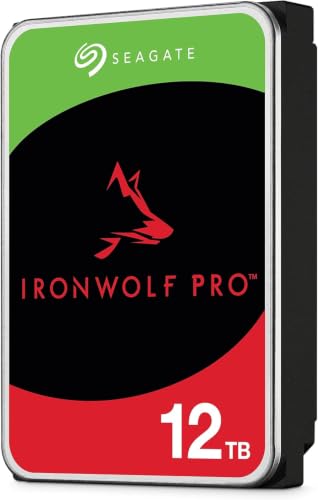 Seagate IronWolf ProNew · MAPOGO LION LLC Seagate IronWolf ProNew · MAPOGO LION LLC | ST12000NT001 | 12TB | $748.00 | $62.33 | Checked 30 min ago | Buy on Amazon |
 Seagate IronWolfNew · ARFA7 Seagate IronWolfNew · ARFA7 | ST6000VN006 | 6TB | $387.38 | $64.56 | Checked 30 min ago | Buy on Amazon |
 Seagate IronWolf ProNew · zhangzhoulonghaikedoulaidianzishangwuyouxiangongsi Seagate IronWolf ProNew · zhangzhoulonghaikedoulaidianzishangwuyouxiangongsi | ST20000NT001 | 20TB | $1,459.76 | $72.99 | Checked 30 min ago | Buy on Amazon |
| Seagate IronWolf ProNew · zhangzhoushiweichimingmaoyiyouxiangongsi | ST20000NT001 | 20TB | $1,492.20 | $74.61 | Checked 30 min ago | Buy on Amazon |
 Seagate IronWolf ProNew · Adorama Seagate IronWolf ProNew · Adorama | ST16000NT001 | 16TB | $1,291.27 | $80.70 | Checked 29 min ago | Buy on Amazon |
| Seagate IronWolf ProNew · 永州市冷水滩区肤臣弯商贸有限公司 | ST20000NT001 | 20TB | $1,621.96 | $81.10 | Checked 30 min ago | Buy on Amazon |
| Seagate IronWolf ProNew · zhaoqingyuanchufuzhuangyouxiangongsi | ST20000NT001 | 20TB | $1,621.96 | $81.10 | Checked 30 min ago | Buy on Amazon |
 Seagate IronWolfNew · Dealforless Seagate IronWolfNew · Dealforless | ST10000VN0004 | 10TB | $820.00 | $82.00 | Checked 30 min ago | Buy on Amazon |
 Seagate IronWolf ProNew · Bian Yu (Lvchun) Daily Necessities Pavilion Seagate IronWolf ProNew · Bian Yu (Lvchun) Daily Necessities Pavilion | ST14000NE0008 | 14TB | $1,156.72 | $82.62 | Last verified 2d ago | Buy on Amazon |
As an Amazon Associate, Cloudzat may earn from qualifying purchases. Prices, seller, selected variation and availability can change after the last check. Confirm the exact model, capacity and New condition before checkout.
Capacity Economics
16TB vs 20TB vs 24TB acquisition cost
| Capacity | 16TB | 20TB | 24TB |
|---|---|---|---|
| Best current $/TB | $36.25 | $36.00 | $33.33 |
| 4-drive raw cost | $2,319.96 | $2,879.96 | $3,199.96 |
| 8-drive raw cost | $4,639.92 | $5,759.92 | $6,399.92 |
| Current model | ST16000NT001 | ST20000NT001 | ST24000NM000C |
Raw acquisition cost only. Apply your RAID, RAIDZ, SHR, erasure coding, tax, shipping, spare and chassis costs separately.
Smart Alternatives
Better-value Seagate options to check

Decision table
What to compare before buying
| Family | Typical buyer | Price question | What to verify |
|---|---|---|---|
| IronWolf | Home and SMB NAS | Which capacity gives the best NAS value? | Exact VN model and NAS support |
| IronWolf Pro | Larger NAS and higher-density arrays | Is the Pro premium justified today? | Exact NT/NE model and warranty channel |
| Exos | Server, homelab and enterprise storage | Is enterprise $/TB cheaper at this capacity? | SATA model, generation and seller route |
| Cross-family | Value-led buyers | Which family is unusually discounted? | Technical fit before price alone |
Why a Seagate price hub needs more than a list of offers
Seagate prices make more sense when IronWolf, IronWolf Pro and Exos are compared as separate families rather than blended into one hard-drive list. The cross-family Seagate dashboard should be read from the storage target outward: verify the exact product first, calculate its $/TB, and then scale that unit price to the number of bays you plan to fill. For IronWolf, IronWolf Pro and Exos, this sequence prevents a superficially cheap result from winning before its identity is understood. The family choice becomes much clearer when the same screen shows both media efficiency and the cash required for the complete set of drives.
A broad Seagate search can place NAS, enterprise, external and non-new products beside each other, so the first job is to keep the comparison technically coherent. Timing in the cross-family Seagate dashboard is useful only when it respects urgency. A planned expansion can demand a stronger historical position, whereas a degraded array may justify paying above the recent norm to restore resilience. Treat the family choice signal as evidence about today’s value, then layer compatibility, seller route and the cost of delay on top. That keeps the result practical without pretending a price chart can predict the next promotion.
Price per terabyte is the fastest way to expose the capacity sweet spot
A 24TB drive can carry a higher sticker price and still cost less for every terabyte than a smaller model, which changes the economics of a multi-bay build. For the cross-family Seagate dashboard, a part number is more informative than a family badge by itself. Keep IronWolf, IronWolf Pro and Exos visible beside the checkout amount so a same-capacity revision is not silently substituted for the drive whose specifications you researched. Once the identity is settled, the family choice can use $/TB and multi-drive cost as clean financial measures instead of mixing technical uncertainty into the price calculation.
The cheapest $/TB is most valuable when the selected drive also fits the intended workload, interface and enclosure policy. The recent range for the cross-family Seagate dashboard answers a different question from compatibility: it shows whether today’s amount is ordinary or unusual for the item being tracked. Use that evidence to decide how aggressively to pursue the family choice, but do not let it override system requirements. A strong value window is useful only if the exact Seagate model, interface and support path also satisfy the storage job.
IronWolf is the mainstream NAS benchmark
Standard IronWolf is the natural reference point for buyers who want a NAS-focused SATA drive without automatically paying for the Pro tier. A cross-family Seagate dashboard decision changes when you multiply one disk by four, six or eight. With IronWolf, IronWolf Pro and Exos, a modest per-drive difference can become a meaningful project variance, while a denser capacity can preserve bays that would otherwise require another enclosure. Frame the family choice around total acquisition cost as well as $/TB so the page rewards useful density rather than simply ranking the lowest sticker price.
The current support range contains multiple VN model identities, so a family-level price needs model verification before specifications are assumed. The cross-family Seagate dashboard can also move independently from neighboring Seagate tiers. One family or generation may be discounted while another is supply-constrained, so yesterday’s preferred family choice is not permanent. Compare the current position with the observations already available, then recheck the exact model and seller. This makes changing market conditions actionable without turning ordinary volatility into a guaranteed forecast.
IronWolf Pro is where price timing becomes expensive
IronWolf Pro moves the purchase into higher-capacity and higher-ticket territory, where a small percentage change can mean a large dollar difference across four or eight drives. Use the cross-family Seagate dashboard as a verification-first buying screen. A qualifying result for IronWolf, IronWolf Pro and Exos should agree on family, capacity, interface and new condition before its price enters the family choice. That discipline matters because marketplace search pages can place external drives, different interfaces and non-new stock near the same keywords. Only after the identity is coherent should the checkout number influence the ranking.
The 16TB, 20TB and 24TB tiers are especially useful anchors because they reveal whether capacity density or a temporary promotion is driving value. For the cross-family Seagate dashboard, urgency sets the acceptable premium. Optional growth can wait for the family choice to reach a stronger value zone, while a replacement needed for redundancy may have to be ordered during a merely average period. The history is therefore context rather than a command: it quantifies where the current amount sits, while the storage operator decides what delay would cost in the real system.
Exos can change the answer for server and homelab buyers
Seagate Exos often competes with NAS products on raw $/TB even though it belongs to an enterprise family and may appear through different channel routes. The cross-family Seagate dashboard should be read from the storage target outward: verify the exact product first, calculate its $/TB, and then scale that unit price to the number of bays you plan to fill. For IronWolf, IronWolf Pro and Exos, this sequence prevents a superficially cheap result from winning before its identity is understood. The family choice becomes much clearer when the same screen shows both media efficiency and the cash required for the complete set of drives.
A lower Exos price should trigger interface and exact-model checks rather than an assumption that every enterprise listing is a direct NAS substitute. Timing in the cross-family Seagate dashboard is useful only when it respects urgency. A planned expansion can demand a stronger historical position, whereas a degraded array may justify paying above the recent norm to restore resilience. Treat the family choice signal as evidence about today’s value, then layer compatibility, seller route and the cost of delay on top. That keeps the result practical without pretending a price chart can predict the next promotion.
Why the same capacity can contain several model numbers
Seagate model suffixes carry real identity, and the market may offer older and newer model numbers at the same capacity simultaneously. For the cross-family Seagate dashboard, a part number is more informative than a family badge by itself. Keep IronWolf, IronWolf Pro and Exos visible beside the checkout amount so a same-capacity revision is not silently substituted for the drive whose specifications you researched. Once the identity is settled, the family choice can use $/TB and multi-drive cost as clean financial measures instead of mixing technical uncertainty into the price calculation.
Keeping those identities visible is particularly important with 24TB Exos and IronWolf Pro, where several current or established SATA models can coexist. The recent range for the cross-family Seagate dashboard answers a different question from compatibility: it shows whether today’s amount is ordinary or unusual for the item being tracked. Use that evidence to decide how aggressively to pursue the family choice, but do not let it override system requirements. A strong value window is useful only if the exact Seagate model, interface and support path also satisfy the storage job.
How to use the Deal Score without overreading it
The Deal Score is meant to compress price position into one quick signal while still showing the underlying $/TB, historical position and observation depth. A cross-family Seagate dashboard decision changes when you multiply one disk by four, six or eight. With IronWolf, IronWolf Pro and Exos, a modest per-drive difference can become a meaningful project variance, while a denser capacity can preserve bays that would otherwise require another enclosure. Frame the family choice around total acquisition cost as well as $/TB so the page rewards useful density rather than simply ranking the lowest sticker price.
A BUY result is strongest when the price record is mature; early history should be treated as a cautious comparison rather than a confident market call. The cross-family Seagate dashboard can also move independently from neighboring Seagate tiers. One family or generation may be discounted while another is supply-constrained, so yesterday’s preferred family choice is not permanent. Compare the current position with the observations already available, then recheck the exact model and seller. This makes changing market conditions actionable without turning ordinary volatility into a guaranteed forecast.
Four-drive and eight-drive cost reveal the real budget
A $30 difference between two drives looks small on one unit but becomes $120 in four bays and $240 in eight before tax, spares or shipping. Use the cross-family Seagate dashboard as a verification-first buying screen. A qualifying result for IronWolf, IronWolf Pro and Exos should agree on family, capacity, interface and new condition before its price enters the family choice. That discipline matters because marketplace search pages can place external drives, different interfaces and non-new stock near the same keywords. Only after the identity is coherent should the checkout number influence the ranking.
Capacity economics also exposes the opposite case, where paying more per drive can save money by delaying another chassis or freeing bays for later growth. For the cross-family Seagate dashboard, urgency sets the acceptable premium. Optional growth can wait for the family choice to reach a stronger value zone, while a replacement needed for redundancy may have to be ordered during a merely average period. The history is therefore context rather than a command: it quantifies where the current amount sits, while the storage operator decides what delay would cost in the real system.
Seller and warranty route can outweigh a small discount
Enterprise and NAS drives can appear through retail, OEM, bulk and marketplace channels, and the support path may differ even when the model number looks familiar. The cross-family Seagate dashboard should be read from the storage target outward: verify the exact product first, calculate its $/TB, and then scale that unit price to the number of bays you plan to fill. For IronWolf, IronWolf Pro and Exos, this sequence prevents a superficially cheap result from winning before its identity is understood. The family choice becomes much clearer when the same screen shows both media efficiency and the cash required for the complete set of drives.
A price-intelligence page should help identify a strong offer, but the buyer still needs to confirm who fulfills it and what warranty terms apply to the delivered serial number. Timing in the cross-family Seagate dashboard is useful only when it respects urgency. A planned expansion can demand a stronger historical position, whereas a degraded array may justify paying above the recent norm to restore resilience. Treat the family choice signal as evidence about today’s value, then layer compatibility, seller route and the cost of delay on top. That keeps the result practical without pretending a price chart can predict the next promotion.
Buying now versus waiting depends on storage urgency
A degraded RAID or nearly full array creates a different cost of waiting than a speculative capacity upgrade planned several months ahead. For the cross-family Seagate dashboard, a part number is more informative than a family badge by itself. Keep IronWolf, IronWolf Pro and Exos visible beside the checkout amount so a same-capacity revision is not silently substituted for the drive whose specifications you researched. Once the identity is settled, the family choice can use $/TB and multi-drive cost as clean financial measures instead of mixing technical uncertainty into the price calculation.
Use the market signal alongside your deadline: urgent replacements prioritize restoring resilience, while discretionary purchases can demand a stronger historical price position. The recent range for the cross-family Seagate dashboard answers a different question from compatibility: it shows whether today’s amount is ordinary or unusual for the item being tracked. Use that evidence to decide how aggressively to pursue the family choice, but do not let it override system requirements. A strong value window is useful only if the exact Seagate model, interface and support path also satisfy the storage job.
A repeatable Seagate buying rule is better than chasing one sale
The most useful outcome is a threshold you can reuse, such as a target $/TB for routine expansion and a higher ceiling for emergency replacement. A cross-family Seagate dashboard decision changes when you multiply one disk by four, six or eight. With IronWolf, IronWolf Pro and Exos, a modest per-drive difference can become a meaningful project variance, while a denser capacity can preserve bays that would otherwise require another enclosure. Frame the family choice around total acquisition cost as well as $/TB so the page rewards useful density rather than simply ranking the lowest sticker price.
As capacities and family pricing change, update the threshold instead of assuming the model that was cheapest last quarter will remain the best value next time. The cross-family Seagate dashboard can also move independently from neighboring Seagate tiers. One family or generation may be discounted while another is supply-constrained, so yesterday’s preferred family choice is not permanent. Compare the current position with the observations already available, then recheck the exact model and seller. This makes changing market conditions actionable without turning ordinary volatility into a guaranteed forecast.
Questions people ask
Seagate Hard Drive Prices FAQs
What is a good Seagate hard drive price per TB?
There is no permanent good-price number because capacity, family and market conditions change. Compare the current $/TB with the same family’s recent price range and nearby capacities.
Is IronWolf Pro always better value than IronWolf?
No. IronWolf Pro targets a different buyer and can carry a premium. The better value depends on current price, capacity density, workload needs and the support features you actually need.
Why can Seagate Exos be cheaper than IronWolf Pro?
Enterprise channel inventory and promotions can price Exos aggressively. A lower price does not remove the need to verify the exact SATA model, seller, compatibility and warranty route.
Does the Deal Score rate drive reliability?
No. It is a price-timing indicator based on current $/TB and the price history available for the target. It is not a reliability score.
Are renewed and used drives included in the new-drive benchmark?
No. New-drive price intelligence is kept separate from renewed, refurbished, recertified and used offers so the benchmark is not distorted by condition.
How should I compare prices for an eight-drive NAS?
Multiply the current per-drive price across all eight bays, then compare usable capacity, spare strategy, tax, shipping and the cost of consuming additional bays.
Price methodology & sources
How Cloudzat compares Seagate prices
Cloudzat matches Seagate offers by family, capacity and model number before including them. Price per TB is the current new-drive price divided by capacity. Price history uses the prices Cloudzat has tracked over time, while renewed, recertified, refurbished and used drives are kept separate from new-drive comparisons.
The Deal Score combines current price per TB with the available price history. When history is limited, the signal stays conservative. The score is a purchase-timing aid, not a reliability rating or compatibility guarantee.
- Seagate IronWolf support and current model information
- Seagate IronWolf Pro support and current model information
- Seagate Exos support and current model information
If a current Amazon price is no longer available, Cloudzat stops showing that numeric price until a new current offer is available. Always confirm the selected model, capacity, seller and condition before checkout.