


EXPANSION PRICE HISTORY
Seagate Expansion Price History
See where current Seagate Expansion Desktop prices sit against verified historical observations and today’s capacity ladder.
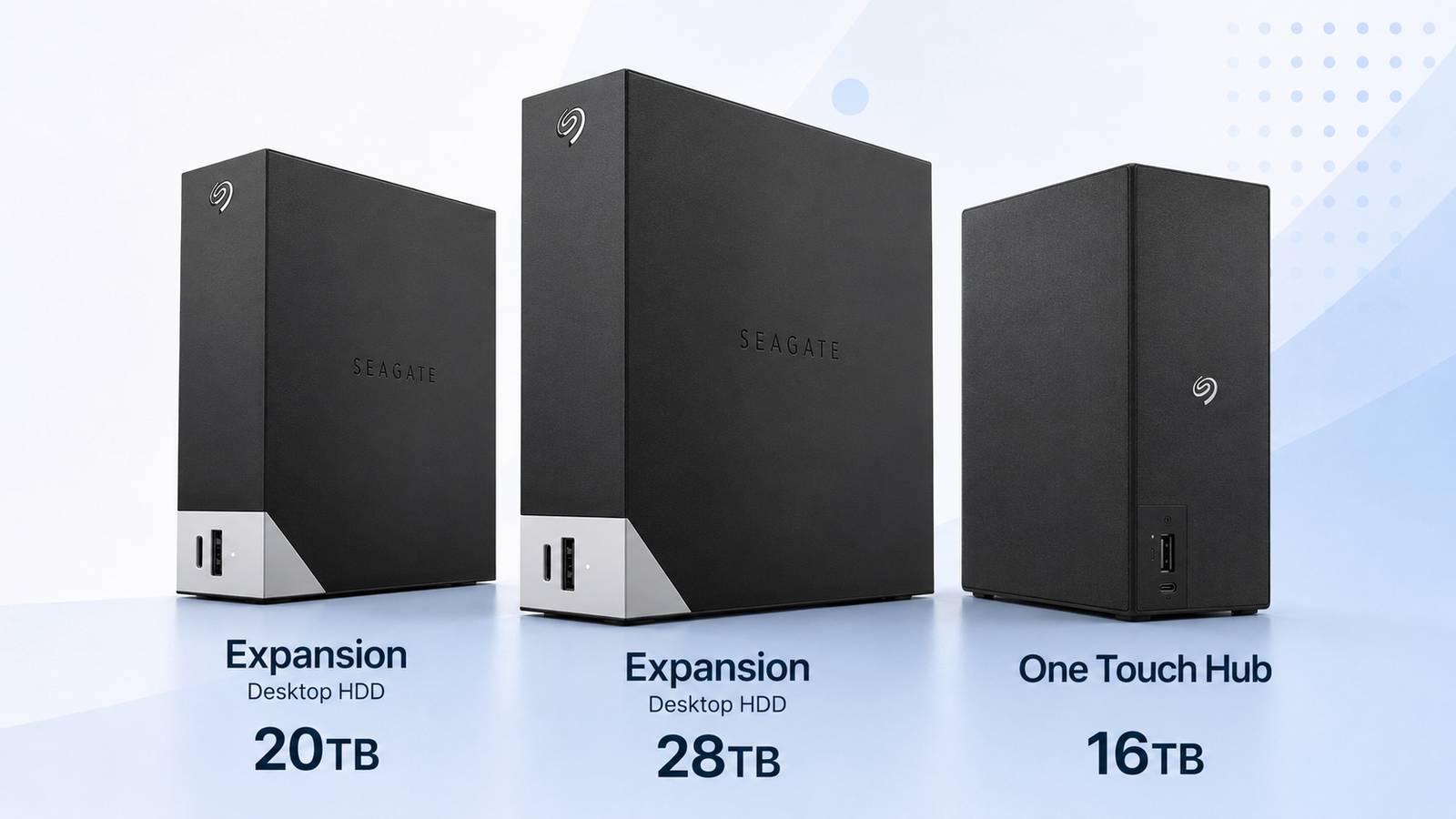
Use this page to separate a genuinely strong Expansion sale from a price that only looks attractive beside an inflated list price. Current $/TB tells you which capacity is efficient today, while recorded price history shows whether that capacity is trading near the lower or upper part of its recorded range.
Price Trend
90-Day Price History
We’ll show the 90-day trend here as more daily price checks are recorded.
Expansion Deal Score
Live value across the capacity ladder
| Capacity / model | Current | $/TB | 30-Day | Deal | Sale | Signal |
|---|---|---|---|---|---|---|
| Expansion 16TBSTKP16000400 | $520.75 | $32.55 | — | 84 | Building | WATCH |
| Expansion 20TBSTKP20000400 | $663.34 | $33.17 | — | 82 | Building | WATCH |
| Expansion 24TBSTKP24000400 | $721.63 | $30.07 | — | 85 | Building | WATCH |
| Expansion 28TBSTKP28000400 | $1,199.99 | $42.86 | — | 50 | Building | WATCH |
The current ranking uses complete New-condition desktop external drives. Historical timing appears only after enough price history is available.
Is this a good price?
Seagate Expansion Price Check
Amazon Live
Current Seagate Expansion Price History offers
| Drive | Model | Capacity | Amazon price | $/TB | Checked | |
|---|---|---|---|---|---|---|
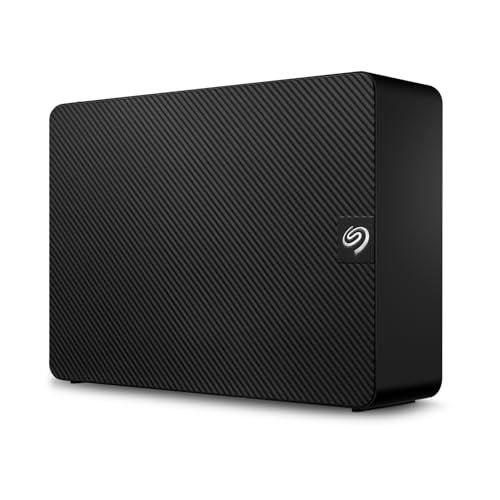 Seagate ExpansionNew · Amazon Global Store UK Seagate ExpansionNew · Amazon Global Store UK | STKP24000400 | 24TB | $721.63 | $30.07 | Checked 5h ago | Buy on Amazon |
 Seagate ExpansionNew · Amazon Global Store UK Seagate ExpansionNew · Amazon Global Store UK | STKP16000400 | 16TB | $520.75 | $32.55 | Checked 5h ago | Buy on Amazon |
 Seagate ExpansionNew · Blue Orbit Commerce Group Seagate ExpansionNew · Blue Orbit Commerce Group | STKP6000400 | 6TB | $197.42 | $32.90 | Checked 5h ago | Buy on Amazon |
| Seagate ExpansionNew · Amazon Global Store UK | STKP10000400 | 10TB | $340.55 | $34.06 | Checked 5h ago | Buy on Amazon |
| Seagate ExpansionNew · Amazon Germany | STKP22000400 | 22TB | $807.27 | $36.69 | Checked 5h ago | Buy on Amazon |
| Seagate ExpansionNew · 3P Enterprise | STKP6000400 | 6TB | $235.00 | $39.17 | Checked 5h ago | Buy on Amazon |
| Seagate ExpansionNew · WEDNET LLC | STKP28000400 | 28TB | $1,199.99 | $42.86 | Checked 5h ago | Buy on Amazon |
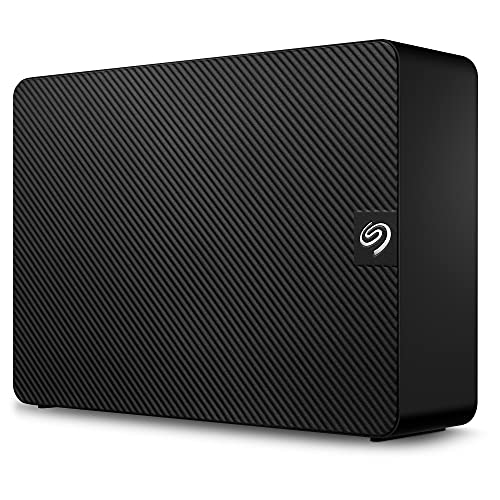 Seagate ExpansionNew · CR Distributors (S/N Recorded) Seagate ExpansionNew · CR Distributors (S/N Recorded) | STKP4000400 | 4TB | $194.95 | $48.74 | Checked 5h ago | Buy on Amazon |
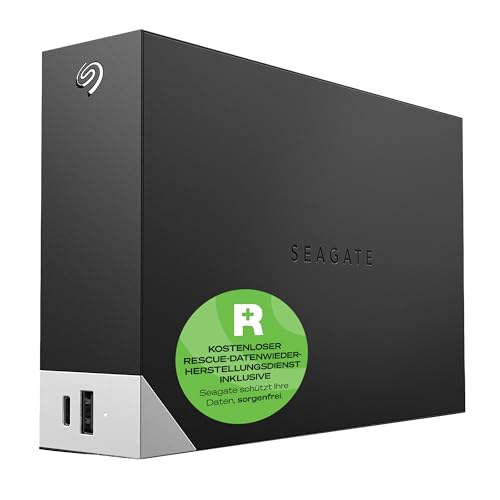 Seagate ExpansionNew · ZAR Systems Germany Seagate ExpansionNew · ZAR Systems Germany | Verify listing | 12TB | $751.00 | $62.58 | Checked 5h ago | Buy on Amazon |
| Seagate ExpansionNew · Amazon buying options | STKP20000400 | 20TB | $663.34 | $33.17 | Last verified 18d ago | Buy on Amazon |
 Seagate ExpansionNew · Amazon buying options Seagate ExpansionNew · Amazon buying options | STKP8000400 | 8TB | $279.00 | $34.88 | Last verified 13d ago | Buy on Amazon |
| Seagate ExpansionNew · Amazon buying options | STKP8000400 | 8TB | $289.99 | $36.25 | Last verified 1d ago | Buy on Amazon |
| Seagate ExpansionNew · Amazon buying options | STKP12000400 | 12TB | $457.32 | $38.11 | Last verified 2d ago | Buy on Amazon |
| Seagate ExpansionNew · Amazon buying options | STKP24000400 | 24TB | $1,128.99 | $47.04 | Last verified 2d ago | Buy on Amazon |
 Seagate ExpansionNew · Amazon buying options Seagate ExpansionNew · Amazon buying options | STEB16000402 | 16TB | $892.97 | $55.81 | Last verified 11d ago | Buy on Amazon |
| Seagate ExpansionNew · Amazon buying options | STKP26000400 | 26TB | Price options | — | Check current price | Buy on Amazon |
As an Amazon Associate, Cloudzat may earn from qualifying purchases. Prices, seller, selected variation and availability can change. Confirm that the listing is a complete Seagate desktop external hard drive in New condition before checkout.
Capacity Economics
16TB vs 20TB vs 24TB purchase cost
| Capacity | 16TB | 20TB | 24TB |
|---|---|---|---|
| Best current $/TB | $32.55 | $33.17 | $30.07 |
| One drive | $520.75 | $663.34 | $721.63 |
| Two copies | $1,041.50 | $1,326.68 | $1,443.26 |
| Three copies | $1,562.25 | $1,990.02 | $2,164.89 |
| Current model | STKP16000400 | STKP20000400 | STKP24000400 |
These are purchase-cost comparisons, not RAID calculations. Choose the number of independent copies required by your backup plan and include tax, shipping, off-site storage, and replacement needs separately.
Smart Alternatives
Other current Seagate external-drive options
Decision table
What to compare before buying
| Signal | What it means | Useful when | Do not assume |
|---|---|---|---|
| Current $/TB | Today’s capacity efficiency | Comparing 16TB, 20TB, 24TB and 28TB | That the lowest $/TB is a historical low |
| Sale Score | Position within recorded price history | Timing a discretionary purchase | That short history predicts the next sale |
| Target price | Lower-quartile reference when history is deep enough | Setting a patient buy threshold | That stock will remain available |
| Shuck comparison | External package price versus current bare Seagate alternatives | Checking raw value | That the enclosure contains a guaranteed internal model |
What a useful Expansion price history should answer
A price-history page earns its place by answering what a current listing cannot answer on its own. In the family-level Expansion history, the focus is not on predicting a future sale; it is on placing a current Expansion offer inside a verified record. A shopper can then compare different Expansion Desktop sizes across time without assuming that a higher-capacity model should have the same normal price per terabyte as a smaller one. The relevant evidence includes the current $/TB, the median of available observations, the lower part of the observed range, and the price of the nearest practical capacity alternative.
For this question, the family-history view separates observations by capacity before interpreting the trend. A 16TB point should not silently become evidence about a 24TB normal price, because each tier has its own supply and promotion pattern.
Current price and historical price answer different questions
Today's number and the historical record describe two different dimensions of value. In the family-level Expansion history, the focus is not on predicting a future sale; it is on placing a current Expansion offer inside a verified record. A shopper can then compare different Expansion Desktop sizes across time without assuming that a higher-capacity model should have the same normal price per terabyte as a smaller one. The relevant evidence includes the current $/TB, the median of available observations, the lower part of the observed range, and the price of the nearest practical capacity alternative.
Price per TB keeps different capacities comparable
Expansion capacities cannot be compared sensibly by sticker price alone because the amount of storage changes with each SKU. In the family-level Expansion history, the focus is not on predicting a future sale; it is on placing a current Expansion offer inside a verified record. A shopper can then compare different Expansion Desktop sizes across time without assuming that a higher-capacity model should have the same normal price per terabyte as a smaller one. The relevant evidence includes the current $/TB, the median of available observations, the lower part of the observed range, and the price of the nearest practical capacity alternative.
Verified history is more useful than an advertised discount percentage
Retail discount labels are weak evidence when the reference price can change or when a seller chooses its own comparison figure. In the family-level Expansion history, the focus is not on predicting a future sale; it is on placing a current Expansion offer inside a verified record. A shopper can then compare different Expansion Desktop sizes across time without assuming that a higher-capacity model should have the same normal price per terabyte as a smaller one. The relevant evidence includes the current $/TB, the median of available observations, the lower part of the observed range, and the price of the nearest practical capacity alternative.
A target-buy level creates discipline
A target-buy level turns passive chart watching into a concrete rule. In the family-level Expansion history, the focus is not on predicting a future sale; it is on placing a current Expansion offer inside a verified record. A shopper can then compare different Expansion Desktop sizes across time without assuming that a higher-capacity model should have the same normal price per terabyte as a smaller one. The relevant evidence includes the current $/TB, the median of available observations, the lower part of the observed range, and the price of the nearest practical capacity alternative.
Short histories deserve conservative signals
Early history should make the recommendation quieter, not more confident. In the family-level Expansion history, the focus is not on predicting a future sale; it is on placing a current Expansion offer inside a verified record. A shopper can then compare different Expansion Desktop sizes across time without assuming that a higher-capacity model should have the same normal price per terabyte as a smaller one. The relevant evidence includes the current $/TB, the median of available observations, the lower part of the observed range, and the price of the nearest practical capacity alternative.
Capacity substitutions can be better than waiting
Waiting for one capacity to fall is not always the best response to a high price. In the family-level Expansion history, the focus is not on predicting a future sale; it is on placing a current Expansion offer inside a verified record. A shopper can then compare different Expansion Desktop sizes across time without assuming that a higher-capacity model should have the same normal price per terabyte as a smaller one. The relevant evidence includes the current $/TB, the median of available observations, the lower part of the observed range, and the price of the nearest practical capacity alternative.
Two-copy cost should be part of every sale decision
External storage is often purchased for protection, which means the meaningful bill may include a second unit. In the family-level Expansion history, the focus is not on predicting a future sale; it is on placing a current Expansion offer inside a verified record. A shopper can then compare different Expansion Desktop sizes across time without assuming that a higher-capacity model should have the same normal price per terabyte as a smaller one. The relevant evidence includes the current $/TB, the median of available observations, the lower part of the observed range, and the price of the nearest practical capacity alternative.
Shucking comparisons need a separate risk lens
Some Expansion buyers are interested in removing the drive from the enclosure, but price history cannot identify the mechanism inside. In the family-level Expansion history, the focus is not on predicting a future sale; it is on placing a current Expansion offer inside a verified record. A shopper can then compare different Expansion Desktop sizes across time without assuming that a higher-capacity model should have the same normal price per terabyte as a smaller one. The relevant evidence includes the current $/TB, the median of available observations, the lower part of the observed range, and the price of the nearest practical capacity alternative.
Seller and regional warranty terms still matter
The same Expansion model number can sit in different regional warranty and seller contexts. In the family-level Expansion history, the focus is not on predicting a future sale; it is on placing a current Expansion offer inside a verified record. A shopper can then compare different Expansion Desktop sizes across time without assuming that a higher-capacity model should have the same normal price per terabyte as a smaller one. The relevant evidence includes the current $/TB, the median of available observations, the lower part of the observed range, and the price of the nearest practical capacity alternative.
The best history rule is one you can reuse
The family history becomes most useful when the buyer uses it the same way on every purchase. In the family-level Expansion history, the focus is not on predicting a future sale; it is on placing a current Expansion offer inside a verified record. A shopper can then compare different Expansion Desktop sizes across time without assuming that a higher-capacity model should have the same normal price per terabyte as a smaller one. The relevant evidence includes the current $/TB, the median of available observations, the lower part of the observed range, and the price of the nearest practical capacity alternative.
Questions people ask
Seagate Expansion Price History FAQs
How should I judge a good price for Seagate Expansion Price History?
Start with the current $/TB, then compare nearby capacities and any recorded price history available for the Expansion Desktop family. A good price is one that fits the storage plan and sits favorably against those comparisons, not merely one carrying a sale label.
What does the Deal Score mean on Seagate Expansion Price History?
It is a price-timing indicator. It combines current value with the history that is actually available and becomes more confident as daily price checks accumulate. It does not score reliability, performance, seller quality, or data-safety.
Are used or recertified products part of Seagate Expansion Price History?
No. The principal benchmark is for complete New-condition Seagate desktop external drives. Used, renewed, refurbished and recertified offers can have different warranty, condition and pricing characteristics, so they are not allowed to establish the new-product benchmark.
How does Cloudzat stop accessories affecting Seagate Expansion Price History?
Listings are screened for complete-drive evidence and coherent capacity. Hard cases, carrying cases, sleeves, empty enclosures, docks, cables, power adapters, stands and similar products are rejected even when their titles contain Seagate Expansion model names or supported capacity ranges.
Does Shuck Score reveal the drive inside Seagate Expansion Price History?
No. Shuck Score compares the sealed external package price with a current bare Seagate alternative at the same capacity when that comparison is available. It does not guarantee the enclosed mechanism, firmware, warranty treatment, recording technology, or exact internal model.
Should I budget for two drives when using Seagate Expansion Price History?
For important data, price the protection plan rather than only one enclosure. A second copy can change which capacity is affordable and can matter more than a small $/TB advantage. The appropriate backup design depends on the value of the data and the rest of your protection strategy.
Price methodology & sources
How Cloudzat evaluates Seagate external-drive prices
Current shopping prices are shown only while they are current. Complete New-condition desktop external drives are matched by Seagate family, capacity and, where available, exact model number. Accessories, portable drives, internal bare drives, multipacks and non-new conditions do not establish the main benchmark.
Historical charts and Sale Scores use recorded price history when enough daily data is available. The Deal Score can still compare current value while history is young, but the timing signal stays conservative. A Shuck Score only compares the external package with a current bare Seagate alternative at the same capacity; it does not identify the drive installed inside the enclosure.
- Seagate Expansion Desktop support and model information
- Seagate Expansion Desktop current data sheet
- Seagate One Touch Hub support information
Always confirm the selected capacity, model, seller, regional warranty terms and current checkout price. External-drive specifications and warranty periods can vary by market and product revision.