


Largest External Hard Drives: Compare 24TB, 26TB & 28TB
See the largest verified single-drive desktop external hard drives currently represented in Cloudzat’s Amazon US catalogue. The guide separates true single-drive capacity from multi-drive RAID totals and compares fresh offers across the 24TB, 26TB and 28TB tiers.
Compare the largest verified desktop external HDDs
Search and sort the fresh qualifying offers below. Filters use the current page only and do not create indexable URLs.
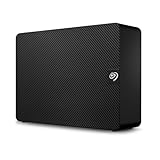

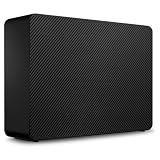


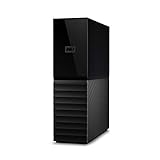
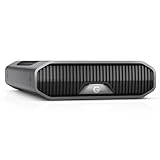


No products match the selected filter.
What “largest external hard drive” means on this page
The phrase can describe several different products. A single-drive desktop external HDD contains one hard disk and connects by USB. A multi-bay DAS or RAID device may advertise a much larger combined capacity because it contains several drives. A NAS can scale even further. This page focuses on mainstream consumer desktop products containing one physical HDD so the capacity and price comparisons remain like for like.
The largest officially listed single-drive consumer desktop capacities currently include 28TB from Seagate Expansion and 26TB from Western Digital’s WD Elements and WD My Book families. Product ranges change over time, so the live catalogue is treated as the source for current Amazon availability while official manufacturer pages are used to verify the product families and maximum listed capacities.
Why multi-drive products are excluded
A two-drive or four-drive product can advertise 28TB, 36TB or more, but its price, performance and failure behavior are different from a single external HDD. Some products use RAID 0 to combine drive capacity, while others support mirrored or parity modes that reduce usable space in exchange for fault tolerance. Including them in the same table would make price per terabyte misleading.
Cloudzat excludes My Book Duo, NAS appliances, DAS arrays, diskless enclosures and multipacks from this page. Those products belong in the DAS, RAID or NAS sections where bay count, RAID mode, price per bay and usable capacity can be compared properly.
28TB: the current top mainstream single-drive tier
Seagate’s official Expansion Desktop page lists a 28TB model, STKP28000400. It is a powered USB 3.0 desktop drive designed for straightforward capacity expansion. The official information describes drag-and-drop setup, compatibility with current Windows, macOS and ChromeOS systems, and possible reformatting for Time Machine.
The 28TB tier is still a narrow market. Limited inventory can cause large price swings and periods where Amazon has no qualifying offer. Buyers should compare the premium over 26TB and 24TB rather than assuming the highest capacity always has the lowest cost per terabyte.
26TB: broader family choice than 28TB
Western Digital officially offers 26TB WD Elements Desktop and 26TB WD My Book models. WD Elements emphasizes simple plug-and-play storage and a two-year limited warranty in the United States. My Book adds backup and security features and is positioned as a more feature-rich desktop backup product.
Seagate also lists 26TB within the current Expansion Desktop capacity selector. This gives the 26TB tier more family choice than 28TB. Greater competition can produce better availability or discounts, and some buyers may prefer the mature 26TB range even when 28TB offers more capacity in one enclosure.
24TB: often the practical high-capacity value tier
Twenty-four-terabyte models are available across several recognized desktop families and usually have deeper retail inventory. That can make 24TB the better purchase when a 26TB or 28TB drive carries a large launch or scarcity premium. The live table includes 24TB products so users can see whether the extra capacity is priced proportionally.
A buyer who needs more than 24TB should also consider the backup requirement. Purchasing one 28TB drive without a second copy may be less useful than purchasing two discounted 24TB drives for a primary and backup set. The correct choice depends on required usable capacity, growth, and how the data will be protected.
Capacity, usable space and growth planning
Advertised capacity is expressed in decimal terabytes. Approximate binary capacity is about 21.8TiB for 24TB, 23.6TiB for 26TB and 25.5TiB for 28TB before formatting overhead. A storage plan should be based on the usable figure shown by the operating system and should reserve space for future growth.
For backups, a destination drive generally needs more capacity than the data currently stored. Versioned backup systems can retain older file states and deleted files, so a drive equal in size to the source may fill sooner than expected. Cloudzat’s backup and replacement tools can help estimate a more practical capacity with headroom.
When a DAS or NAS is a better answer
A single high-capacity external HDD is simple and relatively economical, but it cannot provide drive-level redundancy by itself. Buyers who need more than 28TB, higher sustained performance, multiple simultaneous users or automatic redundancy should compare a multi-bay DAS or NAS rather than stacking many unrelated USB drives.
A DAS keeps storage attached directly to one computer and can offer RAID options. A NAS makes storage available over the network and can add user accounts, snapshots and remote access. Both cost more and require more configuration, but they scale beyond the capacity of one external drive and can support planned drive replacement.
How the live ranking is produced
Cloudzat reads fresh Amazon US offers from the existing storage catalogue and limits this page to verified desktop external HDDs with one drive and at least 20TB. Products are sorted first by capacity and then by price per terabyte, allowing the current largest tier and the strongest normalized value to be seen separately.
The ranking does not claim that one drive is more reliable than another. It compares capacity, price, condition and enriched listing attributes. Seller terms, warranties, bundled services and regional specifications should be confirmed on the exact Amazon and manufacturer pages before purchase.
How Cloudzat verifies high-capacity external HDDs
Compare current Amazon listings relevant to this guide. Product availability and prices can change.
The add-on accepts one-drive desktop HDD products only. It rejects bare internal disks, SSDs, empty enclosures, diskless systems, portable listings at implausible capacities and multipacks whose individual drive capacity does not match the page. Live offers must remain within the configured freshness window.
Frequently asked questions
What is the largest mainstream single-drive external HDD?
Seagate currently officially lists a 28TB Expansion Desktop model. Larger advertised desktop products may contain multiple drives and are not directly comparable.
Does Western Digital make a 28TB WD Elements drive?
Western Digital currently lists WD Elements Desktop through 26TB. Its multi-drive My Book Duo line reaches higher combined capacities, but that is a different product type.
Is 28TB always better value than 26TB?
No. Inventory and discounts determine price per TB. A 26TB or 24TB drive can be the better value when 28TB stock is limited.
Why are RAID enclosures not included?
RAID enclosures combine multiple drives and have different usable-capacity, performance and fault-tolerance characteristics. Cloudzat compares them in the DAS and RAID section.
How much usable space does a 28TB drive provide?
It is approximately 25.5TiB before formatting overhead, although operating-system display conventions and file systems affect the exact number.
Should I buy one large drive or two smaller drives?
One large drive is simpler, but two drives can provide an independent backup copy. The best choice depends on whether the data exists elsewhere and how quickly it is growing.