


26TB vs 28TB External Hard Drive: Capacity, Price & Value
Compare fresh 26TB and 28TB desktop external hard drive offers side by side. The page calculates the current price premium, cost per terabyte and usable-capacity difference while keeping single-drive products separate from multi-drive RAID systems.
26TB and 28TB compared
The lowest 28TB offer currently costs $5.28 less than the lowest 26TB offer.
Current 26TB and 28TB external hard drive offers
Each side is ranked by current cost per terabyte.
26TB offers

28TB offers
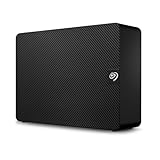
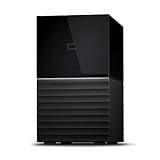
The capacity difference is 2TB, or about 7.7 percent
Moving from 26TB to 28TB adds two advertised terabytes, which is approximately 7.7 percent more capacity. In binary terms, the difference is roughly 1.8TiB before formatting overhead. That extra space can be meaningful for large video or backup collections, but it should be evaluated against the current price premium rather than capacity alone.
The live comparison calculates the lowest eligible purchase price and price per terabyte for each tier. If the 28TB price is less than about 7.7 percent higher, it may offer equal or better normalized value. If the premium is substantially larger, the 26TB option may be more economical unless the buyer specifically needs the extra space in one enclosure.
26TB currently provides more product-family choice
The 26TB tier is represented by multiple current desktop families. Western Digital officially lists 26TB WD Elements and WD My Book models, and Seagate lists 26TB within the Expansion Desktop range. That breadth can improve availability and gives buyers a choice between basic plug-and-play storage and products with additional backup or security features.
The 28TB mainstream single-drive market is currently led by Seagate Expansion Desktop. A narrower market can mean fewer sellers and less predictable discounting. Buyers who prefer a specific Western Digital family may therefore choose 26TB even when a 28TB Seagate product is available.
28TB maximizes capacity in one mainstream enclosure
The strongest reason to select 28TB is simple: it stores more data without adding another power adapter, USB cable or drive letter. For a desk with limited ports or an archive that must remain on one volume, the extra capacity can be more valuable than a small price-per-terabyte difference.
The benefit is convenience rather than redundancy. A 28TB drive still contains one mechanical disk. If it fails, the entire volume can become unavailable. The larger the archive, the more important it becomes to budget for another complete backup or a separate storage system.
Compare total price and cost per TB together
A 26TB drive may have the lower checkout price while a 28TB drive has the lower cost per terabyte. Neither metric is sufficient by itself. Total price determines the immediate budget requirement, while cost per terabyte shows whether the larger capacity is priced efficiently.
The page uses the lowest fresh eligible offer in each capacity group. Different brands, conditions or bundled services can affect the result. A discounted new 26TB WD Elements should not be treated as identical to a 28TB listing with a different warranty or recovery-service package, so the exact listing remains important.
Usable capacity and backup headroom
A 26TB drive provides roughly 23.6TiB and a 28TB drive roughly 25.5TiB before formatting overhead. Users often discover that a backup destination needs more space than the current used-data figure because backup software may retain historical versions and deleted files.
If a source contains 22TB and is still growing, a 26TB destination leaves limited breathing room once formatting and version history are considered. A 28TB drive provides more headroom, but a 30TB-plus requirement may be better addressed with a DAS or NAS rather than operating a backup disk near full capacity.
Brand and feature differences can outweigh 2TB
WD Elements is designed as straightforward desktop storage. WD My Book adds backup software, password protection and hardware-encryption features on current models. Seagate Expansion emphasizes simple powered USB storage and current high-capacity models may include Rescue Data Recovery Services depending on the exact product and region.
A user who values a specific feature may reasonably select a 26TB product over a 28TB alternative. Likewise, someone who already uses Seagate software or wants the highest single-drive capacity may prefer 28TB. The capacity comparison should be the beginning of the decision, not the only criterion.
When 26TB is the better choice
Choose 26TB when it has materially lower cost per terabyte, when several recognized families are available, when the current archive fits with adequate growth room, or when a desired WD Elements or My Book feature is more important than the final two terabytes. It can also be easier to find replacement inventory in a broader capacity tier.
A discounted 26TB drive can free budget for a second backup copy. Two independent copies are usually more valuable for data protection than placing every available dollar into the largest single disk. This is especially true when the files cannot be recreated.
When 28TB is the better choice
Choose 28TB when the archive genuinely needs more than the practical usable space of 26TB, when adding another enclosure is undesirable, or when the live premium is modest relative to the 7.7 percent capacity increase. It can also be sensible for a rapidly growing library where 26TB would be nearly full from the start.
Before purchasing, confirm that the offer is a genuine single-drive desktop HDD, that the seller and warranty terms are acceptable, and that a separate backup exists. The plugin rejects multipacks and internal drives, but the final Amazon listing should still be reviewed at checkout.
How Cloudzat verifies high-capacity external HDDs
Compare current Amazon listings relevant to this guide. Product availability and prices can change.
The add-on accepts one-drive desktop HDD products only. It rejects bare internal disks, SSDs, empty enclosures, diskless systems, portable listings at implausible capacities and multipacks whose individual drive capacity does not match the page. Live offers must remain within the configured freshness window.
Frequently asked questions
How much bigger is 28TB than 26TB?
It provides 2TB more advertised capacity, an increase of about 7.7 percent, or roughly 1.8TiB more before formatting overhead.
Which capacity usually has better availability?
The 26TB tier currently has more family choice, including WD Elements, WD My Book and Seagate Expansion. The 28TB mainstream single-drive tier is narrower.
When is the 28TB price premium reasonable?
A premium close to or below the 7.7 percent capacity increase can be reasonable, especially when the buyer needs the extra space in one enclosure. Current cost per TB should also be checked.
Are 26TB and 28TB drives portable?
Current mainstream products at these capacities are desktop external HDDs that require wall power. They are not pocket-sized bus-powered drives.
Is a 28TB drive faster than a 26TB drive?
Capacity alone does not guarantee higher transfer speed. USB interface, internal drive behavior, file sizes and workload determine real-world performance.
Should I upgrade from 26TB to 28TB?
Only when the extra space solves a real capacity problem or the current price is attractive. Replacing a working 26TB drive solely for 2TB is rarely necessary unless growth has exhausted the available headroom.