


Canada
PC for Revit Canada: Workstation Specs and Prices Guide
For a new Revit workstation, choose 32 GB RAM for ordinary BIM work and 64 GB for larger linked projects or heavy multitasking. Start with a modern responsive processor, a 1 TB SSD and graphics suited to your Revit release. Enscape, Twinmotion and other separate visualisation tools need their own GPU choice; a Revit-ready PC is not automatically a rendering workstation.
Choose the right option
HP Z2 Mini G1i · 32 GB RAM · 512 GB SSD
32 GB installed RAM, RTX A1000 and Windows 11 Pro. For ordinary modelling at the memory tier shown. Exact certification remains unverified.
Compare exact offers ↓HP Z2 SFF G1i · 32 GB RAM · 1 TB SSD
Compare exact offers ↓Amazon offers in Canada
Confirm the selected capacity, seller and delivered total.
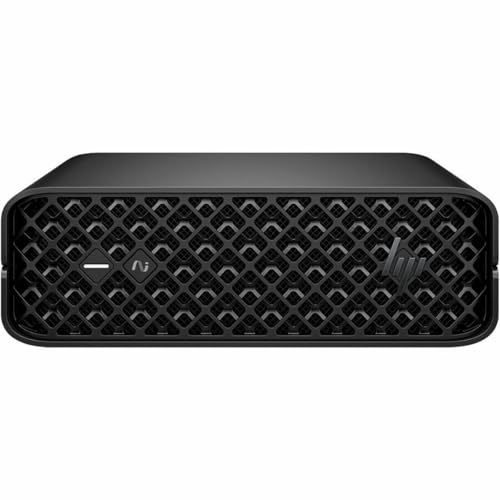
HP Z2 Mini G1i · 32 GB RAM · 512 GB SSD
HP Z2 Mini G1i Workstation - 1 x Intel Core Ultra 7 265-32 GB - 512 GB SSD - Mini PC - Black - Intel W880 Chip - Windows 11 Pro - NVIDIA RTX A1000 8 Graphics - NVMe, Serial ATA/600 Controller - 0, 1
Core Ultra 7 265 · RTX A1000 · Windows 11 Pro. Certification not verified.
CA$4,454.75Price observed 02.11.2026 19:53 UTCBuy on Amazon ↗
HP Z2 SFF G1i · 32 GB RAM · 1 TB SSD
HP Z2 G1i Workstation - Intel Core Ultra 7 265K - 32 GB - 1 TB SSD - Small Form Factor - Black - Intel W880 Chip - Windows 11 Pro - NVIDIA RTX A1000 8 GB Graphics - English Keyboard
Core Ultra 7 265K · RTX A1000 · Windows 11 Pro. Certification not verified.
CA$5,007.16Price observed 02.11.2026 19:53 UTCBuy on Amazon ↗
HP Z2 Tower G1i · 32 GB RAM · 1 TB SSD
HP Z2 G1i Workstation - Intel Core Ultra 5 245K - 32 GB - 1 TB SSD - Tower - Black - Intel W880 Chip - Windows 11 Pro - NVIDIA RTX A400 4 GB Graphics - English Keyboard - Ethernet
Core Ultra 5 245K · RTX A400 · Windows 11 Pro. Certification not verified.
CA$5,483.60Price observed 02.11.2026 19:53 UTCBuy on Amazon ↗As an Amazon Associate, Cloudzat earns from qualifying purchases. Prices are dated observations and can change. Check the exact variant and delivery to your address before ordering.
Buying guide
Which exact option fits your work?
HP Z2 Mini G1i · 32 GB RAM · 512 GB SSD: Core Ultra 7 265, RTX A1000, Windows 11 Pro. This is the installed configuration, not the maximum that the family can support. 32 GB installed RAM, RTX A1000 and Windows 11 Pro. For ordinary modelling at the memory tier shown. Exact certification remains unverified.
HP Z2 SFF G1i · 32 GB RAM · 1 TB SSD: Core Ultra 7 265K, RTX A1000, Windows 11 Pro. This is the installed configuration, not the maximum that the family can support. 32 GB installed RAM, RTX A1000 and Windows 11 Pro. For ordinary modelling at the memory tier shown. Exact certification remains unverified.
Both contain 32 GB RAM. The higher price therefore does not buy more working memory. Compare the actual CPU, graphics, SSD capacity, chassis and support. If you need 64 GB, a 32 GB alternative still needs an appropriate upgrade or replacement configuration.
The Z2 SFF adds SSD space: 1 TB instead of 512 GB. Both still have 32 GB RAM and RTX A1000 graphics. Choose the SFF for the storage and chassis differences if useful; it is not the 64 GB large-project option. Budget a supported memory upgrade or choose a different exact configuration if 64 GB is needed.
| Exact option | Specification | Best reason to choose |
|---|---|---|
| HP Z2 Mini G1i · 32 GB RAM · 512 GB SSD | Core Ultra 7 265 · RTX A1000 · Windows 11 Pro. Certification not verified. | 32 GB installed RAM, RTX A1000 and Windows 11 Pro. For ordinary modelling at the memory tier shown. Exact certification remains unverified. |
| HP Z2 SFF G1i · 32 GB RAM · 1 TB SSD | Core Ultra 7 265K · RTX A1000 · Windows 11 Pro. Certification not verified. | 32 GB installed RAM, RTX A1000 and Windows 11 Pro. For ordinary modelling at the memory tier shown. Exact certification remains unverified. |
When paying more makes sense
Choose 32 GB for ordinary building models and 64 GB for large linked projects or several design programs open together. If you will also use a separate real-time renderer, choose the graphics card for that renderer as well. A memory upgrade may cost less than moving to a different complete workstation when the CPU and graphics are otherwise suitable.
The sensible starting configuration
For a regular Revit desk, our starting point is 32 GB installed RAM, a modern capable processor and a 1 TB SSD. This gives a more comfortable new purchase than building around the lowest supported memory. Autodesk's Revit 2026 guidance separates 16 GB entry, 32 GB balanced and 64 GB-or-more large-model tiers. The tier names are useful buying guidance, not guarantees for every building model.
A student or occasional user with a small project can begin on a supported 16 GB machine. For a paid daily workflow, 32 GB is the more sensible baseline. Choose 64 GB when several linked models, other design applications or a demanding project are part of normal work. A larger RAM number should address that working set rather than serve as a vague promise that every command will run faster.
Why the processor still matters
Many everyday waits in Revit involve work that benefits from a strong individual CPU core, while other operations can use multiple cores. A modern balanced processor is therefore a better starting point than an old many-core workstation bought only for its core count. The exact CPU generation, power limits and cooling matter alongside the model label.
If the choice is between a balanced CPU with enough memory and a much more expensive GPU with too little RAM, favour the balanced system for BIM modelling. More graphics performance does not automatically speed up model regeneration or every export. A separate renderer can change that budget priority, which is why modelling and visualisation should be treated as related but distinct buying needs.
When 64 GB is worth the extra cost
A building project can involve linked models, detailed families, drawings, browser tabs and other software open together. That combined working set is the reason to choose 64 GB. The size of the saved RVT file is only a rough clue: different model contents and links can use resources differently. Avoid buying on a promise that every project below a particular file size is guaranteed to fit a memory tier.
If your work is a single modest model and the computer stays within 32 GB, the larger-memory configuration may add little immediate benefit. Spend the difference on a useful display, backup or support package. If the project is expected to grow, a supported upgrade path matters. Check whether moving to 64 GB requires replacing the existing memory rather than merely adding a module.
Choose graphics for the work you actually display
For Revit 2026, Autodesk's balanced tier lists 6 GB graphics memory, with 8 GB or more recommended for the Accelerated Graphics Tech Preview. These figures concern the relevant Revit features; they do not establish requirements for every additional visualisation tool. A suitable professional card can make sense for an office support policy, but its branding alone does not prove an exact certification record.
If you also run Enscape, Twinmotion or another renderer, choose graphics for that application's current scene and feature requirements as well. Large real-time scenes and ray tracing can justify substantially more graphics capability than a modelling-only desk. The compact workstation below may be a useful BIM choice without being the right purchase for that additional job. More system RAM does not add to the card's dedicated graphics memory.
1 TB storage is a starting point, not a speed promise
A 1 TB SSD leaves room for Windows, Revit, local projects, temporary files and other tools. Autodesk recommends 100 GB free for Revit temporary files, so a nearly full system drive is a poor starting condition. Larger active project collections can justify a 2 TB drive. The useful benefit is working space and convenience, not a guaranteed model-opening time inferred from the SSD's peak transfer rate.
A local SSD cannot remove a slow connection to a central model or a remote collaboration service. For a fixed office workstation, reliable network access is part of the purchase. Keep backups and project permissions consistent with the team's workflow. A second internal SSD may add space, but it is not an independent protection against the whole computer being lost or damaged.
Compact PC or tower for an architecture desk
A tiny workstation saves desk space and suits a stable configuration with a modest graphics requirement. It is attractive when the same monitor arrangement and workload will be used for several years. Its compact size can limit larger GPUs and additional drives. Do not buy it expecting the expansion options of a tower simply because both products carry the same workstation family name.
A tower is more appropriate when a stronger visualisation GPU or several internal drives are likely additions. For a desk that only needs BIM modelling, those unused expansion options may not justify a large premium. Display outputs also matter: enough correctly specified ports for the intended monitors are more useful than a case label. Include any required adapters in the comparison.
The choice for three common buyers
For learning and small existing projects, keep a supported current computer if it performs adequately. For a new everyday BIM workstation, begin with the 32 GB tier. For linked projects, demanding multitasking or a growing office workload, choose 64 GB and enough SSD space. Then make a separate graphics decision if real-time visualisation is a regular part of the job.
The offer comparison identifies the actual CPU, memory, graphics and storage rather than treating every variant of a workstation as equivalent. If two offers have the same RAM, paying more does not move you into the larger-memory tier. The optional selector can help filter the shortlist, but it cannot measure your model or confirm certification. The guide's buying tiers are enough to make the first sensible choice.
Optional: refine capacity or compare your requirements
The guide above gives a starting choice without this tool. Use it only to refine your own capacity or configuration requirements. Its result is an estimate, not a performance test or certification.
SOLIDWORKS always triggers the certification check and excludes an unknown or Home edition. Prices are stored observations; add missing costs below.
Compare the complete purchase cost
Check the checkout amounts. Unknown tax and delivery charges are not added automatically.
Frequently asked questions
Is 32 GB enough for Revit?
It is a sensible new-purchase baseline for ordinary work and matches Autodesk's balanced memory tier. Larger linked models and heavy multitasking can justify 64 GB or more.
Will a Revit PC also run Enscape well?
Not automatically. Enscape and other renderers have separate graphics requirements. Choose the GPU for those requirements if visualisation is part of your work.
Should I choose more RAM or a stronger GPU?
For BIM modelling with a memory shortage, more RAM is the useful first upgrade. For demanding real-time visualisation, GPU capability may become the priority. These solve different limitations.
Related buying guides
- PC for SOLIDWORKS Canada: Workstation Specs and Prices
- Best CAD Laptops Canada: RAM, Graphics and Buying Guide
- Kingston FURY Renegade G5 Prices Canada: Which Capacity Should You Buy?
- Lexar NM790 Prices Canada: Which Capacity Should You Buy?
- Samsung 9100 PRO Prices Canada: Which Capacity Should You Buy?
- Samsung 990 PRO Prices Canada: Which Capacity Should You Buy?
- Best Workstation Gpu
- High End Pc Builder