


Canada · CAD · Deal Watch
Intel Quick Sync Mini PC Black Friday Deals Canada 2026: What to Buy
Bring your next Intel Quick Sync server closer this Black Friday with a shortlist built around the exact processor and media support.
Verify the processor generation, drivers and application requirements for your files. Compare complete systems, keeping the storage and playback clients in the wider plan. Look for a Black Friday checkout total below this exact configuration’s recent normal price. Compare equivalent complete systems from reputable sellers before deciding that the offer is worth buying.
Compare Beelink Mini S12 Pro and Mini S13 for a modest Intel media-server box. Choose the complete configuration with enough memory, boot storage and suitable network connections. Intel branding alone does not establish support for every codec and conversion path, so check the exact processor and your media software.
Which Intel Quick Sync Mini PC option should you choose?
Start here
Beelink Mini S12 Pro
Choose it for a modest Intel media-server box.
Buy on AmazonChoose this alternative
Beelink Mini S13
Choose it for an alternative N-series system with suitable video-engine support.
Buy on AmazonCurrent Intel Quick Sync Mini PC Listings on Amazon
Black Friday sale dates and offer timing
Dates for 2026: Black Friday — November 27; Amazon.ca — November 19–30. Individual offer periods and eligibility vary.

6% below the Amazon reference price
Beelink Mini PC, Mini S12 Pro Intel 12th N100(Up to 3.4GHz), 16GB DDR4 500GB M.2 SSD, Mini Desktop Computers Support 4K@60Hz Dual HDMI Display/WiFi6/BT5.2/USB3.2/1000Mbps LAN/WOL Home/Office
16GB RAM
Last verified 2026-11-15 01:27:58 UTC

Beelink MINI S12 Pro Mini Desktop PC, Intel N100, 16G DDR4 RAM+500G SSD | WiFi6+BT5.2+2.5G LAN, Dual Display HDMI 4K UHD, Mini Desktop Computer Support Auto Power On Win11 Home for Office/HTPC
Last verified 2026-11-13 07:18:04 UTC

Beelink Mini S12 Pro Mini PC - 12th Gen Intel N100 (Up to 3.4GHz), 16GB DDR4, 500GB SSD, 4K Dual Display, WiFi 6, BT 5.2, 1000Mbps LAN - Low Power Mini Desktop Computer
16GB RAM · 500GB SSD
Last verified 2026-11-13 06:44:56 UTC

Beelink MINI S12 PRO Mini PC, Intel Alder Lake-N100 16GB DDR4 512GB SSD | Mini Computer 12th Gen N100 4C/4T,up to 3.4GHz,Desktop PC 4K@60Hz Dual HDMI/2.5G LAN/WiFi 6/BT5.2 for Home/Office
16GB RAM · 512GB SSD
Last verified 2026-11-13 06:44:56 UTC

Beelink Mini PC, MINI S12 Pro Intel Twin Lake N100 4C/4T Mini Computer | 12GB LPDDR5 RAM 500GB M.2 SATA SSD, Desktop PC Dual HDMI 4K UHD/2.5G Ethernet/WiFi6/BT5.2/W11 Home/HTPC
12GB RAM
Last verified 2026-11-12 08:49:09 UTC

6% below the Amazon reference price
Beelink MINI S12 PRO Mini PC, Intel Alder Lake N100, 12G LPDDR5 + 512G SSD | WIFI6+BT5.2+2.5G LAN, Intel UHD Graphics 24EUs, Small PC 4K UHD Dual HDMI Display, Mini Computer for Office/HTPC/Media Server
Last verified 2026-11-12 08:49:09 UTC
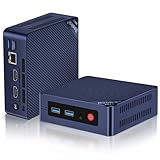
Beelink Mini S12 PRO Mini PC,12 Generation Intel N100 (Up to 3.4GHz) 4C/4T,16GB DDR4 512GB M.2 SSD,Micro PC 4K,Dual Display,WiFi6,BT5.2,2.5G LAN, Low Power Mini Computer
16GB RAM
Last verified 2026-11-12 08:49:09 UTC
Beelink Mini PC, MINI S13 with 13th Gen Intel N150 12GB LPDDR5 512GB SSD | Mini Computer 4C/4T, up to 3.6GHz, Mini Desktop PC with 4K@60Hz Dual Display/WiFi 6/BT5.2/USB 3.2/2.5G LAN, for Office
12GB RAM · 512GB SSD
Last verified 2026-11-15 01:28:07 UTC
As an Amazon Associate, Cloudzat earns from qualifying purchases. Prices and availability can change; Amazon shows the final price for your chosen item.
Intel Quick Sync Mini PC buying guide
| Choice | Best for |
|---|---|
| Beelink Mini S12 Pro | a modest Intel media-server box |
| Beelink Mini S13 | an alternative N-series system with suitable video-engine support |
Which Intel Quick Sync Mini PC option should you choose?
For a modest Intel media-server box, choose Beelink Mini S12 Pro.
For an alternative N-series system with suitable video-engine support, choose Beelink Mini S13.
Choose the exact Intel model, not the label alone
Compare Beelink Mini S12 Pro and Mini S13 for a modest Intel media-server computer. Choose the actual installed RAM, SSD and network connections you need. A family name can cover different configurations, while an Intel processor label does not establish support for every video format.
For everyday desktop use as well as media serving, include those applications in the decision. If the mini PC will run one dedicated media service, keep the configuration simple. A more expensive general-purpose CPU is worth buying when that extra capability has a job rather than simply because it appears beside a newer model name.
Quick Sync helps only where the software uses it
Use the media server's documentation for the exact processor generation, operating system and driver setup. Quick Sync is a hardware capability that applications must support; it is not a promise that every video operation is accelerated in the same way. Choose a documented installation route for the application you will keep using.
For Plex hardware-accelerated streaming, the appropriate subscription is also required. Other media software can have different setup and support requirements. Check your chosen application rather than carrying a Plex result over to every other server package or assuming one successful codec proves them all.
Direct play may avoid conversion altogether
A client that supports the original file can often play it without making the server convert the video. For that household, a modest host may already be adequate. Check the playback information on the actual television, streaming box or phone before assuming the server needs more processing power.
If one old client repeatedly forces conversion, compare a more suitable playback device. For a family mostly watching on one television, that can be a better-targeted purchase than upgrading the server for avoidable work. Choose the complete playback path around the library's real formats.
Test the difficult files rather than counting streams
The number of simultaneous viewers is useful context, but bitrate, codec, HDR and subtitles change the work. A published stream-count claim may use a much easier file and different settings from yours. Look for relevant measurements and confirm the behavior with your own material after setup.
Keep one representative difficult film or clip for testing. Try the actual local and remote quality settings the household uses, including subtitles where relevant. A useful server stays responsive during that test; it should not be chosen from a fixed conversion count that ignores the files.
Choose storage separately from the media engine
The boot SSD holds the operating system, application and database. The media collection may live on a NAS or other suitable storage. A larger internal SSD can be convenient, but it is not required to duplicate a library already stored elsewhere.
Choose enough capacity for database growth and normal operating space. Keep a recoverable copy of the server settings and an independent copy of irreplaceable media. A faster video engine does not recover lost files, and a second partition on the same drive does not protect against losing that whole device.
Keep network and power arrangements simple
Use a stable wired connection between the server and media storage where practical. Check the switch and NAS ports as well as the mini PC. A faster network interface on one device cannot accelerate the slower links in the same path. For remote viewing, include the internet upload in the assessment.
For an always-on machine, use whole-system wall power if you want to estimate electricity use. CPU TDP alone does not describe every drive, adapter or network device attached. Keep the server ventilated and choose a location where its fan noise is acceptable during sustained use.
When to choose a different server
Choose a larger host when other applications or demonstrated conversion work exceed the modest mini PC. Choose a combined NAS when one supported enclosure is more convenient. Keep the existing host when direct playback already works and the real need is more storage or a better client.
After buying, confirm the installed configuration and run the media software through its documented setup. Test restarts and storage reconnection as well as one successful playback session. The best Quick Sync purchase is a dependable supported server for your files, not merely the newest Intel name in a discounted title.
Buying Intel Quick Sync Mini PC in Canada
For Intel Quick Sync Mini PC in Canada, begin with Beelink Mini S12 Pro for a modest Intel media-server box. Compare Beelink Mini S13 when an alternative N-series system with suitable video-engine support is the more useful choice. The Amazon links and prices on this page use Amazon Canada and Canadian dollars. Add delivery and any required components to the amount you are comfortable paying. For a model family with several configurations, use the model name and the installed components together when comparing these two choices. Keep the seller’s order details so you can check that the hardware you receive is the version you chose.
Electricity cost calculator
Replace the example values with your own measurements, capacity or prices.
Questions buyers ask
Which Intel Quick Sync Mini PC option should I choose?
Choose Beelink Mini S12 Pro for a modest Intel media-server box. Choose Beelink Mini S13 for an alternative N-series system with suitable video-engine support.
Does every Intel mini PC support the same video formats?
No. Check the exact processor generation, application, operating system and drivers. Quick Sync branding alone is not a guarantee for every codec or conversion. Use the software's supported setup and test representative difficult files.
Is a newer CPU always the better Plex buy?
Not when the current supported setup already handles playback. A better client or network may help more. Choose additional general CPU capability for other services or demonstrated work rather than treating a processor generation as a guaranteed stream count.
Should I add more RAM to improve video conversion?
Add memory when the operating system and active applications need it. More RAM does not automatically fix an unsupported codec, missing driver path or limited media engine. Check playback information and the documented acceleration setup first. If other services are crowding the host, more memory or a separate server can help that different problem, provided the model supports the intended upgrade.