


CYBER MONDAY 2026
Current Amazon offers for Cyber Monday shoppers

ASUS ROG NUC 15 Mini PC (90AS00I1-M000B0) — Intel Core Ultra 9 275HX, NVIDIA GeForce RTX 5080 16GB, 32GB DDR5 RAM, 2TB SSD, Windows 11 Home, Wi-Fi 7, UK
Verified 2026-11-28 05:58:39 UTC

ASUS Prime GeForce RTX 5080 EVO 16GB GDDR7 OC Edition Gaming Graphics Card (Nvidia GeForce RTX5080, SFF-Ready, Dual BIOS Switch, PCIe 5.0, 1x HDMI 2.1b, 3X DisplayPort 2.1a, PRIME-RTX5080-O16G-EVO)
−4% · Amazon reference price: £1,869.99
Verified 2026-11-27 14:34:16 UTC

PNY GeForce RTX 5080 ARGB Overclocked Triple Fan 16GB GDDR7 Reflex 2 RTX AI DLSS4
Verified 2026-11-28 06:59:23 UTC

Gigabyte GeForce RTX 5080 AERO OC SFF 16G Graphics Card - 16GB GDDR7, 256bit, PCI-E 5.0, 2730MHz Core Clock, 3 x DisplayPort, 1 x HDMI, GV-N5080AERO OC-16GD
Verified 2026-11-28 06:59:23 UTC

Gigabyte GeForce RTX 5080 GAMING OC 16G Graphics Card - 16GB GDDR7, 256bit, PCI-E 5.0, 2730MHz Core Clock, 3 x DisplayPort, 1 x HDMI, GV-N5080GAMING OC-16GD
Verified 2026-11-28 06:59:23 UTC

Each card shows its last successful local Amazon check. Black Friday badges remain Black Friday badges until Amazon reports a different promotion. Reference prices and savings appear only when supplied by Amazon; the checkout price applies. As an Amazon Associate, Cloudzat earns from qualifying purchases.
Our recommendation
Our first choice from the UK listings is the ASUS Prime GeForce RTX 5080 EVO OC for a gaming tower that can accommodate that exact board. Buy it for the GPU and a suitable physical design, rather than paying extra for an AORUS Master purely for its branding. Choose a larger premium model only when its cooling arrangement, dimensions or connections solve a specific need. The Founders Edition is an alternative if it becomes available at a competitive price, not a reason to ignore a suitable local listing. Include the power-supply upgrade in your budget if your existing system does not meet the card’s requirements.
The GeForce RTX 5080 is a serious UK buy for people building or upgrading a powerful desktop and who want a current NVIDIA card without moving to the very top tier. It only makes sense when the rest of the machine can keep up: the power supply must be up to it, the case must have enough room, and the display setup should justify a card of this class. If your PC is compact, underpowered, or already stretched, the best decision may be a different model rather than trying to force this one in.
Choose an RTX 5080 for a demanding 4K gaming or GPU-accelerated creative workstation when 16GB of graphics memory covers the intended workload. A larger cooler does not increase that capacity. For a project that specifically needs more than 16GB of VRAM, buying a premium RTX 5080 variant does not solve the limitation. For ordinary gaming on a less demanding display, the RTX 5070 or RTX 5070 Ti can leave more money for the rest of the system.
For a conventional tower, start with the locally listed partner model in our verdict. The Founders Edition is a conditional alternative for a case that benefits from its 304mm, two-slot layout, rather than a promise of stock. NVIDIA specifies 360W graphics power and an 850W recommended system supply for the reference card. Partner requirements can differ. A complete PC listing, cooler accessory or external-GPU enclosure is not a replacement for the standalone graphics card being recommended here.
Which option should you buy?
| Scenario | Named recommendation | Why this is the right buy |
|---|---|---|
| A normal tower with a suitable power supply | ASUS Prime RTX 5080 EVO | Our local partner-card choice; choose a compact variant only when the case needs it. |
| You want a practical partner card | ASUS Prime GeForce RTX 5080 EVO 16GB | A sensible choice when you want RTX 5080 class hardware in a mainstream partner design. |
| You need exact board measurements before ordering | MSI GeForce RTX 5080 16G EXPERT OC | Useful when you want documented dimensions and power guidance before you commit. |
| You are building in a tighter case | Founders Edition, or another genuinely compact SFF-ready model only | Conditional alternative for its published dimensions; availability and cable clearance still matter. |
| Your PSU or case cannot support a 5080 properly | Choose RTX 5070 or Radeon RX 9070 XT instead | A lower-tier or rival card is the sensible purchase if the system cannot host the RTX 5080 cleanly. |
Buy the RTX 5080 only if the whole PC is ready for it
The RTX 5080 is not a casual replacement card. NVIDIA lists it with 16GB GDDR7, 10,752 CUDA cores, a 360W TGP, and an 850W recommended system power, which places it firmly in serious desktop territory. That means the purchase decision is not only about graphics performance in the abstract. It is about whether your PC can actually support the card without compromise. If your power supply is marginal, your case is cramped, or your cooling is already busy, the GPU may be the wrong place to spend first.
The practical conclusion is simple. If your current build already has a strong PSU, enough room for a long card, and decent airflow, the RTX 5080 is a coherent upgrade path. If not, the wiser move is to fix the platform or buy a different GPU tier. A good graphics card in an awkward system can become an expensive inconvenience. That is why the RTX 5080 should be treated as part of a complete build plan, not as a standalone bargain to chase without checking the rest of the machine.
Choose the listed partner card; treat Founders Edition as a fit-specific alternative
For the offers shown on this page, our purchase recommendation is the named local partner card in the opening verdict. The GeForce RTX 5080 Founders Edition is an alternative for a build that specifically benefits from its published 304 mm length and two-slot cooler. Those dimensions are useful, but they do not make it a universally safer purchase or guarantee clearance in every small case. Cable space, surrounding components and airflow still affect installation. Do not pay an availability premium simply to obtain NVIDIA’s own board when the recommended partner card fits your tower.
Choose a conventional air-cooled partner model for a normal tower, and a compact design when the enclosure requires it. The RTX 5080 GPU and its 16GB memory remain the central capability; a more elaborate cooler does not add VRAM or convert the card into a different GPU tier. Our default is therefore the suitable, locally listed model with the lower total cost, rather than a prestige variant. Founders Edition becomes the better choice when its specific physical design solves your case constraint and its available price remains competitive. Retailer returns and the actual manufacturer warranty apply to the particular listing; a brand name alone does not establish better service.
16GB is a strong fit, but not a universal answer
The RTX 5080’s 16GB memory capacity is one of the reasons it appeals to high-end gamers and creators. It gives useful headroom for demanding titles, richer texture settings, and heavier workloads than a smaller card would comfortably handle. That makes it a strong choice for buyers who want a premium card without stepping to the very highest tier. But capacity alone does not make a card right for every use case. If your work involves very large local projects, huge scene files, or specialist professional tasks, you may need a different class of hardware.
For many buyers, though, 16GB is the sensible middle ground at the top end of the consumer market. It is enough to make the card feel well provisioned without pushing into the power and cost burden of the highest tier. The important part is honesty about the rest of your setup. If your screen, CPU, or storage setup is modest, the RTX 5080 may be more than the system needs. If you use a high-resolution display or demanding creative software, the card becomes much easier to justify.
Power supply and cable planning decide whether the upgrade works
The biggest RTX 5080 mistake is assuming a good-looking PSU label is enough. NVIDIA’s guidance points to an 850W system recommendation, and the card family may use either three PCIe 8-pin leads through an adapter or a single 450W-plus PCIe Gen 5 cable, depending on the board and PSU. That means power planning must come before checkout. If your supply is older, low headroom, or missing the right native cable path, the card becomes a poor fit no matter how attractive it looks.
This is the point where many buyers should choose a different route. If your PSU already supports the right connector path and has the necessary headroom, the RTX 5080 is realistic. If it does not, the cost and inconvenience of the supporting upgrade can change the whole value equation. A partner card does not remove the requirement, and a larger cooler does not solve electrical limits. The clean decision is to match the RTX 5080 with a known-compatible PSU, or to step down to a card that better suits the hardware you already own.
Suitable alternatives — different models

GeForce RTX 5070 TI 16G GAMING TRIO OC+ Roamii BE Lite Mesh System- 2 Pack | 16GB GDDR7 (28Gbps/256-bit), PCIe 5.0 - TRI FROZR 4 (3 x STORMFORCE FAN) ; WiFi 7, 3600 Mbps Speed, Whole Home Coverage
−1% · Amazon reference price: £1,309.74
Verified 2026-11-28 08:24:56 UTC

PNY Epic-X Triple GeForce RTX 5070 Ti OC 16GB GDDR7 256Bit HDMI/DP Graphics Card
Verified 2026-11-28 08:24:56 UTC

ASUS ProArt NVIDIA GeForce RTX 5070 Ti OC Edition, 16GB GDDR7, 256 Bit, PCIe 5.0, 2.5 Slot, 1 HDMI 2.1, 3 DisplayPort 2.1, USB-C, GPU Tweak III, Black, PROART-RTX5070TI-O16G
Verified 2026-11-28 08:24:56 UTC
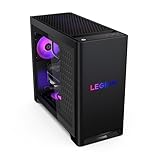
Lenovo Legion Tower 5i | 30L Gen 10 | Intel Core Ultra 7 270K Plus | NVIDIA GeForce RTX 5070 | 32GB RAM | 1TB SSD | Wi-Fi 7 | Windows 11 Home | Eclipse Black
Verified 2026-11-28 05:57:50 UTC
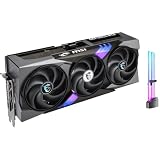
msi GeForce RTX 5090 Gaming Trio OC Triple Fan Graphics Card, 32GB GDDR7, 3352 AI Tops, DLSS 4, AI Content Creation, Local LLM Inference, 28 Gbps, 512-bit, DP 2.1b x3, HDMI 2.1b, with GPU Holder
Verified 2026-11-28 05:16:29 UTC

MSI Geforce Rtx 5090 32g Ventus 3x 32gb Gddr7 512 Bit Dlss 4 Gaming (HOLDER) Graphics Card
Verified 2026-11-28 05:16:29 UTC
Case fit matters more than the brand name
The RTX 5080 comes in different physical shapes depending on the board partner, and that affects the buying decision as much as the specification sheet does. NVIDIA’s Founders Edition is a useful baseline because it is relatively compact by this class’s standards, but it is not the only shape you will see. The MSI EXPERT OC, for example, has its own documented length and thickness, and other partner cards may be larger still. That means the right purchase is the one that fits your case without forcing awkward cable bends or blocking adjacent slots.
If you are building in a smaller case, do not assume any RTX 5080 will behave like the next one. Some listings may say SFF-ready, but that is not universal across the whole family. The safest route is still to choose the model with the clearest fit for your chassis. If your build is roomy, you have more freedom to choose a cooler-heavy partner board. If it is tight, favour the model with the most predictable dimensions and fewer surprises during installation.
Pick a partner card for a reason, not for its marketing noise
UK listings currently show several RTX 5080 partner boards, including ASUS, MSI, Gigabyte, Zotac, and Gainward models. They are not the same product wearing different stickers. Cooler design, thickness, output arrangement, and physical size can all differ. That matters because a board that looks appealing on paper may be awkward in your case, or it may demand more room than you expected. A partner card should be chosen because it meets a specific need, not because it sounds more premium than another listing.
The right way to think about the choice is practical. Buy a partner model when you need a particular form factor, a known factory-tuned design, or a layout that suits your chassis. If you simply want the most straightforward purchase, the Founders Edition remains the better starting point. If you need the flexibility of a board partner, then compare the physical dimensions and connector arrangement before anything else. The best card is not the loudest SKU; it is the one that lands cleanly in your build.
When the RTX 5080 is too much card for the machine
Some buyers will be better served by something else. If you do not need a high-end NVIDIA card, the RTX 5070 is the obvious lower-tier route inside NVIDIA’s own family. If you want a different vendor path, the listed Radeon RX 9070 XT models from XFX and Sapphire are meaningful alternatives rather than direct RTX 5080 equivalents. That distinction is important. Different models are useful when you need to balance power, size, and budget more conservatively.
A sensible test is this: if your current machine would also need a PSU refresh, cable planning, and perhaps a case rethink, the RTX 5080 may no longer be the best-value answer. In that situation, a lower-tier card or a rival model can deliver a cleaner outcome without turning the upgrade into a rebuild. The best shopper is not the one who buys the biggest card; it is the one who buys the card that the rest of the system can support properly from day one.
Warranty and support paths are part of the purchase decision
The support route differs depending on which RTX 5080 you buy. NVIDIA’s own Founders Edition cards are covered directly by NVIDIA, while partner cards are warranted by the partner and usually handled through the local reseller or distributor first. For a UK buyer, that means the Founders Edition offers the cleanest single support path, while a partner model ties you more closely to the seller channel that supplied it. Neither route is wrong, but they do feel different once you own the card.
This should influence the final choice. If you value a straightforward NVIDIA-backed ownership route, the Founders Edition has the advantage. If you choose a partner card because its size or cooling is better for your system, make sure you are comfortable with the retailer and support chain behind it. Premium GPUs should be bought with the assumption that service may matter later. The best option is the one whose purchase and support path fits your expectations as well as your case and power setup.
Questions answered
Is the RTX 5080 a good buy for a new UK gaming PC?
Yes, if you are building a genuinely capable desktop with the right power supply and case space. It makes most sense for buyers who want a current NVIDIA card and understand that the rest of the system must be built around it.
Should I choose the Founders Edition or a partner card?
Choose the Founders Edition first if it is available. It is the cleanest NVIDIA-supported option and easiest to plan into a case. Choose a partner card only when its dimensions, cooling, or connector layout better suit your build.
What PSU do I need for an RTX 5080?
NVIDIA’s guidance points to an 850W recommended system power. You also need the correct cable path, either through the right adapter setup or a compatible native PCIe Gen 5 cable. Check your PSU maker’s guidance before buying.
Will every RTX 5080 fit in a smaller case?
No. The Founders Edition is comparatively manageable, but partner cards can be longer or thicker. Do not assume every RTX 5080 is suitable for a compact chassis; check the exact dimensions and slot requirements first.
Is 16GB enough for demanding games and creative work?
For many high-end gaming and creator uses, yes. It is a strong capacity level for a premium card, but very large professional workloads may still call for something else. Match the card to your real files and display needs.
What should I buy instead if the RTX 5080 is too much card?
The most sensible alternatives are NVIDIA’s RTX 5070 for a lower-tier route or an AMD Radeon RX 9070 XT if you want a different vendor path. Choose the alternative if your PSU, case, or budget cannot comfortably support the 5080.