


United Kingdom · GBP · Deal Watch
Coral TPU Black Friday Deals UK 2026: What to Buy
Put Coral TPU offers on your Black Friday watch list if a compatible detector is the missing piece in your build.
The USB accelerator and M.2 module solve different installation needs. Compare the exact interface, included hardware and delivered price; an adapter or case is a separate purchase. Price the supported accelerator and required adapter as a complete kit, then compare recent selling prices. That gives a Black Friday discount a useful compatibility and cost test.
Coral USB is the simpler starting point when you want an external detector that can move between compatible hosts. Choose a Coral M.2 version only when the computer has the correct supported slot and you are comfortable installing it. An M.2 storage slot is not automatically suitable for every Coral board.
Which Coral TPU option should you choose?
Start here
Google Coral USB Accelerator
Choose it for a compatible USB EdgeTPU installation.
Buy on AmazonChoose this alternative
Google Coral M.2 Accelerator
Choose it for a host with the exact supported key, slot and driver.
Buy on AmazonCurrent Coral TPU Listings on Amazon
Black Friday sale dates and offer timing
Dates for 2026: Black Friday — November 27; Amazon.co.uk — November 19–30. Individual offer periods and eligibility vary.

Google Coral USB Edge TPU ML Accelerator coprocessor for Raspberry Pi and Other Embedded Single Board Computers
Last verified 2026-11-13 02:45:36 UTC

seeed Studio Coral USB Accelerator Accelerator Coprocessor for Raspberry Pi and Other Single-Card Integrated Computers
Last verified 2026-11-13 02:45:36 UTC
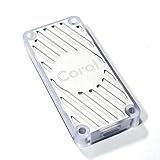
G950-01456-01/ G950-06809-01Coral USB Edge TPU ML Accelerator coprocessor for Raspberry Pi and Other Embedded Single Board Computers
Last verified 2026-11-13 02:45:36 UTC

16% below the Amazon reference price
seeed studio Google Coral USB Accelerator
Last verified 2026-11-13 02:43:45 UTC

Coral G950-06809-01 USB Accelerator: ML Accelerator, USB 3.0 Type-C, Debian Linux Compatible
Last verified 2026-11-12 07:15:27 UTC
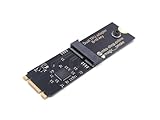
Coral Dual Edge TPU Adapter for Coral m.2 Accelerator - M.2 2280 B+M Key PCIe x1 Gen2 Adapter Board with Mounting Screw
Last verified 2026-11-12 07:15:27 UTC

youyeetoo PCIe Gen3 AI Accelerator PCIe Card Based on Google Coral Edge TPU for Edge AI Inference (CRL-G18U-P3DF)
Last verified 2026-11-12 07:15:27 UTC

PCIe Gen3 AI Accelerator PCIe Card based on Google Coral Edge TPU for Edge AI Inference(CRL-G18U-P3DF)
Last verified 2026-11-12 07:15:27 UTC
As an Amazon Associate, Cloudzat earns from qualifying purchases. Prices and availability can change; Amazon shows the final price for your chosen item.
Coral TPU buying guide
| Choice | Best for |
|---|---|
| Google Coral USB Accelerator | a compatible USB EdgeTPU installation |
| Google Coral M.2 Accelerator | a host with the exact supported key, slot and driver |
Which Coral TPU option should you choose?
For a compatible USB EdgeTPU installation, choose Google Coral USB Accelerator.
For a host with the exact supported key, slot and driver, choose Google Coral M.2 Accelerator.
Coral USB is a different purchase from Coral M.2
The USB Accelerator is a complete external device with its own enclosure and a straightforward host connection. M.2 Edge TPU modules are internal components that depend on slot keying, PCIe connectivity and physical clearance. They can look cheaper on the shelf while requiring more installation work.
Do not combine the prices when judging a sale. Treat Coral USB and M.2 variants as different purchases, compare like with like, and include any carrier or adapter required by an internal module.
M.2 keying is not cosmetic
M.2 is a family of connectors used for storage, Wi-Fi and other PCIe devices. A slot's shape, key and electrical wiring determine what it can support. A mini PC can advertise an M.2 slot that is unavailable for a Coral because it is storage-only, occupied or wired differently.
Check the host board documentation before buying the accelerator. If the documentation is unclear, choose a connection method with fewer assumptions rather than gambling on a Black Friday price. Returning a module is cheaper than rebuilding the host, but avoiding the mismatch is better.
Dual Edge TPU requires more than a dual-device label
A dual-TPU module presents additional interface considerations. The host or carrier must expose the required PCIe connectivity so both devices are usable as intended. A slot that physically accepts the module does not guarantee the electrical layout is sufficient.
If your planned Frigate workload does not need the extra detector capacity, the dual device may add complexity without benefit. Size from camera count, detect resolution and FPS, then decide whether the additional parallel inference capacity has a clear purpose.
Coral accelerates detection, not video decoding
The Edge TPU runs supported object-detection inference. It does not replace the host's video decoder or make an undersized recording pipeline disappear. A system can have very fast detection and still waste CPU on software video decode if the camera and host acceleration path is misconfigured.
Treat the Coral as one component in the pipeline. Choose the mini PC for decode and system workload, choose camera streams for efficiency, and choose the TPU for detector demand. That separation produces more reliable sizing than asking how many cameras one Coral can handle without context.
Model and detector support define usefulness
The accelerator only helps when the detector backend and model format used by Frigate can run on it. Current application documentation should be the authority because supported paths can evolve. Do not purchase an Edge TPU on the assumption that every AI or enrichment feature in Frigate will use it.
This distinction matters as Frigate adds more AI-related capabilities. Object detection, face recognition, semantic search and other enrichments can follow different hardware paths. Confirm which workload you intend the Coral to accelerate before judging its value.
USB placement and host stability matter
The USB Accelerator is convenient, but continuous NVR operation still benefits from a stable port and cable path. Avoid marginal hubs or extensions unless the hardware is known to work reliably. A loose or underpowered connection can turn detector resets into an intermittent system problem.
If the host has limited USB ports because it also connects radios, storage or a UPS interface, include that resource in the architecture. The cheapest Coral USB deal is less attractive when it forces an unreliable hub arrangement.
Do not buy an adapter disguised as the accelerator
After selecting the actual TPU, budget any required carrier separately. Keeping accessories outside the main history prevents an inexpensive adapter from becoming the apparent 'lowest Coral price' and corrupting the deal signal.
Scarcity can matter more than a perfect discount
Specialized accelerators can have uneven marketplace inventory. If a verified form factor is difficult to source and you have a near-term deployment, a fair current price may be more valuable than waiting for a theoretical Black Friday low that never appears.
A regular price already near the tracked low can be reasonable. When verified Black Friday inventory arrives, compare it with the same form factor and condition rather than assuming every Coral listing is equivalent.
Measure after deployment before adding more TPUs
Once Frigate is running, observe detector inference speed and CPU/video-decode behavior. If detection has ample headroom, adding another TPU may not improve the user experience.
Black Friday can be a sensible time to buy a planned spare or second device, but label that spending correctly. It is either capacity for a measured requirement or redundancy for an important system, not automatically part of every Frigate build.
Budget for decoding, detection and recording separately
The host decodes video, the detector performs object inference, and storage keeps the recordings. These are separate workloads. An accelerator can improve detection without fixing a slow recording drive or an unsuitable video-decoding path. Choose the camera streams, recording plan and detector together so that one part does not remain the bottleneck.
A lower-resolution detection stream can reduce processing work while a higher-quality stream is recorded. Confirm that the camera provides the streams and local access your setup requires. Battery cameras, vendor-cloud features and a high advertised resolution do not by themselves establish suitability for continuous local recording.
Choose the detector for the software and connector you have
Coral USB, Coral M.2 and Hailo devices are different hardware paths. Match the exact connector, host support, driver and model format to the Frigate version you plan to use. An M.2-shaped accelerator does not automatically fit or operate in an SSD slot. A Raspberry Pi HAT is not a complete general-purpose computer.
Before adding cameras, leave capacity for the busiest scene and concurrent recording activity. Check inference and video-processing behaviour with the intended streams. A fixed number of cameras is not a universal hardware rating because resolution, frame rate, scene activity, recording settings and software choices change the work.
Keep recording storage and recovery separate from the camera price
Estimate storage from the camera bitrate, recording duration and retention period, then leave room for overhead and growth. A resolution label alone does not determine the storage needed. Continuous recording and event-based retention can produce very different capacity requirements. Use the settings you intend to keep rather than the smallest file size demonstrated by a seller.
Place important event exports or required evidence on another recoverable device when losing the recorder would also lose the recordings. A camera purchase is only part of a complete local recording setup. Include the switch or PoE supply, host, storage and a sensible recovery procedure in the budget.
Buying Coral TPU in the UK
For Coral TPU in the UK, begin with Google Coral USB Accelerator for a compatible USB EdgeTPU installation. Compare Google Coral M.2 Accelerator when a host with the exact supported key, slot and driver is the more useful choice. The Amazon links and prices on this page use Amazon UK and pounds. Add delivery and any required components to the amount you are comfortable paying. For a model family with several configurations, use the model name and the installed components together when comparing these two choices. Keep the seller’s order details so you can check that the hardware you receive is the version you chose.
Electricity cost calculator
Replace the example values with your own measurements, capacity or prices.
Questions buyers ask
Which Coral TPU option should I choose?
Choose Google Coral USB Accelerator for a compatible USB EdgeTPU installation. Choose Google Coral M.2 Accelerator for a host with the exact supported key, slot and driver.
What is the easiest Coral TPU for Frigate?
For many mini-PC retrofits the USB Accelerator is easiest to evaluate because it avoids M.2 keying and carrier questions.
Can I put a Coral M.2 in an NVMe slot?
Do not assume so. M.2 keying and electrical wiring vary; verify the exact Coral module and host slot documentation.
Does Coral reduce Frigate CPU usage?
It can offload supported object detection, but video decoding, recording and other services still use host resources.
Does Coral accelerate face recognition or semantic search?
Do not assume every Frigate AI feature uses the Edge TPU. Check the current documentation for each feature and detector path.