


CYBER MONDAY 2026
Current Amazon offers for Cyber Monday shoppers
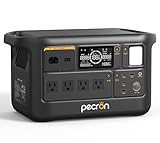
PECRON F1000 LFP Portable Power Station 960Wh, 1500W Solar Generator | 1500W AC Output, LiFePO4 Battery Backup, Fast Charging Power Station for Camping, Home Use, RV, Emergency
−8% · Amazon reference price: $399.00
Verified 2026-11-26 12:53:30 UTC

Pecron E500LFP Portable Power Station, 576Wh/600W LiFePO4 Battery | 600W AC Outlets Solar Generator, Fast Charging Power Station for Home Use, RV, Camping, CPAP, Emergencies
Verified 2026-11-26 12:53:30 UTC

PECRON Portable Power Station, E1500LFP Solar Generator 1536Wh, 2200W | 2200W AC Output LiFePO4 Battery Backup, Fast Charging Power Station for Home Use, RV, and Outdoor Camping
Verified 2026-11-26 12:53:30 UTC

PECRON Portable Power Station F3000LFP, 3072Wh Solar Generator, 3600W LiFePO4 Battery Home Backup, Fast Charging Power Station Expand Capacity to 10752Wh, Solar Generators for Home Use, Camping, RV
Verified 2026-11-26 12:53:30 UTC
Each card shows its last successful local Amazon check. Black Friday badges remain Black Friday badges until Amazon reports a different promotion. Reference prices and savings appear only when supplied by Amazon; the checkout price applies. As an Amazon Associate, Cloudzat earns from qualifying purchases.
Our recommendation
Choose PECRON E2400LFP for a supported local setup needing about 2kWh of energy, or E1500LFP for a smaller 1.5kWh-class purchase. Choose F1000LFP for a lighter roughly 1kWh job. Move to F3000LFP or another suitable larger station for longer operation, and buy only the correct local electrical version with a clear support route.
A good PECRON Cyber Monday deal buys enough stored energy for the equipment you intend to keep running. Our first comparison is E2400LFP against E1500LFP: the former serves a larger energy budget, while the latter can be the more economical basket for a smaller job. F1000LFP is the lighter-capacity starting point.
The model name is not the whole specification. Capacity in watt-hours, normal output in watts and supported expansion are separate decisions. A discounted cable, panel or expansion battery is not a complete station, and a larger peak-output number does not guarantee a longer runtime.
Choose the local voltage and outlet version, with a seller able to supply the intended package. Where a matching local PECRON offer is unavailable, a suitable local EcoFlow DELTA or Anker SOLIX model is the practical alternative. We do not recommend importing a different electrical configuration merely to keep the brand name in the basket.
Which option should you buy?
| Your need | Our choice | Reason |
|---|---|---|
| About 2kWh for moderate-load backup | E2400LFP | A larger energy budget than the smaller models. |
| Smaller home-office or portable setup | E1500LFP | A middle capacity choice with a documented expansion route. |
| Lighter roughly 1kWh job | F1000LFP | Avoid buying a large station for a modest load. |
| Longer higher-capacity operation | A suitable F3000LFP or larger local system | Buy energy and output for the actual job. |
| No suitable local PECRON package | Local EcoFlow DELTA or Anker SOLIX alternative | Correct electrical version and support take priority. |
E2400LFP is the larger everyday starting point
Choose E2400LFP when the intended moderate-load setup benefits from its roughly 2kWh energy class. PECRON identifies it with 2048Wh capacity and 2400W normal AC output, which are different capabilities: one controls the energy budget and the other the supported running load. We would consider it for a longer laptop-and-network session or another suitable plug-in backup task before moving to a much larger home-energy system.
Buy station-only when ordinary mains charging will refill it between uses. Add a matched solar package only for a real outdoor charging routine. If the local E2400LFP is unavailable, choose a suitable alternative capacity rather than buying a panel or battery accessory whose title mentions the station. Manufacturer-store stock and a local Amazon seller’s stock are separate facts, so the offer cards are the evidence for that retailer’s current supplied package.
E1500LFP is the middle choice, not the same battery
Choose E1500LFP for a supported setup that needs less energy than E2400LFP while retaining a substantial portable AC role. The current V3 product information identifies 1536Wh capacity and 2200W output. Keep the generation with the purchase: an older listing or an accessory using the same family name should not silently inherit every detail from the current version. We would buy the clearly identified complete station rather than rely on a generic family photograph.
Its expansion route can be useful when compatible additional battery capacity is part of a definite plan. That does not mean every PECRON battery works with every station, or that an expansion pack is a standalone replacement for the main unit. For a first purchase already needing much more energy, compare a suitable larger complete station before assembling a smaller system plus accessories. The best basket is the one that covers the intended duration and remains practical to move and recharge.
Choose F1000LFP for a smaller portable job
F1000LFP is the named smaller option for buyers who need roughly 1kWh rather than a larger multi-kilowatt-hour station. PECRON lists this family at 960Wh and 1500W normal output. We would choose it for a modest portable or home-office load when the energy budget fits, rather than treating the larger model as automatically better because it is discounted. A smaller complete station can be the more practical item to carry and store.
For a phone-only day out, a suitable power bank may still be a simpler purchase. For a desktop workstation or appliance combination with a larger sustained demand, move to the appropriate higher output and energy class. The smaller station’s role should be explicit: it is a useful portable energy supply for supported loads, not an all-purpose household backup system. Buy around the actual equipment rather than the most ambitious collection of devices shown in a marketing image.
Runtime calculations decide whether the larger model is worth it
For illustration, assume a 2kWh-class station provides 1600Wh to the connected load after a broad allowance for losses and reserve. At 100W combined demand, that is a sixteen-hour energy budget; at 200W it is eight hours; at 800W it is two hours. These are hypothetical divisions, not measured E2400LFP results. Real inverter overhead, changing loads, temperature and battery condition can alter the outcome.
The example shows why a larger battery can be worthwhile for a long low-power session and still be modest for sustained high consumption. If the desired duration is the problem, additional stored energy is the relevant upgrade. If an appliance exceeds normal output, a bigger energy store alone is insufficient. We recommend buying for both constraints and leaving comfortable room for the supported load instead of treating a surge or boost figure as the continuous rating for every appliance.
Expansion and solar are separate accessory decisions
Choose expansion only through the exact supported battery and station combination. PECRON’s catalogue names expansion batteries for selected models, which is a compatibility list rather than a universal promise across the brand. A matching connector appearance or similar voltage in a title does not establish support. Our default for an inexperienced first buyer is a complete documented package, avoiding an improvised collection of separately discounted parts.
Choose a solar panel for recurring outdoor charging with a suitable deployment location. Panel wattage is a test-condition figure, and real charging varies with light, shade and orientation. The station’s input limits still govern the supported arrangement. For a home backup station recharged from the wall, we would omit the solar bundle unless it changes the planned routine. This keeps the sale focused on useful capacity rather than accessories that add cost but remain unused.
Local electrical version is a firm buying boundary
Buy the version intended for the country of use, including the correct outlets, voltage and support arrangement. US-style 120V, UK 230V and other regional packages are not made equivalent by a simple travel adapter. A model family sold in several regions can have different local configurations. We would choose a supported local alternative over an imported bargain that changes the electrical assumptions of the purchase.
For Canadian buyers without a matching locally supplied PECRON package, the direct recommendation is to consider a suitable local EcoFlow DELTA or Anker SOLIX model in the required class. For UK buyers, use the UK electrical version and local seller terms. For US buyers, keep any specialised split-phase or household-integration requirement separate from an ordinary portable station purchase. Do not infer whole-home wiring compatibility from a product family name or a high output number.
A portable station is not automatically a managed UPS
For a NAS whose main requirement is a clean shutdown after a short interruption, choose a dedicated UPS with supported communication before buying PECRON solely for the larger battery. The NAS needs power-loss signalling as well as electrical support. A transfer-time claim does not establish every storage system’s shutdown integration, and a station advertised for emergency use is not automatically suitable for every always-on computing role.
Choose the power station for a defined portable-energy or longer suitable plug-in task. Keep essential low- and moderate-consumption loads at the centre of that plan rather than adding heating appliances simply because spare sockets remain. Household wiring integration requires the appropriate supported system and installation; never backfeed a wall outlet. We would buy the right product category for the immediate need instead of expecting one discounted unit to replace a managed UPS, a portable battery and a complete household backup installation.
The PECRON basket we would buy
Choose E2400LFP for the roughly 2kWh job, E1500LFP for the smaller middle-capacity requirement and F1000LFP for a lighter portable load. Move to a suitable F3000LFP or larger system when the duration and output calculation actually require it. Buy the correct regional complete station first, then only the supported accessories that serve the planned refill or expansion. Keep solar panels, cords and expansion packs out of the alternative-station comparison.
The current cards show the local retailer’s price, checked time and verified promotion label. A brand-store Black Friday promotion does not automatically apply to an Amazon seller, and a current badge does not promise the same Monday price. When a suitable local offer is absent, the model remains a buying comparison rather than a stock claim. Our priority is the correct station and support route at a sensible delivered cost, with a named local alternative when that is the better practical purchase.
Questions answered
Which PECRON model should I compare first?
Compare E2400LFP for a roughly 2kWh requirement and E1500LFP for a smaller middle-capacity job. F1000LFP is the lighter option. Choose the model whose normal output and usable energy budget fit the equipment.
Does a model number equal battery capacity?
No. Read the watt-hour capacity and normal watt output separately. They describe energy and supported load. A high peak figure does not establish a long runtime.
Can any PECRON expansion battery be added?
No. Use the documented compatible combination for the exact station and generation. An accessory title or matching-looking connector is not enough to establish support. A complete supported bundle is the simpler first purchase.
What should Canadian buyers do if no local model is offered?
Choose a suitable locally supported alternative such as an EcoFlow DELTA or Anker SOLIX in the required class. Do not import a different electrical configuration solely to preserve the brand choice.
Should I buy a panel bundle for indoor backup?
Usually buy station-only when mains charging will refill it between uses. Add solar for a real recurring outdoor charging opportunity and use the station’s supported input arrangement.
Is this the best first purchase for a NAS shutdown?
Choose a compatible dedicated UPS for that specific role. A portable station’s energy capacity and transfer claim do not establish supported NAS shutdown signalling. Buy the category that solves the actual requirement.