


CYBER MONDAY 2026
Current Amazon offers for Cyber Monday shoppers
Black Friday Deal
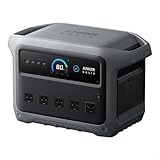
Anker SOLIX C1000 Gen 2 Solar Powered Generator | 1,024Wh LiFePO4 Battery, Full Charge in 49 Min, 2,000W Portable Power Station (Peak 3,000W) for UPS, Outdoor, Emergency Use
−41% · Amazon reference price: $799.00
Verified 2026-11-27 09:19:09 UTC
Black Friday Deal
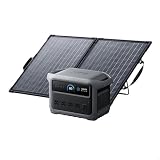
Anker SOLIX C1000 Gen 2 Portable Power Station with 100W Solar Panel | 2,000W Solar Generator with 1,024Wh LiFePO4 Battery, Up to 3,000W Output, Full Charge in 49 Min, for UPS, Home, Outdoor
−36% · Amazon reference price: $999.99
Verified 2026-11-27 09:18:15 UTC

Black Friday Deal
Anker SOLIX S2000 Portable Power Station with Water-Resistant Bag | 2,010Wh LiFePO4 Battery, 1,500W Output, Solar Generator for Home Backup, Outdoor and Emergency Use
−27% · Amazon reference price: $999.99
Verified 2026-11-27 09:25:21 UTC
Black Friday Deal
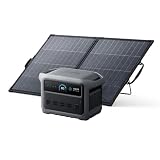
Anker SOLIX C1000 Gen 2 Solar Powered Generator with 200W Solar Panel | 2,000W Portable Power Station with 1,024Wh LiFePO4 Battery, Up to 3,000W Output, for UPS, Home, Outdoor
−25% · Amazon reference price: $929.99
Verified 2026-11-27 08:31:21 UTC

Black Friday Deal
Anker SOLIX S2000 Solar Powered Generator Portable Power Station+400W Panel | 2,010Wh LiFePO4 Battery, 1,500W Output, Portable Power Station for Home Backup, Outdoor, Emergency Use
−19% · Amazon reference price: $1,375.99
Verified 2026-11-27 10:11:57 UTC

Black Friday Deal
Anker SOLIX S2000 Portable Power Station with 400W Panel+Alternator Charger | 2,010Wh LiFePO4 Battery, 1,500W Output, Solar Generator for Home Backup, Outdoor and Emergency Use
−12% · Amazon reference price: $1,649.00
Verified 2026-11-27 09:51:10 UTC
Each card shows its last successful local Amazon check. Black Friday badges remain Black Friday badges until Amazon reports a different promotion. Reference prices and savings appear only when supplied by Amazon; the checkout price applies. As an Amazon Associate, Cloudzat earns from qualifying purchases.
Our recommendation
Buy the C1000 Gen 2 for a portable home-office energy buffer, and choose S2000 when a longer moderate-load session matters more than the higher output rating. Keep the package to the station and required cables unless outdoor solar charging is part of the plan. For USB-only equipment, choose C300 DC instead; for a managed NAS shutdown, choose a supported UPS.
A good Anker SOLIX Cyber Monday purchase starts with the job you want to keep running: a laptop and broadband connection need a different basket from a high-consumption desktop or household appliance. Our first choice is C1000 Gen 2 for mixed everyday equipment, with S2000 as the longer-duration alternative and C300 DC for a lighter DC-only kit.
Capacity and output answer different questions. The C1000 Gen 2’s energy store decides how long a suitable load can run; its output rating decides which loads it can supply. The original C1000 has an expansion route that Gen 2 lacks. Our recommendations below keep those distinctions visible so a bargain on the wrong generation does not become an expensive second purchase.
Choose the US electrical version and a seller whose delivery timing suits the need. Manufacturer-store availability and an Amazon seller’s available stock are separate facts. A unit ordered for an imminent outage needs a credible delivery date; a future shipment is a different purchase from an available local listing. Keep regional support and the selected generation with the price comparison.
Which option should you buy?
| Your job | Our choice | Reason |
|---|---|---|
| Mixed laptop, network and portable AC use | C1000 Gen 2 | Balanced fixed-capacity station; buy the correct local version. |
| A supported battery-expansion plan | Original C1000 plus its compatible battery | Gen 2 does not support expansion. |
| Longer sessions at moderate consumption | S2000 | Larger energy class, with a different running-output limit. |
| USB and DC equipment only | C300 DC | Smaller DC-first option; not a household-AC station. |
| Short NAS interruptions and orderly shutdown | A NAS-compatible dedicated UPS | Shutdown integration is a separate requirement from stored energy. |
C1000 Gen 2 is the balanced starting point
Choose the C1000 Gen 2 for a mixed home-office or camping setup that needs ordinary AC sockets as well as USB charging. Its 1,024Wh battery and 2,000W rated output make it a different purchase from a small USB power bank: it can supply a larger instantaneous load while carrying enough stored energy for useful periods at modest loads. Our preference is the station-only package for a household that will recharge from the mains. A solar bundle is worthwhile when there is a real outdoor charging opportunity, rather than merely because the combined package has a large discount badge.
The key limit is energy, not the impressive output number. A 2,000W rating does not mean the battery can supply 2,000W all afternoon. Nor should a 3,000W peak figure be used as the normal running allowance for a collection of appliances. For a router, laptop and lighting arrangement, this class is much more practical than using the same stored energy for continuous electric heating. If the main requirement is several hours of high consumption, move to a larger battery class from the start instead of buying accessories around an undersized station.
Original C1000 versus Gen 2: choose the expansion route deliberately
Buy the original C1000 when its supported expansion battery is part of a definite plan. Buy C1000 Gen 2 when the fixed-capacity, more portable arrangement already covers the job. Anker explicitly says Gen 2 does not support capacity expansion. The shared C1000 family name therefore does not establish battery compatibility. An expansion pack for the original model is not a way to turn Gen 2 into a larger system, and two separate stations do not become one combined-output station simply because both are charged.
For an existing original-C1000 owner, the useful comparison is the cost and convenience of its correct expansion battery against a separate new station. Expansion keeps the supported system together; a second independent station lets you power equipment in different locations but has its own sockets, charging routine and energy budget. We would choose expansion for one established supported backup point, and a second station for two physically separate jobs. For a first purchase that already needs substantially more than one kilowatt-hour, compare a suitable larger SOLIX model before assembling an older station-and-battery basket.
How much capacity should you buy?
Here is a planning example rather than a measured runtime claim. Assume 800Wh is available to the connected load after allowing a broad reserve for conversion losses and battery margin from a roughly 1kWh station. A combined 100W load would then have an eight-hour energy budget; a 200W load would have four hours; a 500W load would have 1.6 hours. These divisions explain why the same station can look generous for networking and modest for a desktop workstation. Actual results depend on inverter overhead, the changing load, temperature, settings and battery condition.
For a home office with a laptop, broadband equipment and modest lighting, choose the C1000 Gen 2 class before paying for a large domestic-backup system. For an extended higher-consumption workload, choose a larger battery such as the S2000 class, while still respecting that model’s lower rated output. A refrigerator is not a constant-watt load: its compressor cycles and startup demand matter. Do not transfer an advertised single-appliance runtime to a refrigerator plus computer plus heater. Our purchase rule is to fund the essential-load duration first and treat spare outlets as convenience, not as extra stored energy.
S2000 is the longer-runtime option, not the higher-output option
The S2000 is the useful alternative when the priority is more stored energy for moderate loads. Its approximately 2kWh class holds substantially more energy than C1000 Gen 2, but the published running-output limit is 1,500W. That distinction changes the recommendation: choose S2000 for a longer modest-load session, and C1000 Gen 2 when the suitable load needs the latter’s higher rated output but not the larger energy store. A larger model number is not proof that every electrical capability is higher.
For a desktop, network equipment and monitor drawing a combined hypothetical 250W, an assumed 1,600Wh usable energy budget would divide to 6.4 hours. This is an illustration, not an S2000 test result or guarantee. It shows why the additional battery capacity can matter more than fast charging for a long work session. Conversely, a load above S2000’s ordinary output rating is the wrong purchase even if its intended runtime is short. Leave high-demand appliance combinations to a suitably rated larger system rather than relying on a boost label to erase the mismatch.
Suitable alternatives — different models
Black Friday Deal
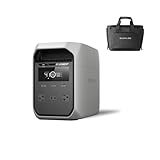
EF ECOFLOW Portable Power Station Delta 3 Classic with Bag, 1024Wh 1800W | 3600W Surge, 100W USB-C Output, LFP Battery, 1 Hr Fast Charge, Solar Generator for Home Backup, Outdoor &RVs (Waterproof Bag)
−32% · Amazon reference price: $679.00
Verified 2026-11-27 08:40:14 UTC

Black Friday Deal
EF ECOFLOW Solar Generator DELTA 3 Classic with 2x100W Solar Panels, 1024Wh | 1800W AC (3600W Surge)/100W USB-C Output, LFP Battery Portable Power Station, 10ms UPS, 1 Hr Fast Charge for Home, Camping
−30% · Amazon reference price: $899.00
Verified 2026-11-27 08:40:17 UTC

Black Friday Deal
EF ECOFLOW Portable Power Station DELTA 3 with Extra Battery, 2048Wh 1800W | Expand Capacity from 1024Wh to 2048Wh, 1800W AC/100W USB-C Output Solar Generator for Outdoor Camping, Emergency, Home Backup
−29% · Amazon reference price: $1,298.00
Verified 2026-11-27 08:55:44 UTC

Black Friday Deal
EF ECOFLOW 3763Wh DELTA 3800 Gen4 Portable Power Station, 3600W AC Output | 7200W Surge, LiFePO4 Battery Generator, 4–12kWh Expandable, Solar Generator for Home Backup, Camping, RV & Emergency Power
−23% · Amazon reference price: $2,199.00
Verified 2026-11-27 09:59:34 UTC

Black Friday Deal
EF ECOFLOW Portable Power Station Delta 3 Classic, 1024Wh 1800W AC | 3600W Surge, 1 Hr Fast Charge, 100W USB-C Output, LiFePO4 Battery, 10ms UPS Solar Generator for Home Backup, Camping & RVs
−21% · Amazon reference price: $559.00
Verified 2026-11-27 10:43:30 UTC

EF ECOFLOW DELTA 3 Ultra Plus 3072Wh Portable Power Station, 3600W Output | (7200W Surge), LFP Battery Power Station, Expandable to 11kWh, Solar Generator for Essential Home Use, Camping, RV
−27% · Amazon reference price: $2,199.00
Verified 2026-11-26 13:59:24 UTC
Choose C300 DC only for a DC-first setup
Choose C300 DC when the actual equipment is powered through compatible USB-C or DC connections and portability matters more than a large AC energy reserve. It is not the model to buy for equipment that requires a household AC socket. The C300 family has different variants, so the letters after the name are part of the buying decision. A laptop with a suitable USB-C charging profile and some small accessories can make a sensible DC-first kit; a desktop computer with an ordinary mains power cable cannot be treated the same way.
For readers with both kinds of equipment, our preference is the C1000 Gen 2 rather than trying to turn a smaller DC unit into an AC station through additional conversion equipment. For a phone-only day out, even C300 DC may be more capacity and weight than necessary; an appropriately sized power bank is the simpler purchase. For sustained tiny loads, automatic port-shutdown behaviour is also relevant: a product designed to stop low-current output can interrupt an unattended device. The right choice follows the actual outputs and operating behaviour, not just the largest battery number.
A home-server UPS and a portable power station solve different problems
For a NAS whose main requirement is an orderly shutdown after a short outage, we would buy a compatible dedicated UPS before buying a portable station solely for its energy capacity. The NAS needs a supported communication and shutdown arrangement as well as power. A station’s advertised switchover time does not by itself establish that integration, and a short transfer specification does not guarantee that every connected power supply will ride through every event. This guide recommends SOLIX for portable energy and suitable plug-in backup loads, not as an automatic substitute for every managed UPS installation.
If long runtime is the priority for a home-office setup, keep the load modest and choose the station by both its normal output rating and the energy calculation above. For a more complex backup arrangement, use only configurations supported by the equipment manufacturers. Do not improvise a connection to household wiring or backfeed an outlet. A full home-circuit backup purchase involves a different set of equipment and installation decisions from placing a portable station beside a laptop. We would not spend the much larger whole-home budget to solve an occasional router-and-laptop interruption.
Buy solar only when it solves the next recharge
Choose the station-only C1000 Gen 2 package when reliable mains charging is available between uses. Choose a compatible solar-panel bundle for recurring camping or another outdoor use with somewhere suitable to deploy it. A panel’s rated watts are a test-condition output, not energy delivered continuously throughout a day. Shade, orientation, weather and usable daylight affect the refill. A 100W panel is a portability choice; it should not be mistaken for a fast guaranteed replacement of a kilowatt-hour after every evening’s use.
The C1000 Gen 2 product information specifies up to 600W solar input and a maximum input voltage of 60V. Those are limits for a compatible charging arrangement, not permission to connect arbitrary panels simply because their wattages add up. Our default recommendation is the correctly matched manufacturer bundle when the buyer does not already own compatible solar equipment. For charging at home, the advertised rapid mode is conditional and must be enabled in the app; it is useful when turnaround matters. For an overnight refill, quieter ordinary charging can be more useful than chasing the shortest laboratory time.
The Cyber Monday basket we would actually buy
For a first household purchase, our basket is the correct local C1000 Gen 2 station with its supplied AC cable, followed by only the cables the intended equipment actually needs. We would omit an expansion battery because this generation cannot use one. We would also omit a solar panel for an indoor-only backup routine. If the workload needs more energy, the alternative basket is a suitable S2000-class station, not the smaller model plus several unrelated accessories. If the workload needs only USB power, the smaller C300 DC deserves the first comparison.
Compare the station-only price with the complete bundle you will use. A carrying bag, expansion battery or solar panel is not a complete power station, even when the product title contains the station’s name. The dated Amazon cards separate current listing evidence from the buying recommendation; a reference-price reduction does not prove a historic low. Choose the correct generation, regional sockets and complete package at a competitive delivered cost. If that suitable configuration is unavailable, retain the named alternative’s different role rather than substituting a cheaper incompatible version just to obtain a sale badge.
Questions answered
Which Anker SOLIX should most home-office buyers choose?
C1000 Gen 2 is our starting choice for a mixed AC-and-USB setup with a modest runtime requirement. It balances a roughly 1kWh battery with useful running-output capacity. S2000 is the more relevant alternative when longer duration at moderate load matters more than the higher output rating; C300 DC is for a smaller DC-only job.
Can I add the original C1000 battery to C1000 Gen 2?
No. Anker states that C1000 Gen 2 is not expandable. Choose the original C1000 only when its documented compatible expansion route fits a definite plan. An accessory containing C1000 in its title does not establish compatibility with both generations.
Is S2000 automatically better because it has more energy?
No. It serves a different balance of capacity and output. More stored energy can extend a suitable moderate load, but it does not permit a load above the station’s normal running-output limit. Choose the model around both requirements, not the model number alone.
Should I buy the solar bundle?
Buy it for a recurring outdoor charging use with a suitable place to deploy the panel. For a home-office backup station that will recharge from the wall, station-only is our preferred basket. A panel included in a deal is only useful value when it changes the way the station will actually be refilled.
Will a portable station replace my NAS UPS?
Not automatically. A managed NAS backup needs compatible shutdown signalling as well as electrical support. We prefer a supported dedicated UPS for short interruptions and an orderly shutdown. A portable station may suit other energy needs, but its transfer-time claim alone does not establish a complete NAS shutdown solution.
Does a Black Friday badge on this page mean the offer will last until Monday?
No. The card retains the promotion label supplied for the local Amazon offer, while the guide helps Cyber Monday shoppers choose a configuration. Stock, seller and price can change independently of the event calendar. A currently suitable purchase can be reasonable without a promise that the same offer will remain available later.