


Quick buying answer
Choose a local-AI PC by software support and the memory pool your models need, not by the largest AI TOPS number. For many buyers the first decision is CUDA/NVIDIA versus AMD, then unified memory versus discrete GPU VRAM, then laptop versus desktop.
Developers, creators, researchers and power users who want to run models, agents or AI-assisted applications locally rather than relying entirely on cloud services.
Use cloud compute if your heavy workloads are occasional, or choose a conventional non-AI PC if your applications do not benefit from local acceleration or large memory.
List the models and apps you will actually run, their memory requirements, supported backends and OS. Then compare installed RAM/VRAM, storage, network, thermals, power and upgradeability.
What matters for a Canadian buyer
There is no single best local-AI PC because the software stack can eliminate entire hardware families. A CUDA-dependent application points toward NVIDIA, while another workload may run well on Ryzen AI hardware or benefit more from CPU/system memory.
Start from the largest model or workflow you expect to run locally during the next year. That requirement gives you a useful memory target and prevents paying for premium hardware that does not solve a real constraint.
Advertising / affiliate links. As an Amazon Associate, we earn from qualifying purchases. This page compares selected Amazon offers, not the entire Canadian market.
Prices in this exact selection
Statistics for the filtered exact selection. Item prices exclude any additional shipping. Each product card shows its verification time.
Current Local AI PC Deals on Amazon
1 of 31 products
Amazon | prices in CAD
AMD Ryzen™ AI Halo - Personal AI Desktop Computer - Developer Platform - Linux OS
Ryzen AI Max+ 395 | AMD Ryzen AI Max+ 395 | Ryzen AI Max+ 395 | Radeon 8060S | 128 GB RAM | 10GbE | Linux | New | Ships after lead time
Last checked: Nov 22, 2026 3:52 pm GMT+0000
Seller when checked: Moon Star Store | Shipping may be additional
Try different filters or use the buying guide below. A missing Amazon API offer does not mean the product is unavailable everywhere.
Prices and availability can change. The Amazon price at the time of purchase is the final reference. Confirm configuration, seller, condition, shipping and delivery before ordering.
Certain content on this site comes from Amazon. That content is provided as-is and may be changed or removed at any time.
Other products that may fit your setup
Separately priced products from the Canada Price Authority. They are not automatically included with or compatible with every system.
NVMe storage for projects and models

Lexar Thor Pro 1TB SSD M.2 2280 PCIe Gen4 NVMe Up to 6,000MB/s | Internal Solid State Drive for Gamer and Creator, Compatible with PS5, Laptop & Desktop
Internal SSD | 1 TB | PCIe 4.0 | New | In stock
Last checked: Oct 24, 2026 7:20 pm GMT+0000

Lexar EQ790 1TB SSD M.2 2280 PCIe Gen4x4 NVMe 1.4 | Internal Solid State Drive Up to 7,000MB/s Read 5,000MB/s Write for Intense Workloads & PS5 PC Gaming
Internal SSD | 1 TB | PCIe 4.0 | New | In stock
Last checked: Oct 24, 2026 7:19 pm GMT+0000

Crucial SSD 1TB M.2 (2280) P310 NVMe PCIe Gen4 Internal
Internal SSD | 1 TB | PCIe 4.0 | New | In stock
Last checked: Oct 24, 2026 7:20 pm GMT+0000

Crucial P310 1TB 2280 PCIe Gen4 3D NAND NVMe M.2 SSD – Up to 7,100 MB/s – Shift up to Gen4, with Acronis Offer, Internal Solid State Drive (PC) – CT1000P310SSD801
Internal SSD | 1 TB | PCIe 4.0 | New | Low stock
Last checked: Oct 24, 2026 7:12 pm GMT+0000
NAS systems for separate backup

Synology DiskStation DS124 1-Bay 3.5inch Diskless 1xGbE NAS (Tower), Realtek RTD1619B quad-core. 1.4GHz, 1GB RAM, 2xUSB3 - 2 yr - Launch date 19JUL23
Diskless NAS | 1 bays | New | Low stock
Last checked: Oct 24, 2026 7:13 pm GMT+0000

Asustor Drivestor 2 Gen 2 AS1202T 2 Bay NAS Storage for Personal Home Users | Photo File Backup, Remote Access, Mobile App, 4K Media Server, 2.5GbE, Personal Cloud, Network Attached Storage (Diskless)
Diskless NAS | 2 bays | 2,5-GbE | New | In stock
Last checked: Oct 24, 2026 7:12 pm GMT+0000
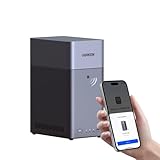
UGREEN NAS DH2300 2-Bay Desktop NAS, Support Capacity up to 64TB (Diskless) | Remote Access, AI Photo Album, Beginner Friendly System, 4GB RAM on Board,1GbE, 4K HDMI, Network Attached Storage(Diskless)
Diskless NAS | 2 bays | 1-GbE | New | In stock
Last checked: Oct 24, 2026 7:19 pm GMT+0000
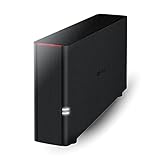
BUFFALO LinkStation 210 1-Bay Personal Cloud Network Storage 6TB (1x6TB) with Hard Drives Included
NAS: check included drives | 1 bays | New | In stock
Last checked: Oct 24, 2026 7:15 pm GMT+0000
Network upgrades

UGREEN 2.5Gb Switch, 5-Port Ethernet Switch, 5 x 2.5Gb Uplink, Metal Case | Plug & Play Unmanaged Ethernet Splitter, Desktop/Wall Mount Network Hub, Fanless Quiet with LED, for NAS, PC, Game Console
Network switch | 2,5-GbE | New | In stock
Last checked: Oct 24, 2026 7:03 pm GMT+0000

TP-Link TL-SG105S-M2, 5 Port Multi-Gigabit 2.5G Unmanaged Ethernet Switch | Ethernet Splitter, Plug & Play, Desktop/Wall Mount, Silent Operation
Network switch | 2,5-GbE | New | In stock
Last checked: Oct 24, 2026 7:04 pm GMT+0000

TP-Link TL-SG108-M2, 8 Port Multi-Gigabit 2.5G Unmanaged Switch | 2.5G Bandwidth, Ethernet Splitter, Plug & Play, Desktop/Wall Mount, Fanless Metal Design, Lifetime Protection
Network switch | 2,5-GbE | New | In stock
Last checked: Oct 24, 2026 7:03 pm GMT+0000

TP-Link TL-SG108S-M2, 8 Port Multi-Gigabit 2.5G Unmanaged Switch | 2.5G Bandwidth, Ethernet Splitter, Plug & Play, Desktop/Wall Mount, Fanless Metal Design, Lifetime Protection
Network switch | 2,5-GbE | New | In stock
Last checked: Oct 24, 2026 7:03 pm GMT+0000
What will your complete purchase cost?
Use your own amounts, including anything else you still need. This is a planning tool, not a retailer bundle.
Which option fits your situation?
| Buyer situation | What matters most | Check before purchase |
|---|---|---|
| Local LLMs | Memory + backend | Check quantization and model size |
| AI creator workflow | CUDA/app acceleration | Check application support |
| Always-on agents | Reliability + power + network | Plan storage and backup |
Detailed buying guide
Who should consider this system or platform?
A good local-AI PC is the least expensive system that reliably supports your software, model size, memory requirement and daily workflow with enough headroom for the next projects you actually expect to run.
Buy it because it solves a specific workload constraint, not because the platform name is new. Start with the application, model size, memory requirement and operating system you actually plan to use.
How should I compare memory and storage?
Only installed capacity counts in the exact configuration. A listing that says a system supports or can be upgraded to a larger amount does not qualify as having that amount installed.
For local AI, memory capacity can determine whether a model fits at all, while SSD capacity affects how many models, datasets and project files you can keep locally.
Why are RTX Spark, DGX Spark and other AI PCs kept separate?
These are different product classes with different operating systems, software assumptions, memory architectures and form factors. Keeping the identities separate prevents a cheaper but different platform from being presented as the exact product a buyer searched for.
What matters most for local AI?
Check software support, model size, quantization, usable memory, storage, thermals and sustained workload behaviour. A headline AI-performance figure alone does not tell you whether your model or application will run correctly.
What connectivity should I check?
Confirm the ports and networking you actually need. For large model files and creator workflows, 10GbE, USB4 or Thunderbolt, display outputs and external-storage support can materially affect daily use.
How do I avoid buying the wrong variant?
Check the exact model number, installed RAM, SSD, keyboard layout on laptops, operating system and bundle contents. Do not assume every configuration in a product family has the same memory or storage.
When is the premium worth paying?
Pay more when the higher-priced configuration removes a real bottleneck such as insufficient memory, inadequate storage, the wrong software environment or a form factor that does not fit your workflow. Otherwise compare the clearly labelled alternatives.
How this comparison works
The selection uses the Amazon Creators API. Product identity, category and configuration are checked before an item enters the comparison. Accessories and ambiguous variants are never used as substitutes for the requested system. Unknown specifications remain unknown.
Each price timestamp stays tied to a successful price request. An error, missing offer or missing image does not make old data appear newer. A previously verified price is not confirmation of current stock. Images load from the provider URL and that remote image may later disappear.
The figures apply only to the filtered selection. There is no permanent price history, automatic price alert or claim that this page covers every Canadian retailer. Any savings percentage uses an Amazon-supplied reference basis and is suppressed on older retained prices.
Frequently asked questions
Does this page compare every Canadian retailer?
No. Live offers on this page come from Amazon. The buying guidance helps you judge the configuration, but it is not a complete comparison of every Canadian store.
Why can a saved price be older than my visit?
The date beside each price shows when it was checked. Older prices provide a comparison point; Amazon confirms the price and availability when you order.
Can the Amazon Associate tag be changed without another product pull?
Yes. The outgoing Associate-tag override is separate from the Creators API Partner Tag, so changing the public tag does not require a new catalogue pull.
Are accessories shown as the main product?
No. Accessories, replacement parts, empty enclosures, docks, cables, barebones systems and unclear variants are excluded from the main exact selection.
Are missing RAM, storage or platform details guessed?
No. Unknown installed memory, storage, platform or keyboard details stay unknown instead of being inferred from a similar model.
Does a matching system guarantee my local-AI software will work?
No. Exact product identity is only one part of the decision. Confirm operating system, framework, driver, model-format and application support for your own workload.