


CYBER MONDAY 2026
Current Amazon offers for Cyber Monday shoppers

Black Friday Deal
ACEMAGIC K5 Ai Mini PC(Up to 24 Tops), Intel Core 3 304, 12GB RAM 512GB SSD | Windows 11 Pro • Triple 4K 60Hz • WiFi 6 • BT5.2 • Mini Desktop Computers AI Boost for Home Office • Business • Multitasking
−30% · Amazon reference price: CA$649.99
Verified 2026-11-27 08:31:17 UTC
Black Friday Deal
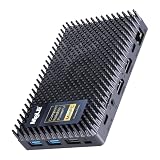
MeLE Cyber X1 Fanless Mini PC N150 8GB DDR4 128GB eMMC with Windows 11 Pro | Dual HDMI+USB-C 4K Triple Display|WiFi 5 BT5.1|0dB Silent|Unlock BIOS,Auto Power On,PXE,WoL|VESA Mount|Industrial Business PC
−29% · Amazon reference price: CA$531.99
Verified 2026-11-27 10:44:42 UTC

Black Friday Deal
MeLE SE-Grade Quieter 4C N150 Fanless Mini PC 8GB 128GB Win11 Pro | N150 4C/4T 3.6GHz, Triple 4K Display, USB-C PD3.0, WiFi 5 BT5.1 GbE, 0dB Silent, No Dust, Unlocked BIOS, Home Office, Study
−20% · Amazon reference price: CA$419.99
Verified 2026-11-27 09:03:54 UTC
Black Friday Deal
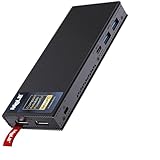
MeLE PCG02 Pro Mini PC Stick, N100 8GB 256GB Mini Computer | Fanless micro PC stick with Dual HDMI, WiFi5 Gigabit Ethernet, USB Type-C PD3.0 on Business Office IoT, Media, Home
−20% · Amazon reference price: CA$499.99
Verified 2026-11-27 08:31:17 UTC

Black Friday Deal
N5 Mini PC Ryzen 3 5400U Small Desktop Computer 8GB DDR4 RAM 256GB NVMe SSD | Micro Compact PC Triple 4K HDMI DP USB-C WiFi 5 BT5.0 Home Office Business Streaming
−20% · Amazon reference price: CA$359.99
Verified 2026-11-27 08:18:14 UTC

Black Friday Deal
GEEKOM A5 2027 Edition Mini PC, AMD Ryzen 7 7730U, 16GB RAM, 512GB NVMe SSD | (Beats 7430U), Wi-Fi 6, BT 5.4, 15W Low Power, Quad 8K Display, Business Mini PC, Office & Video Editing, 3-Year Support
−19% · Amazon reference price: CA$759.00
Verified 2026-11-27 10:33:27 UTC
Each card shows its last successful local Amazon check. Black Friday badges remain Black Friday badges until Amazon reports a different promotion. Reference prices and savings appear only when supplied by Amazon; the checkout price applies. As an Amazon Associate, Cloudzat earns from qualifying purchases.
Our recommendation
Buy G3 Plus 16GB/512GB for a light office or small-service PC, UM870 Slim 32GB/1TB for balanced everyday performance, and MeLE Quieter 4C for fanless light-duty use. Choose UM790 Pro for a more expandable small lab. A compact PC with integrated graphics should not replace a discrete-GPU tower when demanding games or GPU-specific software are the reason for buying.
For Cyber Monday 2026, choose GMKtec NucBox G3 Plus with 16GB and a 512GB-class SSD for light office work, MINISFORUM UM870 Slim with 32GB and 1TB for a busier everyday desktop, or MeLE Quieter 4C when a fanless light-duty machine is the priority. Those are three different jobs. A tiny N-series box can be excellent for documents or automation, while a Ryzen system is the better starting point for substantial multitasking and modest integrated-graphics work.
The most useful upgrade is often a balanced complete configuration rather than the newest processor label. A 32GB Ryzen machine with an adequate SSD and the right display outputs is a coherent desk purchase. A minimal 8GB appliance with tiny fixed storage is a different proposition, even if the title advertises several monitors or uses AI language. For demanding games, GPU rendering or a CUDA-based local-model workflow, a discrete-GPU desktop belongs in the comparison instead of an ordinary mini PC.
For a Canadian desk, a configured Ryzen UM870 Slim or SER8 is the balanced work-PC comparison, while G3 Plus or MeLE Quieter 4C suits lighter duties. A fanless 8GB/128GB appliance is not equivalent to a 16GB desktop with a larger SSD. Prefer Canadian support and an appropriate North American power package, and treat AI labels separately from the actual CPU, memory and software requirements.
Which option should you buy?
| Choose | Best use | Reason to pass |
|---|---|---|
| GMKtec NucBox G3 Plus | Light office and small services | Entry-level CPU and graphics |
| MINISFORUM UM870 Slim | Balanced 32GB everyday desktop | More capacity than a simple appliance needs |
| MeLE Quieter 4C | Fanless light-duty installation | Exact CPU and storage variant matters |
| MINISFORUM UM790 Pro | Development and small home lab | Still integrated rather than discrete graphics |
| Home Assistant Green | Dedicated beginner automation host | Not a general-purpose Windows PC |
Choose between a light appliance and a real work desk
A light office machine spends much of its time waiting for web pages, documents and user input. An N150 system with enough RAM and a useful SSD can handle that job without the footprint of a tower. The same class can host a small dedicated service. A busier desk running development tools, large spreadsheets and several applications at once benefits from a stronger Ryzen platform and 32GB memory. These are different requirements, so the least expensive mini PC is not automatically the best value for both.
Our general-purpose middle choice is a complete UM870 Slim 32GB/1TB. It gives a demanding everyday user more room than a minimal N-series appliance without requiring a specialist external-GPU project. G3 Plus 16GB/512GB remains the sensible comparison when the workload is genuinely light. MeLE Quieter 4C is useful when eliminating fan noise is the priority. Selecting the role first prevents spending on a powerful box that runs one tiny service or buying a cramped appliance for a full workday.
A small PC is not automatically a gaming system
Integrated Radeon graphics can be useful for lighter games and modest graphical work in a compact system. A system with Radeon 780M and an appropriate memory configuration is a more relevant comparison for that purpose than a basic N-series box. It still shares system memory and does not provide the same capability as a dedicated desktop graphics card. The number of monitor outputs or an 8K output claim says nothing reliable about demanding game frame rates.
For modern high-detail games, substantial GPU rendering or software requiring CUDA, choose a suitable discrete-GPU desktop or a purpose-built compact gaming system. External graphics can be useful in a deliberate setup, but the dock, card, power supply and connection all add to the purchase. An ordinary USB-C port does not establish that an eGPU arrangement is supported. The point of a mini PC is a useful compact installation; expanding it into a collection of external boxes may remove the very advantage that made it attractive.
Home servers need storage and recovery more than display claims
For a small server, dependable Ethernet, suitable storage and a recoverable operating system matter more than multiple high-resolution outputs. A mini PC with a replaceable SSD is a useful host for lightweight services, but it is not a multi-bay NAS simply because an external disk can be attached. A large media library needs a storage and backup plan of its own. Keeping the small compute host separate from dedicated network storage can make later replacement and expansion simpler.
Home Assistant Green is the straightforward appliance alternative for a first automation installation. A generic mini PC is attractive when more storage or several services justify the flexibility. UM790 Pro is a more substantial lab choice with room for development and virtualisation, but a powerful lab host also concentrates more household services on one machine. Backups and a recovery plan therefore matter as much as the initial specification. An inexpensive spare or an easy restore route can be more useful than unused processor capacity.
Choose installed memory before the headline processor
For an everyday office PC, 16GB is the useful starting point when a browser, documents and video calls run together. A machine with 8GB can still handle a lighter routine, but a small saving can disappear when memory pressure makes the owner close applications constantly. For heavier multitasking, development tools or several virtual machines, 32GB is the more comfortable target. Capacity does not turn a low-power four-core processor into a workstation, so the memory and CPU class need to suit the same workload.
Socketed SO-DIMM memory and soldered LPDDR memory create different upgrade paths. A soldered configuration should be bought at the capacity needed for the machine’s intended life. With a two-slot system, a matched pair can provide the intended memory-channel arrangement and bandwidth for integrated graphics. DDR4 and DDR5 are physically and electrically different; neither is a universal replacement for the other. A listing’s installed capacity, module layout and supported upgrade ceiling are separate facts, and the highest number mentioned in a family advertisement may not describe the selected configuration.
An SSD and a complete system are worth budgeting for
A 500GB or 512GB SSD is a practical starting point for Windows, office applications and a modest personal library. A 1TB drive is more useful when projects, local media or several development environments will live on the machine. Tiny eMMC configurations can be appropriate for a narrowly defined appliance, but they leave less room for application growth and operating-system updates. For a normal desktop, we would generally choose a replaceable SSD over a minimal fixed-storage configuration when the complete purchase remains sensible.
Barebone mini PCs usually need memory, storage and an operating system added to the particular package; the exact included components determine the comparison. A configured 32GB/1TB unit is therefore not directly comparable with an empty kit’s headline cost. Internal expansion also depends on the actual board: an M.2 connector can differ in length and interface, and a second slot may have different capabilities from the first. External USB storage is useful for a backup or media library, but it does not provide the same tidy installation as a supported internal drive.
Match the monitor and network connections
For two ordinary office monitors, two suitable display outputs simplify the desk. A USB-C connector is not enough evidence by itself: it can provide data only, display output, power input or a combination depending on the PC. A dock cannot create an unsupported display mode merely by adding more sockets. The advertised number of displays also says little about the simultaneous resolution and refresh rate. A buyer with a high-refresh monitor should choose a configuration whose actual output supports that requirement rather than relying on a generic 4K label.
Gigabit Ethernet is sufficient for ordinary broadband and many office tasks. A 2.5GbE port becomes useful for a compatible NAS, switch and workload, particularly large local file transfers. Two network ports can serve a lab or gateway project, but they do not automatically make a mini PC a well-supported router appliance. For a conventional desktop, one dependable wired link is often more valuable than an elaborate port count. For an always-on server, a stable wired connection also avoids depending on wireless placement and interference for household services.
Small size does not make every system silent
A fanless mini PC removes fan noise, which is useful beside a microphone, in a bedroom or for a light always-on service. It still produces heat and needs an installation position that allows its enclosure to release that heat. A compact actively cooled Ryzen system can sustain a different workload, but its fan may become audible under long builds, rendering or games. A brief turbo frequency does not describe the noise or performance of an hour-long task. Choose the cooling style for the work and room rather than treating silence as a free feature.
Processor base power is not the power drawn by the complete PC at the wall. Memory, storage, networking, the power supply and the workload all contribute. For an always-on system, a measured average 10W would amount to 87.6kWh over a year; 20W would amount to 175.2kWh. Those are arithmetic examples, not measurements of the recommended models. They explain why a modest automation host can be a better fit than a powerful desktop kept running for a tiny service. A monitor and external drives add their own consumption.
Buy the configuration and support route together
A complete mini PC should include the specified memory, storage, appropriate power supply and any advertised operating-system licence. A case, mounting bracket, dock or barebone listing can appear in the same search results without being an equivalent purchase. Regional versions can also differ in the supplied mains lead and service channel. For a work machine, a clear local return route can be worth more than a small reduction on an import with uncertain handling. A familiar family name does not establish that every seller supplies the same configuration or warranty.
Keep recovery practical once the machine is installed. A current backup of documents or server configuration belongs on another device or service, not only on a second partition of the same SSD. Driver and BIOS packages need to match the exact model and hardware revision; a near-identical product name does not make firmware interchangeable. For a desktop, a recoverable operating-system installation reduces downtime. For a home server, configuration backups and documented storage connections make replacing a failed small PC much less disruptive than rebuilding every service from memory.
Questions answered
Is a barebone mini PC ready to use?
Not necessarily. A barebone package can omit memory, storage and an operating system, so it needs those components before it becomes the same purchase as a configured desktop. Compare the exact included items and the complete cost rather than a family page’s lowest entry option.
Is 32GB always better than 16GB?
It is useful when applications, development tools or virtual machines need the extra space. A light office workload can be comfortable with 16GB. More memory does not remove a processor bottleneck or provide the same capability as dedicated GPU memory.
Can I use any USB-C dock?
The PC’s particular USB-C port must support the functions the dock needs. A data-only connection does not automatically carry a display signal or accept power. Match the supported monitor modes and power arrangement rather than treating the connector shape as a complete specification.
Will a mini PC be silent?
Only a fanless design removes fan noise. Actively cooled systems can become audible under sustained work, and fanless systems still need room to release heat. Choose the cooling style for the room and workload instead of assuming every small computer behaves the same way.
Can I upgrade the memory later?
Only when the exact model has replaceable memory and supports the intended modules. Soldered LPDDR configurations are normally fixed at purchase. SO-DIMM systems still have generation, layout and capacity limits, so the motherboard’s supported arrangement matters.
Does a small PC need a separate backup?
Yes. A failed SSD or accidental deletion can affect a mini PC just like a larger desktop. Keep documents or service configuration on another device or backup service as well. A second partition on the same internal drive is not an independent copy.
Sources and specifications
- Apple’s new Mac mini is more mighty, more mini, and built for Apple Intelligence – Apple
- ASUS NUC 14 Pro – Tech Specs|NUCs|ASUS USA
- ASUS Announces NUC 14 Pro | ASUS Pressroom – Official Global News & Updates
- ThinkCentre M70q Gen 6 (Intel) Tiny PC | Efficient Business Performance | 13A4CTO1WWUS2
- ThinkCentre M90q Gen 6 (Intel) Tiny PC | Elevate Business Productivity | 13AC002FUS