


Canada · CAD · Deal Watch
NVIDIA Workstation GPU Black Friday Deals Canada 2026: What to Buy
Bring your Nvidia workstation upgrade into focus this Black Friday with the exact model, software support and complete purchase cost.
Compare supported applications, installed VRAM and the precise RTX PRO edition. More memory can matter enormously for some workloads while adding little to others. For Black Friday, compare the exact card’s recent selling price and equivalent offers from reputable sellers. A larger advertised discount cannot make up for the wrong memory, condition or warranty.
Choose RTX PRO 5000 Blackwell when its exact memory configuration meets the professional application's requirements. Move to RTX PRO 6000 Blackwell 96GB for work that needs the larger GPU memory pool. Check the supported application, driver and workstation configuration before paying for a professional board.
Which NVIDIA Workstation GPU option should you choose?
Start here
NVIDIA RTX PRO 5000 Blackwell
Choose it for a supported professional application that fits the exact VRAM configuration.
Buy on AmazonChoose this alternative
NVIDIA RTX PRO 6000 Blackwell 96GB
Choose it for larger professional GPU-memory requirements.
Find this configurationCurrent NVIDIA Workstation GPU Listings on Amazon
Black Friday sale dates and offer timing
Dates for 2026: Black Friday — November 27; Amazon.ca — November 19–30. Individual offer periods and eligibility vary.

NVIDIA RTX PRO 5000 Blackwell Graphics Card - 48GB GDDR7 ECC Memory, PCIe 5.0 x16, 4X DisplayPort 2.1b, Dual Slot Full Height AI Workstation GPU, Retail Packaging
48GB GPU memory
Last verified 2026-11-13 03:38:24 UTC

RTX PRO 5000 BLACKWELL 72GB GDDR7 384BITS PNY VCNRTXPRO5000B72-PB NV FRAME GPU
72GB GPU memory
Last verified 2026-11-13 03:38:24 UTC
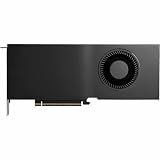
PNY VCNRTXPRO5000B-PB NVIDIA RTX PRO 5000 Blackwell 48GB GDDR7 384B Graphic Card - Black
48GB GPU memory
Last verified 2026-11-13 03:37:23 UTC

ASUS Dual GeForce RTX™ 5060 8GB GDDR7 OC Edition (PCIe 5.0, DLSS 4, HDMI 2.1b, DisplayPort 2.1b, 2.5-Slot, Axial-tech Fan, 0dB Technology, and More)
8GB GPU memory
Last verified 2026-11-16 07:37:07 UTC

TFGAJKKKKK Intel Arc B Series Intel Arc B580 Limited Edition Graphics Video Card
Last verified 2026-11-16 07:37:07 UTC

msi Gaming GeForce RTX 3060 Ventus 2X 12G OC V1 Graphics Card - 15 Gbps GDRR6 Boost Clock: 1807 MHz 192-Bit HDMI/DP PCIe 4 Torx Twin Fan Ampere
Last verified 2026-11-16 07:37:07 UTC

GIGABYTE GeForce RTX 5060 WINDFORCE OC 8G Graphics Card, 8GB 128-bit GDDR7, PCIe 5.0, WINDFORCE Cooling System, GV-N5060WF2OC-8GD Video Card
Last verified 2026-11-16 07:36:56 UTC
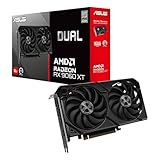
ASUS Dual Radeon RX 9060 XT 16GB GDDR6 Gaming Graphics Card | PCIe 5.0, HDMI 2.1b, DisplayPort 2.1a, 2.5-slot design, Axial-tech Fans, 0dB Technology
16GB GPU memory
Last verified 2026-11-16 07:36:56 UTC
As an Amazon Associate, Cloudzat earns from qualifying purchases. Prices and availability can change; Amazon shows the final price for your chosen item.
NVIDIA Workstation GPU buying guide
| Choice | Best for |
|---|---|
| NVIDIA RTX PRO 5000 Blackwell | a supported professional application that fits the exact VRAM configuration |
| NVIDIA RTX PRO 6000 Blackwell 96GB | larger professional GPU-memory requirements |
Which NVIDIA Workstation GPU option should you choose?
For a supported professional application that fits the exact VRAM configuration, choose NVIDIA RTX PRO 5000 Blackwell.
For larger professional GPU-memory requirements, choose NVIDIA RTX PRO 6000 Blackwell 96GB.
Choose the memory tier before the board partner
For a graphics purchase, first decide what must fit in GPU memory. A game, rendering scene or local model can be limited by memory even when a faster processor is available. Keep room for the application, its working data and the way you run it. A model-loading estimate alone may leave too little capacity for a longer context, larger batch or a second task. Compare the configuration you will actually run rather than a best-case demonstration.
GeForce and professional RTX cards serve overlapping but different needs. A professional model can offer a larger memory pool, ECC or a software and support path that matters to the job. Those features do not automatically justify its cost for ordinary gaming. A less expensive card that fully satisfies the workload can leave budget for the rest of the computer, storage and an appropriate display.
Buy the graphics card, not a different product with the same name
A GPU search can return a complete workstation, a laptop, an external enclosure, a water block, a cooler or a support bracket. Those are different purchases. For an upgrade to an existing desktop, compare complete add-in graphics cards. A workstation containing the requested GPU should be assessed as a complete computer, with its CPU, system RAM, storage, operating system and warranty included in the comparison.
Keep the exact model and memory amount together. Similar professional card names can refer to different generations, memory configurations, cooling arrangements or intended systems. A family name in a title is not enough to establish the exact board you need. Where your application or workstation vendor requires a particular supported configuration, use that compatibility information before treating another edition as equivalent.
Check case clearance and cooling before paying for an upgrade
Measure usable length, height and slot space in the actual chassis. Include front radiators, drive cages, other expansion cards and the space required by the power cable. A nominal case GPU-length limit can change when other components occupy the same area. Large cards can also make nearby slots inaccessible. Check how the installed card will be supported rather than leaving a heavy board hanging without the intended bracket or mounting arrangement.
Choose the cooling arrangement for the enclosure. An actively cooled desktop card and a passive server card are not interchangeable thermal designs. A passive board can require directed server airflow that a quiet desktop case does not provide. Liquid-cooled variants add radiator position, pump arrangement and maintenance considerations. The lowest card price can be poor value when it forces an unplanned chassis or cooling rebuild.
Budget the power supply and cable path as part of the card
Use the board manufacturer’s requirements for the exact card and the power-supply manufacturer’s supported cables. Include the CPU and other components in the system budget. Do not treat the card power number as the complete computer’s consumption, or the supply’s nominal rating as proof that every connector and cable arrangement is suitable. The required connectors, cable condition and available space all matter.
Follow the component installation instructions and leave the cable routing space the manufacturers require. When the existing supply does not support the intended upgrade, compare the GPU-plus-supply cost with the alternative card. Installation is easier to plan before the old hardware is removed. Keep the original working setup available until the replacement system has been checked with the workloads that matter.
Match the software stack to the accelerator
Check the application, operating system, driver and compute backend that will use the card. A CUDA requirement points to a different purchasing decision from a tool that runs well on another supported backend. A new architecture can also require a sufficiently recent driver or application build. Confirm the path for the software you run today, rather than assuming a specification label guarantees that every existing tool will work unchanged.
For professional applications, check whether the project depends on a certified configuration or a supported driver branch. For local AI, check model support, quantisation, memory use and any acceleration libraries required by the chosen application. A synthetic throughput figure is not a direct prediction of interactive response time or the speed of a particular rendering project. Useful performance comes from the complete working software and hardware combination.
Compare complete costs across suitable alternatives
Compare the exact memory tier and board edition with other products that can perform the same job. Factory overclocks, cooler design, dimensions, warranty and seller support can explain price differences within one GPU family. A higher-priced board is not automatically the sensible choice when a lower-priced model fits the case and performance requirement. Include any required supply, cooling or chassis changes in the total.
A higher-memory alternative can be worth considering when the intended workload does not fit the cheaper card. A lower-memory card is a useful alternative only when the workload can be reduced or changed without losing what you need. Keep that tradeoff explicit. For a business purchase, the time spent waiting for a supported replacement or resolving an incompatible setup may cost more than a modest initial saving.
Choose the seller and support arrangement deliberately
High-value graphics cards deserve a clear invoice, return route and warranty description. Establish whether the card is new, refurbished or used, and whether the seller or manufacturer handles the support you expect. Packaging, accessories and regional warranty arrangements can differ. A lower price can represent a different condition or support arrangement rather than a better deal on the same purchase.
After installation, test the displays and a representative application while the return window remains useful. Check that the intended memory amount is recognised and that the system stays stable under the work it was bought to do. Keep a recovery route if a driver change affects an important application. The practical goal is a dependable working machine, not simply acquiring the largest discount shown during an event.
Multiple cards need an explicitly supported workload
Two cards do not automatically behave as one card with twice the usable memory. The application must support the intended multi-GPU arrangement, and the host needs the necessary slots, power, cooling and data paths. Compare one sufficiently large-memory card with a multi-card build as complete working systems.
Buying NVIDIA Workstation GPU in Canada
For NVIDIA Workstation GPU in Canada, begin with NVIDIA RTX PRO 5000 Blackwell for a supported professional application that fits the exact VRAM configuration. Compare NVIDIA RTX PRO 6000 Blackwell 96GB when larger professional GPU-memory requirements is the more useful choice. The Amazon links and prices on this page use Amazon Canada and Canadian dollars. Add delivery and any required components to the amount you are comfortable paying. For a model family with several configurations, use the model name and the installed components together when comparing these two choices. Keep the seller’s order details so you can check that the hardware you receive is the version you chose.
Electricity cost calculator
Replace the example values with your own measurements, capacity or prices.
Questions buyers ask
Which NVIDIA Workstation GPU option should I choose?
Choose NVIDIA RTX PRO 5000 Blackwell for a supported professional application that fits the exact VRAM configuration. Choose NVIDIA RTX PRO 6000 Blackwell 96GB for larger professional GPU-memory requirements.
When does a professional NVIDIA GPU justify buying now?
For professional GPUs, the absolute saving can be thousands of dollars, but stock is narrower. Compare the exact card with its own history and project timing rather than waiting solely for a percentage target.
Which requirement makes RTX PRO worth the premium?
Choose RTX PRO when ECC, professional software expectations, enterprise deployment or much larger VRAM is part of the requirement. Otherwise flagship GeForce may deliver better value for many workloads.
How do workstation power needs affect the deal price?
RTX PRO 5000 and RTX PRO 6000 have very different power envelopes. Size PSU, connectors, thermals and any multi-GPU deployment from the exact card specification.
Where does local AI fit in a professional GPU decision?
Professional cards can make local AI practical when GeForce VRAM is insufficient, but capacity alone does not establish inference speed, framework support or total system throughput.