


Black Friday 2026 · Our buying decision
TerraMaster F2-425 Plus Black Friday 2026 Deals
Black Friday offers
No matching Black Friday promotion is verified right now. These are current Amazon listings, not a promise of a Black Friday discount.
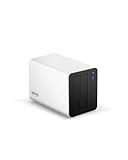
TERRAMASTER F2-425 Plus NAS 2-Bay Intel N150 4-Core CPU 8GB DDR5 (Diskless) | 5GbE LAN x 2, M.2 Slot x 3, Network Attached Storage for Teamwork, Multimedia Server (Diskless)
−20% · Amazon · List Price: $499.99
Verified 2026-11-24 04:48:09 UTC
No fresh priced listing is available right now. Check the matching Amazon results below.
Search AmazonThe F2-425 Plus is a useful Black Friday target when you want a compact two-bay NAS without giving up fast networking or room for NVMe storage.
Our default purchase is the standard 8 GB configuration with two matching CMR NAS drives. Choose a four-bay model instead when the library is already large enough that replacing both drives later would be inconvenient.
Our choice from the current local listings
These are the specific observed configurations we would choose for the use described. The recommendation is withdrawn if the reviewed price ceiling, title or freshness no longer holds.
Our pick · TERRAMASTER F2-425 Plus NAS 2-Bay Intel N150 4-Core CPU 8GB DDR5 (Diskless)
Buy this F2-425 Plus for a compact two-drive capacity plan. It is the reviewed Plus configuration, not the ordinary F2-425 or the differently specified N95 listing. Suitable data drives and backup are separate purchases.
Current item price: USD 399.99
Buy on AmazonVerified 2026-11-24 04:48:09 UTC
Wait: this observed option has expired, changed or exceeded our reviewed price. The general model comparison above remains available.
No currently active purchase recommendation from these observed listings.
Our compact hybrid NAS choice for a small, capable setup
TerraMaster specifies an Intel N150, 8 GB of DDR5 memory, two SATA bays and three M.2 2280 NVMe positions for the F2-425 Plus. The three M.2 slots are not three additional 3.5-inch drive bays. This is a small hybrid system: useful bulk hard-drive capacity plus optional flash storage. We would buy the SATA capacity first for household backup and add NVMe only for a defined workload.
Current matching Amazon listings
Current Amazon.com listings in USD. Pack size, memory and included storage remain explicit. Only an API-confirmed public promotion receives a Black Friday badge; savings use the matching Amazon reference price.
As an Amazon Associate, Cloudzat earns from qualifying purchases. Amazon provides the final price and availability. A live listing is not automatically a Black Friday discount.
Matching product · exact configuration shown
TERRAMASTER F2-425 Plus NAS 2-Bay Intel N150 4-Core CPU 8GB DDR5 (Diskless) | 5GbE LAN x 2, M.2 Slot x 3, Network Attached Storage for Teamwork, Multimedia Server (Diskless)
−20% · Amazon · List Price: $499.99
Verified 2026-11-24 04:48:09 UTC
No matching live listing is available right now. Use the product search below to see current Amazon results.
The configuration we would buy
| Buying priority | Our recommendation |
|---|---|
| Main choice | F2-425 Plus N150 with 8 GB |
| Alternative | F4-425 Plus for growth |
| Upgrade or different workflow | NVMe only for an identified working role |
The option we would choose
The Plus designation matters. F2-425, F2-425 Plus and F4-425 Plus are not interchangeable bargains. A cheaper ordinary F2 listing does not establish the discount on the Plus model, while the F4 changes the expansion decision by providing more SATA positions. Our preference is F2-425 Plus for a settled two-drive plan, F4-425 Plus when growth is foreseeable, and neither solely for a large reference-price percentage.
The two 5GbE ports are a practical advantage with suitable clients and networking. A single ordinary file transfer does not automatically become 10Gbps because both ports are connected. Link aggregation, multiple clients and appropriate multichannel arrangements have different requirements. For a home starting at 1GbE, the NAS can be purchased first and the network upgraded later, but the initial experience should be judged at the existing network's speed.
The setup worth paying for
Our storage basket is two equal-capacity CMR NAS drives in a mirror or another supported layout chosen for the task. Two 8 TB drives in a mirror give roughly 8 TB of nominal capacity before formatting. If that is already too little, buy the larger pair now or move to four bays. Buying small drives to make the enclosure deal look cheaper is usually the wrong economy for a growing archive.
The M.2 slots are specified as PCIe 3.0 x1. That makes compatible midrange NVMe SSDs a more balanced purchase than paying heavily for the highest sequential desktop benchmark. We would not buy three flagship SSDs before deciding whether they will hold a working pool, applications or supported cache. A cache is not a guaranteed accelerator for every backup job or large sequential copy.
Our final buying decision
The supplied 8 GB memory is our starting choice for ordinary file services and backups. Additional containers or heavier services may justify an upgrade, but the system has one memory slot, so a larger module replaces the original. Buy to an identified need rather than assume an empty second slot. A high memory figure cannot remove the limits of the processor or storage layout.
Our verdict is F2-425 Plus for a compact household or small-office NAS with a clear two-drive capacity plan and useful fast-network potential. Choose four bays for growth, and an all-flash system only when responsiveness and compact SSD storage justify its full cost. The Black Friday saving should make a complete, protected setup more affordable rather than encourage a cupboard full of unused upgrades.
What earns a place in our Black Friday basket
Our buying order is the enclosure that fits the job, enough suitable storage, and an independent backup destination. We would remove an optional memory upgrade or oversized switch before removing the backup. A discounted chassis can be a good purchase, but it is not a complete system unless the selected offer explicitly includes the required drives. The exact package name matters more than the product photograph.
The reference price and percentage shown above come from the current Amazon observation when available. They describe that listing's stated comparison, not our own long-term price-history claim. Our recommendation is based on the final price for the usable configuration. A smaller advertised reduction can be the better purchase when it applies to the right memory, storage and seller package.
The capacity we would pay for
We would size storage around the files that must remain online, the expected additions and room for working copies. Buying only enough space for today's archive can force an early replacement. Buying the largest possible drives without a realistic use also ties up budget that could protect the data elsewhere. Our preference is a useful margin above the known working library, followed by a supported expansion route.
Raw capacity is the sum printed on the drive boxes; protected usable capacity is smaller. Mirroring, parity, formatting, snapshots and reserved space all affect the result. We would not choose a package by adding every SATA and M.2 capacity into one large headline. Separate pools with different jobs should be evaluated separately, especially when the fast working area and the large archive use different storage media.
Protection is part of the purchase
For important files, our minimum practical recommendation is the NAS plus another recoverable copy that does not disappear with the same machine. That could be a separate backup device or a suitable remote service. The appropriate choice depends on how much data must be restored and how quickly. A second folder inside the same storage pool is not that independent copy.
RAID can keep a system available after certain drive failures, but it cannot guarantee recovery from deletion, corruption, theft or every administrative mistake. Snapshots are valuable for supported recovery scenarios, yet they should not become the only recovery layer. We would fund a modest complete protection setup before buying a premium CPU for a file server that rarely uses it. That is a concrete purchasing priority, not an optional finishing touch.
Networking without buying unused speed
A fast NAS port is useful only along a capable path. The workstation adapter, switch, cables, protocol, drives and workload all contribute to the result. For scheduled household backups, we would keep a functioning existing network unless the transfer window is a genuine problem. For daily creator transfers, the matching client connection and shared network can justify a larger investment.
We would avoid purchasing several network adapters merely because the NAS has multiple ports. Multiple-client capacity, failover and a properly supported multichannel configuration are different benefits. A single ordinary transfer does not automatically use the sum of every port. The recommended complete setup should solve the actual transfer pattern: one workstation, several simultaneous users or unattended overnight backups.
Where we would spend the upgrade budget
For a capacity problem, buy the appropriate drives. For a network bottleneck, buy the missing network link. For a memory-constrained workload, buy the supported memory configuration. We would not use Black Friday to add every optional component at once. It becomes difficult to tell which purchase improved the experience, and the complete basket can erase the saving on the original NAS.
SSD cache is particularly easy to overbuy. It may help a suitable workload, but a large sequential backup is not automatically transformed by an expensive cache device. An SSD working pool and an SSD cache are different roles. We would assign the role first, then choose capacity, endurance and compatibility for it. Published desktop peak speeds alone are not a sufficient reason to buy a premium drive for a constrained NAS slot.
The complete package and ongoing ownership
Our preferred offer is new stock with the exact model and capacity stated, the appropriate local power equipment and a clear seller. A package that omits storage may still be the right choice when drives are already available; it should simply be compared as a diskless purchase. Likewise, a preorder can be reasonable for a planned project, but it is not our recommendation for an urgent replacement needed this week.
We would also account for placement and continuous operation. Mechanical drives, fans and heat make a desk installation different from a cupboard or equipment room. A faster processor can add capability without being the most economical always-on choice. The best-value NAS is the one whose everyday ownership matches the workload, rather than the one with the longest specification list at the moment of purchase.
When the live price changes
The cards lead with fresh local observations, and expired prices or unavailable offers are removed rather than treated as valid bargains. A model recommendation is not a claim that every seller or configuration deserves purchase at any price. If a matching offer disappears, the tagged Amazon search is a fallback for availability; it is not presented as a verified discounted listing.
Our decision remains to buy the configuration described in the verdict and avoid paying extra for features with no assigned job. Where a fresh Black Friday badge exists, it is shown with its applicable price. Where only a current ordinary listing is verified, the page says so. A price reduction without a campaign badge can still be useful, but we do not manufacture an event label or call an offer a historical low without evidence.
Black Friday dates and offer eligibility
Black Friday falls on 27 November 2026. Manufacturer and marketplace campaigns have different schedules, stock and eligibility. A calendar date does not establish a discount on the recommended configuration.
Direct answers before buying
Should I choose F2-425 Plus or a four-bay NAS?
Choose F2-425 Plus when a two-drive capacity plan comfortably covers the household or small-office need. Choose four bays when growth is foreseeable and replacing both drives would be inconvenient. The extra M.2 positions do not turn the F2 into a five-hard-drive enclosure. We would prioritise the right bay count over an unnecessary memory or SSD-cache upgrade. For a settled small library the F2 is appealing; for a rapidly growing archive, more expansion room can be worth paying for even when the two-bay discount is larger.
Does a large percentage make this the best deal?
No. We would buy the recommended configuration at a sensible complete price before a less suitable product with a larger percentage. The reference price shown belongs to Amazon's current comparison for that exact offer; it is not a promise of the lowest price ever recorded. Quantity, included parts and eligibility can change the value. A Prime-only offer is also a different purchase condition from an unrestricted price. Our choice remains the useful package, and we would not pay for an unwanted membership or extra item solely to make the headline saving appear larger.
What should I do if the recommended listing is unavailable?
Use the clearly identified alternative in the buying verdict, or wait when that alternative does not meet the same need. We would not replace an exact model with an accessory or a materially smaller configuration just to display a purchase button. The Amazon search fallback is available for checking current availability but is not itself a confirmed discounted product. If the suitable replacement costs substantially more or changes the workflow, keeping the existing setup is often the better decision. The purpose of this guide is a useful purchase, not a purchase at any cost.
Related buying guides
Sources and research notes
Researched on 23 November 2026 using manufacturer specifications and local Amazon observations. Recommendations are editorial judgments, not claims of hands-on testing. Prices expire after 24 hours; public promotion badges expire after one hour or the offer end. No unsupported historic-low claim is made.