


United States · USD · Deal Watch
Offline SSD Cloners Black Friday Deals 2026: US Buying Guide
Planning an SSD upgrade over the holidays? Black Friday is a good opportunity to pick up the right migration tool before the new drive arrives. These US cloner comparisons separate NVMe and SATA workflows so the discounted device fits the copy you need to make.
Check the supported source and destination interfaces, target-capacity rule and power supply before comparing recent prices. Only pay for autonomous cloning if the manual confirms the operation you need. A computer-assisted migration may be better value when partition resizing or a smaller target is part of the plan.
Compare SABRENT EC-SSD2 for compatible NVMe-to-NVMe work and ICY BOX IB-1232CL-U3 for SATA drives. They are alternatives for different source interfaces, not substitutes for the same SSD.
Which Offline SSD Cloners option should you choose?
Start here
SABRENT EC-SSD2
A dual-NVMe dock with offline cloning; confirm source and destination capacity before considering the clone function.
Buy on AmazonChoose this alternative
ICY BOX IB-1232CL-U3
A SATA HDD/SSD cloning dock; M.2 NVMe drives need a different product.
Find this configurationCurrent Offline SSD Cloners Listings on Amazon
Black Friday sale dates and offer timing
Dates for 2026: Black Friday — November 27; Amazon.com — November 19–30. Individual offer periods and eligibility vary.
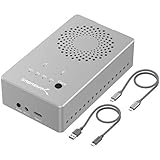
SABRENT Dual-Bay USB-C 10Gbps M.2 NVMe SSD Cloner Dock (EC-SSD2) | Offline clone, no PC needed, NVMe only - not SATA/AHCI, 2230-2280, Fan runs while powered, USB-C
Last verified 2026-11-14 09:14:05 UTC

30% below the Amazon reference price
ORICO Dual Bay Hard Drive Docking Station Hard Drive Cloner | USB to SATA with Duplicator/Offline Clone Function External Hard Drive Dock for 2.5''/3.5'' HDD SSD Support UASP Plug&Play
Last verified 2026-11-14 09:14:56 UTC

SABRENT Lay Flat NVMe & SATA HDD/SSD Dock, USB-C 10Gbps (DS-UFNC) | M.2 NVMe + 2.5in/3.5in SATA, Offline clone, USB-C and USB-A cables included, Tool-free, Win/Mac/Linux
Last verified 2026-11-14 09:14:05 UTC

WAVLINK M.2 SSD Cloner, 20Gbps NVMe Cloner Dual-Bay SSD Enclosure, Tool-Free M.2 Duplicator for SSDs PCIe Sizes 2230/2242/2260/2280, Supports Offline Clone, Compatible with NVMe, up to 8TB per Drive
Last verified 2026-11-14 09:13:52 UTC

MAIWO M.2 NVMe SSD Cloner Duplicator, 10Gbps USB 3.2 Gen 2, Supports AHCI | NVMe Offline Clone Dock for M-Key 2230/2242/2260/2280/22110,Up to 16TB,Access Two SSDs Simultaneously,12V/3A Power,Tool-Free
Last verified 2026-11-14 09:13:52 UTC

11% below the Amazon reference price
M.2 NVMe & SATA SSD/HDD Hard Drive Docking Station, ICY BOX USB-C 10Gbps NVMe Cloner&Reader, TripleBay Hard Drive cloner for 2.5"/3.5" SSD&HDD Hard Drives, Offline Cloning, Tool-Free (3 Bay)
Last verified 2026-11-14 09:13:52 UTC

10% below the Amazon reference price
FIDECO M.2 NVMe SATA SSD Cloner Dock, USB 3.2 Gen 2 X 2, 20Gbps Dual NVMe SATA SSD Enclosure, M.2 Duplicator Cloner, Support Offline Clone, UASP and Trim, Aluminum Design
Last verified 2026-11-14 09:13:52 UTC
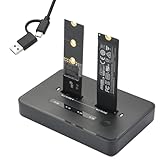
ELUTENG M.2 NVMe SSD Cloner, USB 3.2 20Gbps Dual Bay NVMe Enclosure, Tool-Free Offline Clone & SSD to USB Adapter, Supports M-Key 2230/2242/2260/2280 SSDs
Last verified 2026-11-14 09:13:52 UTC
As an Amazon Associate, Cloudzat earns from qualifying purchases. Prices and availability can change; Amazon shows the final price for your chosen item.
Offline SSD Cloners buying guide
| Model or family | What to compare |
|---|---|
| SABRENT EC-SSD2 | A dual-NVMe dock with offline cloning; confirm source and destination capacity before considering the clone function. |
| ICY BOX IB-1232CL-U3 | A SATA HDD/SSD cloning dock; M.2 NVMe drives need a different product. |
Choose the right configuration for this purchase
Identify the source, destination and whether partitions need to change. A straightforward sector copy is different from moving to a smaller drive or changing encryption and boot arrangements. Confirm the complete procedure before buying and retain a separate backup. Leave enough time after cloning to verify the copy and the intended boot or data-access behaviour before erasing or repurposing the original.
Check cloning direction, protocol and destination requirements
Offline cloning is a specific function, not a feature of every two-bay enclosure. Confirm whether the product copies SATA to SATA, NVMe to NVMe or explicitly supports a cross-protocol operation. Check the manufacturer’s destination-capacity rule; unused space on the source does not guarantee that a smaller target can be used for a sector-by-sector copy.
The destination’s existing contents can be overwritten. Label both drives, keep an independent backup and read the exact procedure before starting. Do not buy on a transfer-rate headline and assume that cloning will run at that rate. If you need partition resizing, encryption handling or a migration to a smaller drive, compare the documented offline function with suitable host software. A useful deal matches the migration task as well as the drive sockets.
Match the drive interface before the connector
Write down the full model of the drive you want to install. M.2 describes a physical format, while SATA and NVMe describe different interfaces. A socket that looks right does not prove electrical compatibility. Check the accepted lengths, keying, maximum supported capacity and clearance for components on both sides of the SSD. A factory heatsink may prevent an otherwise compatible drive from fitting.
Then check the connection to the computer separately. USB-C is a connector shape, not a promise of a particular transfer rate. A useful purchase starts with a documented match between drive, enclosure, cable and host. Keep the precise product suffix in your comparison: one extra letter can identify a different bridge or supported protocol.
Choose a dock for the drives you will handle
A drive dock is convenient when bare drives need to be connected occasionally, but its sockets must match those drives. SATA HDD and SSD docks do not automatically accept M.2 NVMe modules. Check drive size, interface, supplied power and how the device behaves when both bays are populated. A second bay does not necessarily include an autonomous cloning function.
Think about the working surface as well as the specification. Exposed drives need a stable, dry location with room for ventilation and clear cable routing. Follow the dock’s instructions when inserting or removing a drive, and do not interpret a general hot-swap claim as permission to interrupt an active copy. For permanent everyday storage, an enclosed device may be a better fit than an open bench-style dock.
Keep a separate recovery copy
Moving files into an enclosure does not by itself create a backup. If the originals are deleted, the external device becomes the only copy. A mirrored array can help with a failed drive, but it does not protect against accidental deletion, theft, damaging software or a mistaken reconfiguration. Include a separate recovery copy in the budget for important files.
Before changing an existing storage layout, confirm that a recent copy can actually be opened and restored. Keep source and destination drives clearly labelled, especially when a docking station exposes both at once. After a transfer, check a representative selection of files and the total amount copied before reusing the original drive. The value of a discounted storage accessory depends partly on whether it fits a sensible recovery plan.
Check the complete path back to the computer
The useful connection is the slowest part of the entire path. Check the computer’s specific port, the cable supplied with the enclosure and any hub or dock between them. Two identical-looking USB-C sockets can offer different capabilities. A charging cable may not be suitable for the intended data rate, and sharing a dock with other storage can affect simultaneous transfers.
Also consider how the drive will be used across operating systems. Choose a filesystem appropriate to the devices that need to read and write it, and check the manufacturer’s compatibility guidance before formatting. Formatting can remove existing data, so preserve an independent copy first. For a permanent setup, test reconnecting, sleep and wake, and safe removal rather than judging the purchase only from one short benchmark.
Compare the finished storage purchase
Build two comparable baskets rather than comparing two isolated headline prices. Include the enclosure, the same drive capacity, the required data cable, approved power supply and any mounting parts. Check whether a bundle adds something you need or simply makes a higher total look attractive. For multiple drives, account for the intended redundancy and the cost of a separate backup.
Use the exact model’s recent normal selling price where reliable history is available. A discount against a reference price is only one piece of evidence, and a Black Friday badge does not establish a historic low. Recheck the selected variant, seller, delivery and condition at checkout. A cheaper enclosure that cannot use your SSD or host connection is not a saving, however prominent the sale percentage appears.
Use the return period to test your real workload
Inspect the package contents and model number before installing the drive. Follow the manufacturer’s fitting instructions, including thermal pads and any retaining screws, and keep original data backed up. Test the device with the computer and cable you intend to use. A successful connection proves less than a complete transfer, reconnect and sleep/wake cycle.
Copy a realistic folder, open sample files afterwards and watch for unexplained disconnects or repeated errors. Check that multiple bays are visible as documented and that the intended drive-management software recognises them. Keep the packaging and record any problem while the retailer’s return process is available. This is particularly useful when replacing an older enclosure: the new unit should solve the original limitation rather than introduce a different one.
Compare the complete US order
Use the Amazon.com listing for the selected model and package. Add any sales tax shown for your delivery address, shipping and separately required components before comparing baskets. For powered desktop enclosures, confirm the supplied adapter and US power connection rather than assuming an imported package is equivalent. Keep seller, condition and bundle contents fixed when looking at price history.
Set a purchase target before watching the sale: the interface you need, the drives that must fit and the maximum complete-project cost. A coupon, Prime-only offer or limited promotion may change eligibility or expire before checkout. The dated listings below show observed local products; the editorial shortlist explains which configurations to investigate. A model-search link helps comparison and does not establish stock. We do not label a price a historic low without supporting history.
Complete purchase cost calculator
Add the device price, any separately purchased drives and required accessories or installation. Use the actual local prices for your chosen configuration.
Questions buyers ask
Can unused space let me clone to a smaller SSD offline?
Do not assume so. Sector-by-sector cloners commonly impose destination-capacity requirements. Check the exact manual; a migration requiring resizing may need suitable software instead of the device’s autonomous copy mode.
Does every recommendation have a Black Friday discount?
No. The shortlist is buying guidance. Dated local cards show observed listings; Early and main Black Friday sections require fresh public event evidence. We do not call a price a historic low without supporting history. Check the final seller, selected variant and basket total.